
Loading, please wait...
LOT 0632
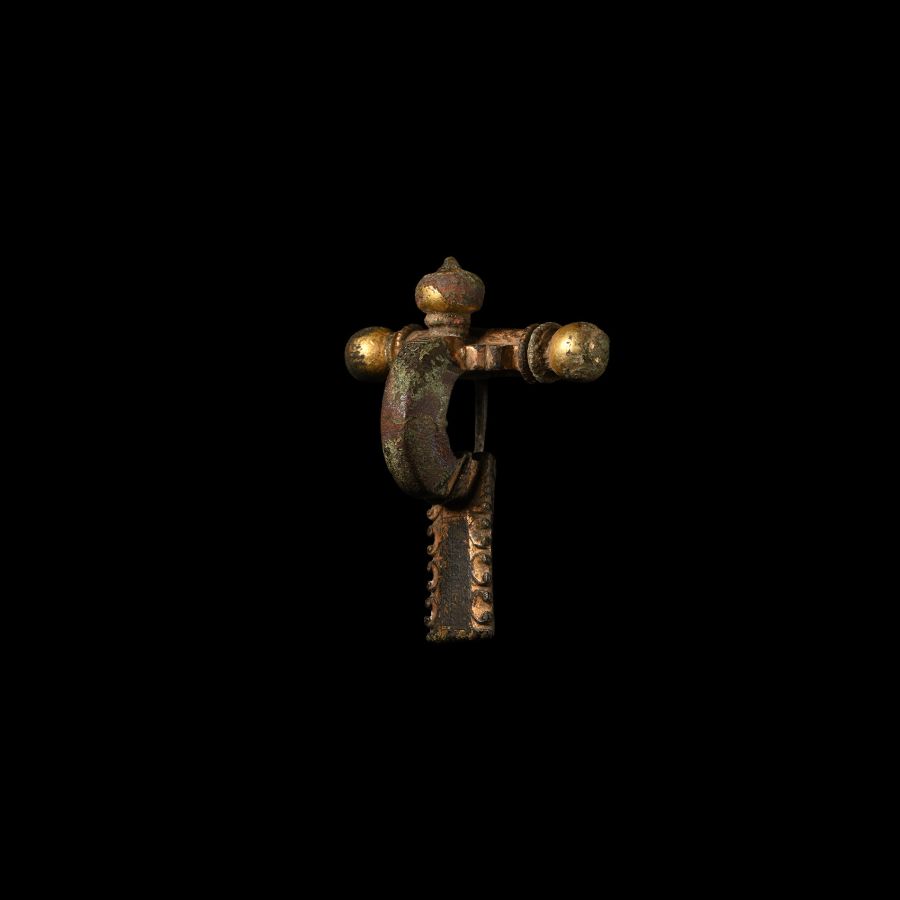
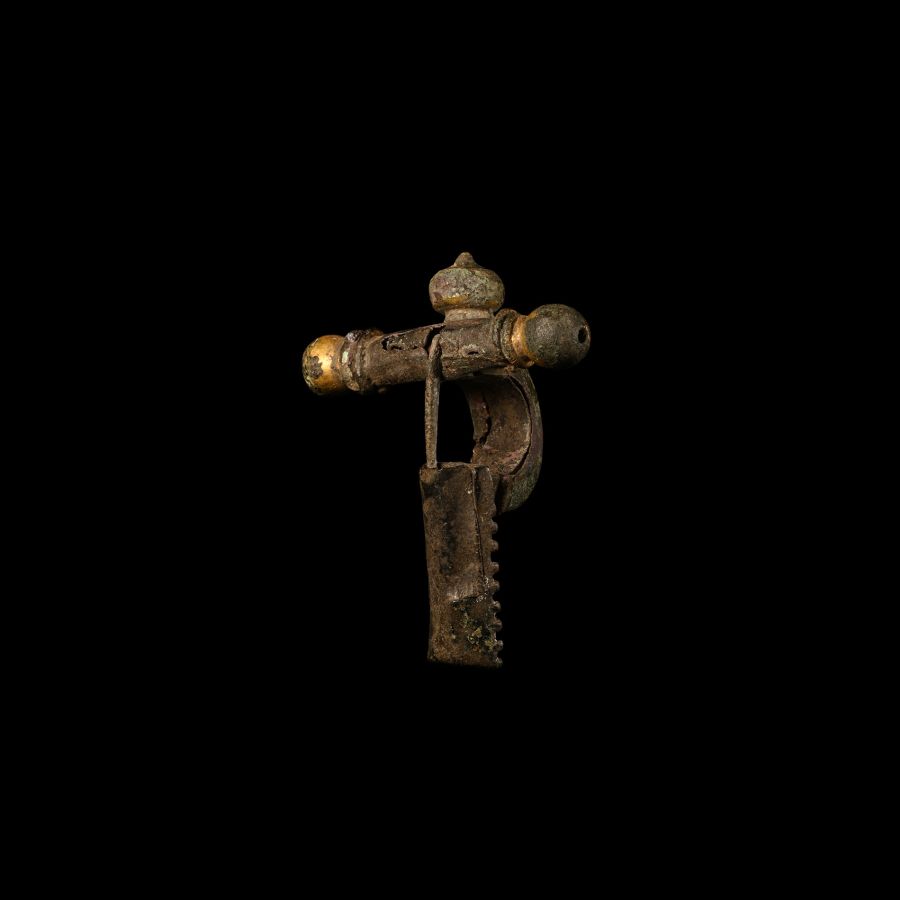
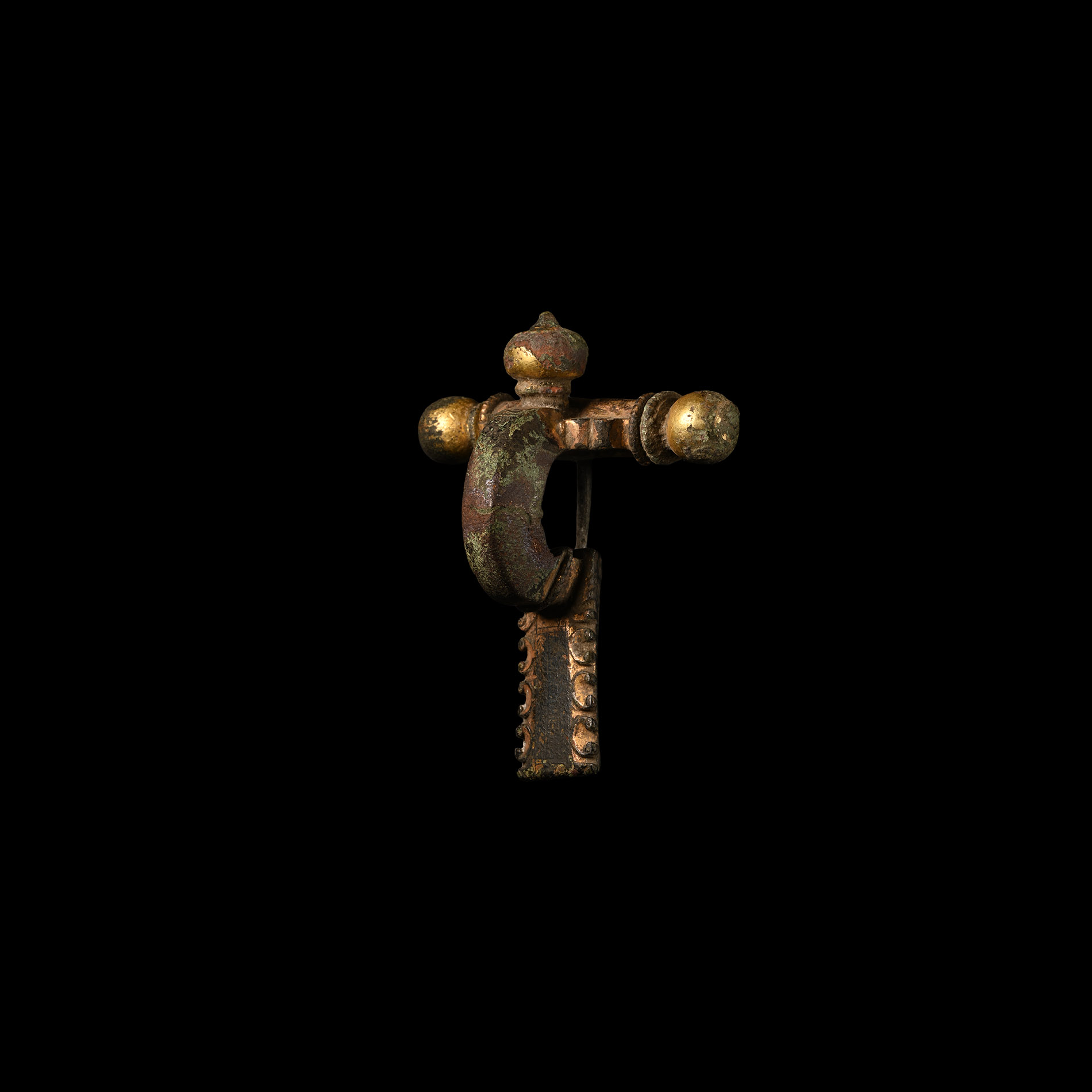
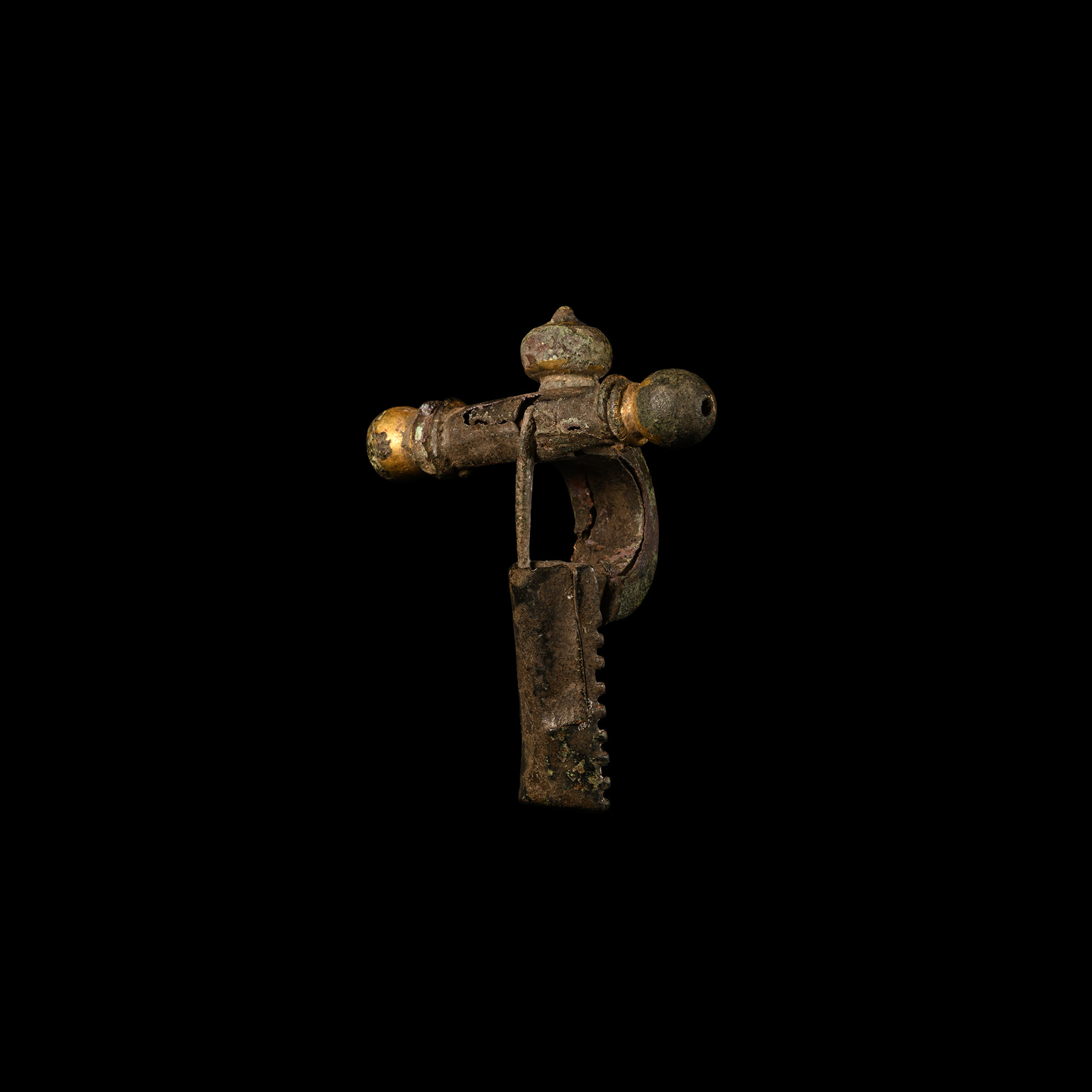
Roman Gilt Bronze Crossbow Brooch
CIRCA MID 4TH-EARLY 5TH CENTURY A.D.
2 7/8 in. (56 grams, 73 mm).
Three onion-knops and pierced decoration to the headplate, facetted bow and footplate with semi-circular cross-section, conjoined peltate border and geometric motifs to the centre, bow with geometric motifs and possibly facing human head; complete with pin and catchplate to reverse.
ProvenanceAcquired 1990s-early 2000s.
East Anglian private collection.
Cf. The Metropolitan Museum, New York, accession number 1999.42, for a similar example; PAS DUR-57B5D5, in Leahy, K. and Lewis, M., Finds Identified II, London, 2020, p.30.
FootnotesDuring the Late Roman period, these brooches were worn as marks of rank both by officers of militia armata and non armata, i.e. military and civilian officers.
CONDITIONTimeLine Auctions follows a vetting process to ensure the authenticity and legality of all items, reinforcing our commitment to integrity and responsible trading. Each antiquity, antique, and coin lot undergoes thorough examination by a vetting committee of at least ten external specialists, professional trade association members, scientists, and archaeologists: Our Vetting Process
AUCTIONS:
TimeLine is a leading auction house specialising in antiquities, ancient art, collectables, natural history, coins, medals, and books. Our auctions offer museums, collectors, historians, and enthusiasts the opportunity to acquire unique and historically significant pieces.
-
Roman Bronze Axe Brooch
3rd century A.D.Sold for (Inc. bp): £117
Plate brooch with raised vertical shaft and lateral crescent blades each with notched outer edge and incised ring-and-dot motif; catch and pin to the reverse. 9.2 grams, 37 mm
Ex Cambridgeshire, UK, collection, 1980s. -
Roman Bronze Horse Collection
1st-4th century A.D.Estimate: £600 - 800 (+bp*)
Opening Bid: £333
Four horse head mounts modelled with naturalistic and semi-naturalistic detailing; one standing figure wearing a saddle and head collar. 235 grams total, 24-51 mm
‘The Ancient Menagerie Collection’ formerly the property of a Cambridgeshire lady, collected since the 1990s and acquired from auctions and dealers throughout Europe and the USA, now ex London collection. -
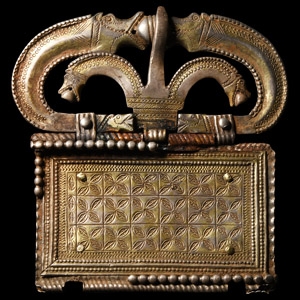
Roman Silver-Gilt Military Buckle for an Elite Imperial Officer
4th-5th century A.D.Sold for (Inc. bp): £7,800
Comprising a rectangular plate, richly decorated with embossed laurel leaves in a grid, framed with raised bosses, the buckle loop comprising opposing dragons with open mouths, holding a spherical tongue-rest, another pair of smaller dragon heads to base, the tongue with a smaller pair of punch-decorated dragon heads. 152 grams, 11.2 cm
Acquired before the 1970s. Ex J.L. collection, Surrey, U.K., thence by descent. This lot has been checked against the Interpol Database of stolen works of art and is accompanied by search certificate no.203881.
Most precious military buckles, like this one, were reserved for soldiers belonging to Legiones Palatinae, i.e. the legions forming part of the imperial Comitatus, accompanying the emperor in his military expeditions.
