
Loading, please wait...
LOT 0983
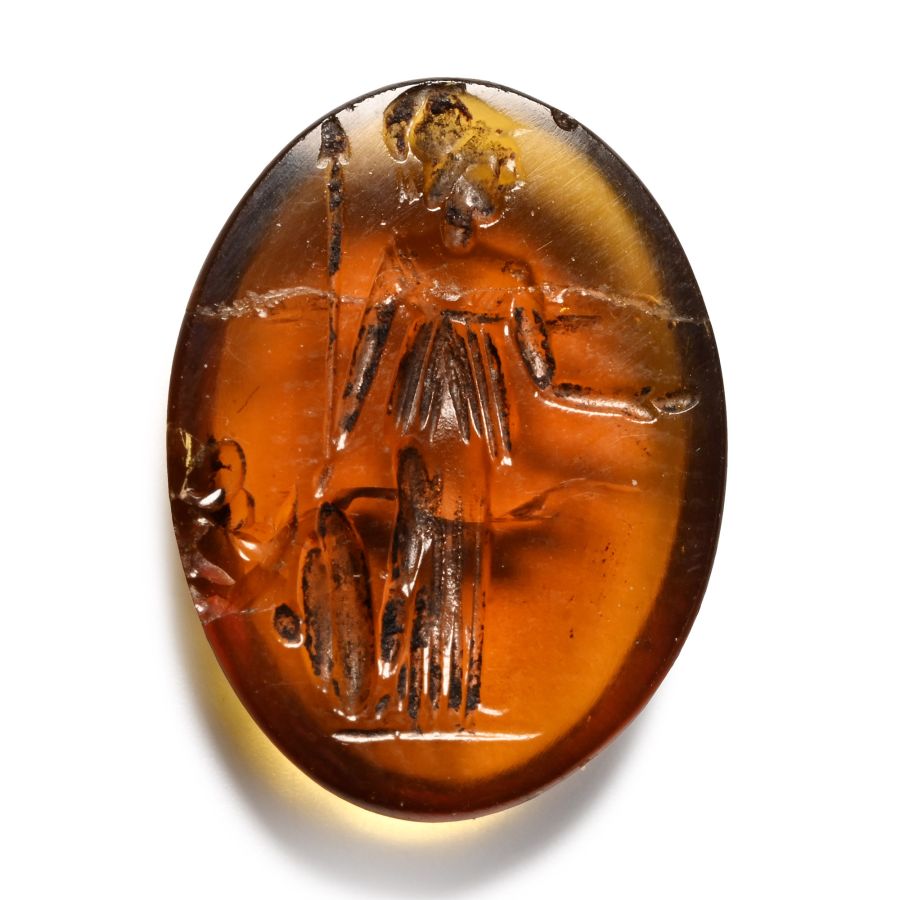
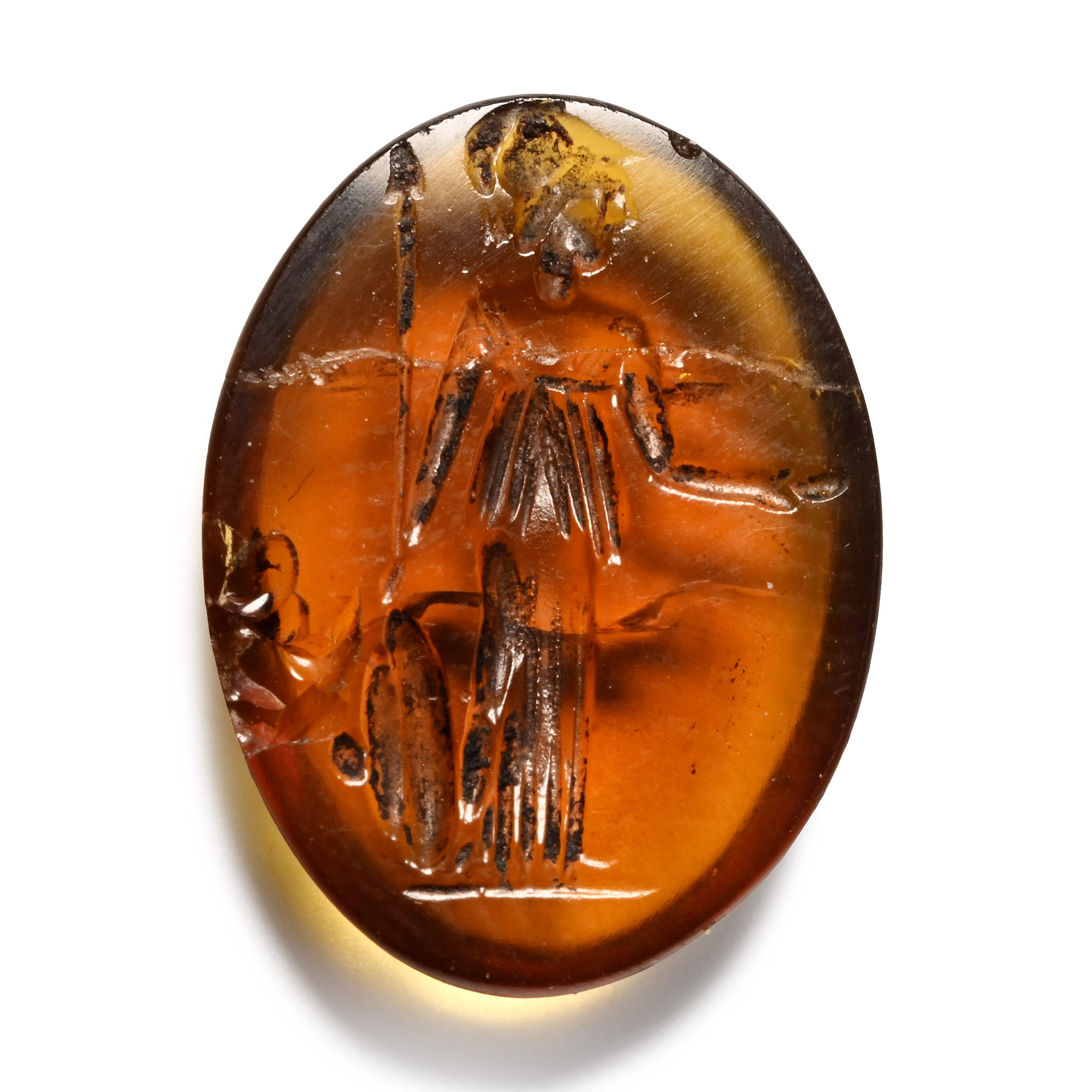
Roman Gemstone with Minerva
2ND CENTURY A.D.
5/8 in. (1.18 grams, 17 mm).
Plano-convex in section with incuse image of Minerva standing with one hand extended, holding her spear and shield.
ProvenanceAcquired 1970s-1996.
Property of a North American collector.
London collection, 2016.
TimeLine Auctions follows a vetting process to ensure the authenticity and legality of all items, reinforcing our commitment to integrity and responsible trading. Each antiquity, antique, and coin lot undergoes thorough examination by a vetting committee of at least ten external specialists, professional trade association members, scientists, and archaeologists: Our Vetting Process
AUCTIONS:
TimeLine is a leading auction house specialising in antiquities, ancient art, collectables, natural history, coins, medals, and books. Our auctions offer museums, collectors, historians, and enthusiasts the opportunity to acquire unique and historically significant pieces.
LOT 0983
Roman Gemstone with Minerva
Estimate £200 - 300€230 - 350 (for guidance only)$270 - 410 (for guidance only)
-
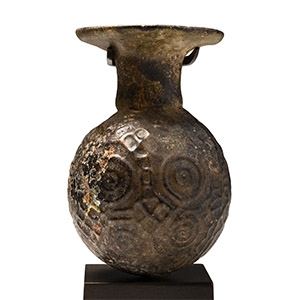
Roman Glass Mould Blown Jar
3rd-4th century A.D.Sold for (Inc. bp): £572
With bulbous body featuring a low-relief interlocking octagonal cells and trumpet-style neck and rim; iridescent surfaces; mounted on a custom-made stand. 87 grams total, 95 mm including stand
From an important collection of glass, London, UK, 1990s. -
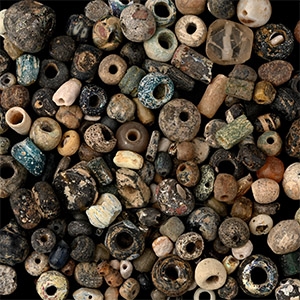
Ancient Glass and Other Bead Collection
Early 1st millennium A.D.Sold for (Inc. bp): £208
Including polyhedral, oblate, biconvex, melon and other types. 109 grams total, 3-18 mm
From an old deceased estate. Property of an East London lady collector, acquired at auction before 1995. -
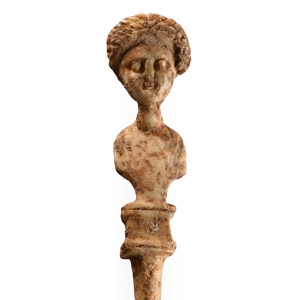
Roman Bone Pin with Bust
1st-4th century A.D.Sold for (Inc. bp): £234
With round-section tapering shank, rectangular baluster topped by a female bust wearing a diadem. 7.73 grams, 12.2 cm
From the collection of a gentleman, acquired on the London art market in the 1990s.
