
Loading, please wait...
LOT 0586
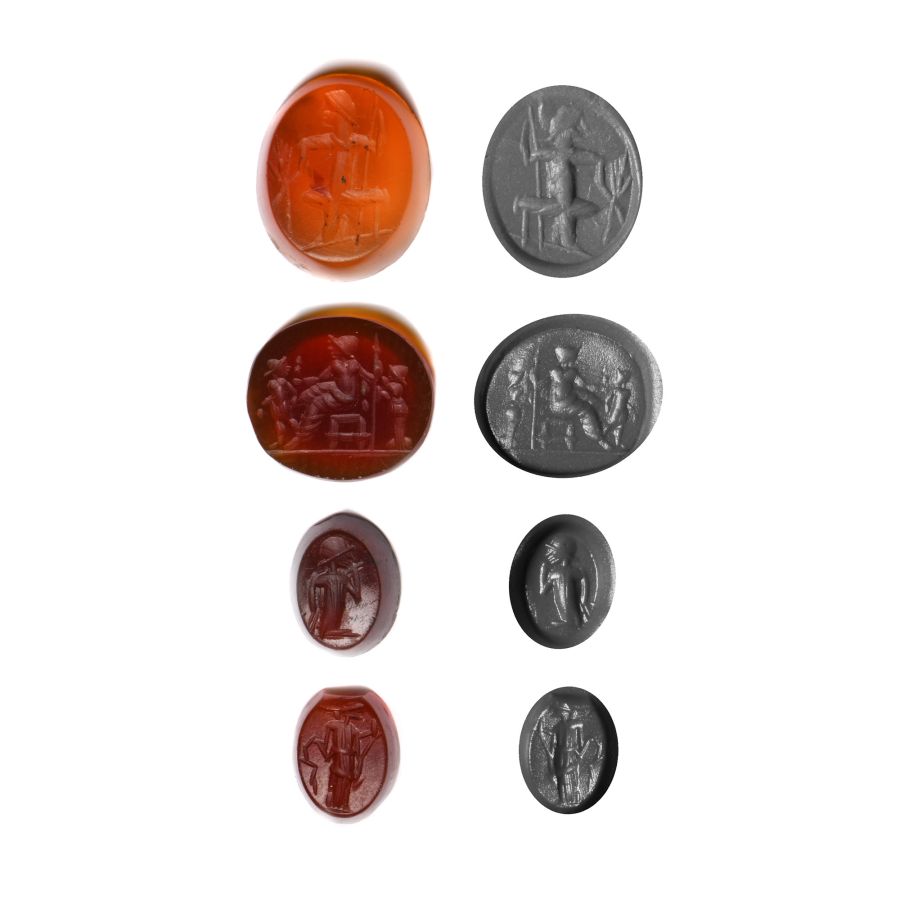
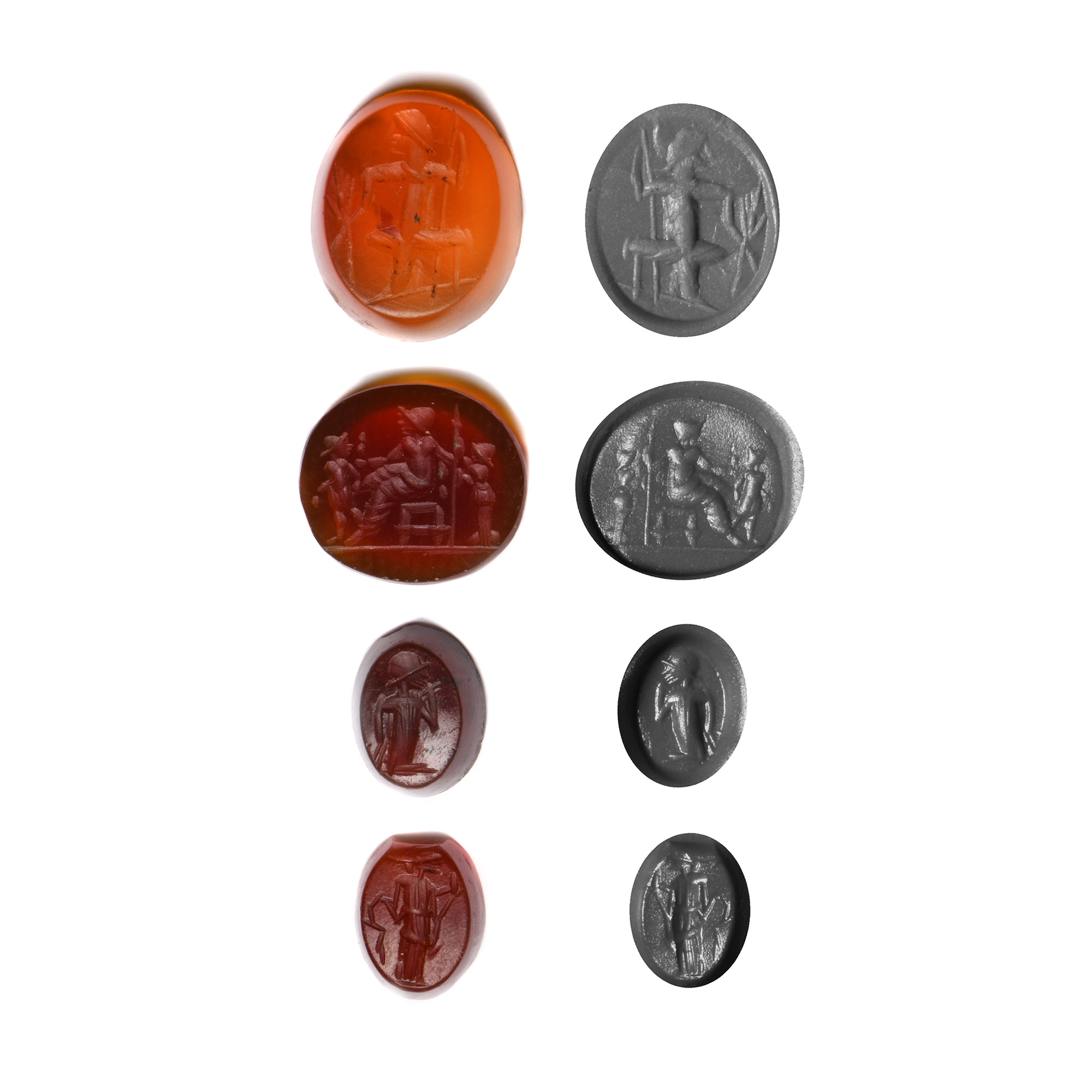
Roman Gemstone Group
CIRCA 1ST-2ND CENTURY A.D. AND LATER
3/8 - 5/8 in. (2.88 grams total, 9-14 mm).
Composed of carnelian and possibly garnet polished stones, each bearing a different intaglio design: a figure holding a staff; figure standing holding a cornucopia and wearing a floor-length robe, possibly Fortuna; short, helmetted figure, possibly Mars; figural scene composed of a central seated female wearing a helmet, possibly the goddess Minerva, two attendants to either side; each accompanied by a museum-quality impression. [4]
ProvenanceEx property of a European lady living in London; from her father's family collection formed before 1978.
CONDITIONTimeLine Auctions follows a vetting process to ensure the authenticity and legality of all items, reinforcing our commitment to integrity and responsible trading. Each antiquity, antique, and coin lot undergoes thorough examination by a vetting committee of at least ten external specialists, professional trade association members, scientists, and archaeologists: Our Vetting Process
AUCTIONS:
TimeLine is a leading auction house specialising in antiquities, ancient art, collectables, natural history, coins, medals, and books. Our auctions offer museums, collectors, historians, and enthusiasts the opportunity to acquire unique and historically significant pieces.
-
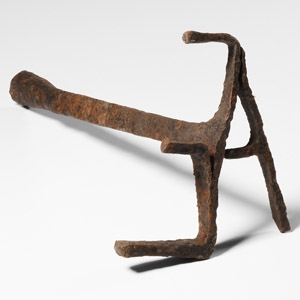
Late Roman Iron Branding Signaculum
5th-6th century A.D.Sold for (Inc. bp): £117
Featuring an elaborate monogram composed of Greek letters A and E, rectangular section bar and tapering cylindrical socket. 396 grams, 28.5 cm
Acquired 1990s-early 2000s. East Anglian private collection.
Branding stamps or signacula, in particular those with large single letters, were used for marking livestock to identify the ownership, the breed, the quality and other features of the animal. These signacula were usually made in bronze, but iron examples are also preserved. -
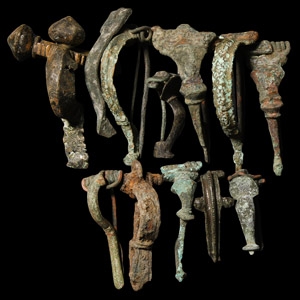
Roman Bronze Brooch Collection
1st-4th century A.D.Sold for (Inc. bp): £208
Including P-shaped, knee, trumpet-derivative, crossbow and other types, some with restored pins. 120 grams total, 33-57 mm
Acquired on the German art market around 2000. From the collection of a Surrey, UK, gentleman. -
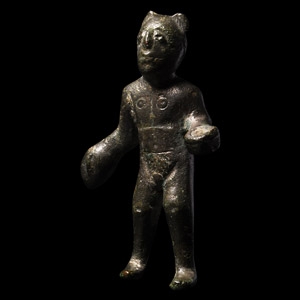
Gallo-Roman Bronze Mercury Statuette
1st-3rd century A.D.Estimate: £400 - 600 (+bp*)
Opening Bid: £222
Modelled standing nude with stylised anatomical detailing, stylised wings on the head, right hand shrouded beneath a flattened area with horizontal grooves holding the purse, the other clenched into a fist. 43 grams, 59 mm
Fine condition.
Acquired 1970s. Ex UK collection. Property of a Portsmouth, UK gentleman.
Likely an ex-voto figure representing Mercury (Greek Hermes) holding a purse, clearly offered by someone to ask or give thanks for successful vows.
