
Loading, please wait...
_900x900.jpg "Roman Gemstone Collection")
_200x200.jpg "Roman Gemstone Collection")
.jpg "Roman Gemstone Collection")
LOT 0682
Roman Gemstone Collection
2ND-3RD CENTURY A.D. AND LATER
3/8 - 5/8 in. (2.16 grams total, 11-15 mm).
Including a rock crystal insert with intaglio hoplite and two other intaglio warriors, a later cameo with female bust. [4, No Reserve]
ProvenanceNorfolk family collection, 1940s-1960s; thence by descent.
CONDITIONTimeLine Auctions follows a vetting process to ensure the authenticity and legality of all items, reinforcing our commitment to integrity and responsible trading. Each antiquity, antique, and coin lot undergoes thorough examination by a vetting committee of at least ten external specialists, professional trade association members, scientists, and archaeologists: Our Vetting Process
AUCTIONS:
TimeLine is a leading auction house specialising in antiquities, ancient art, collectables, natural history, coins, medals, and books. Our auctions offer museums, collectors, historians, and enthusiasts the opportunity to acquire unique and historically significant pieces.
-
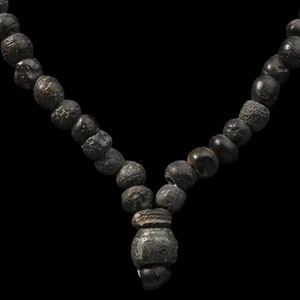
Roman Black Glass Bead Necklace String
1st-4th century A.D. and laterSold for (Inc. bp): £85
Restrung designer necklace string of annular, oblate and other types with pendant centrepiece. 24.3 grams, 44.5 cm
London, UK, collection, 2000s. -
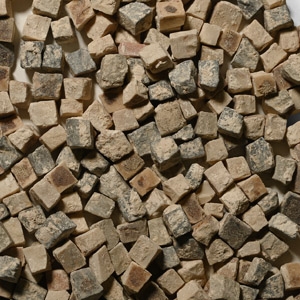
Roman Mosaic Stone Tesserae Group
1st-4th century A.D.Sold for (Inc. bp): £195
A mixed group of two hundred and fifty single tesserae of various colours and sizes, mostly cuboid. 350 grams total, 7-14 mm
From a collection acquired on the UK art market from various auction houses and collections mostly before 2000. From an important Cambridgeshire estate; thence by descent.
Roman mosaics were made from small cubes of natural stone and terracotta possibly cut from tile or brick. Each of these small cubes was called a tessera (plural tesserae) from the Latin word for dice. -
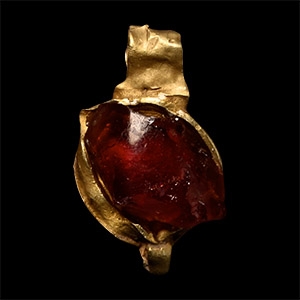
Roman Gold and Garnet Pendant
1st-4th century A.D.Sold for (Inc. bp): £286
Discoid in plan with integral loop, inset irregular garnet. 0.19 grams, 8 mm
From the collection of a late Japanese gentleman, 1970s onwards.
