
Loading, please wait...
LOT 0655
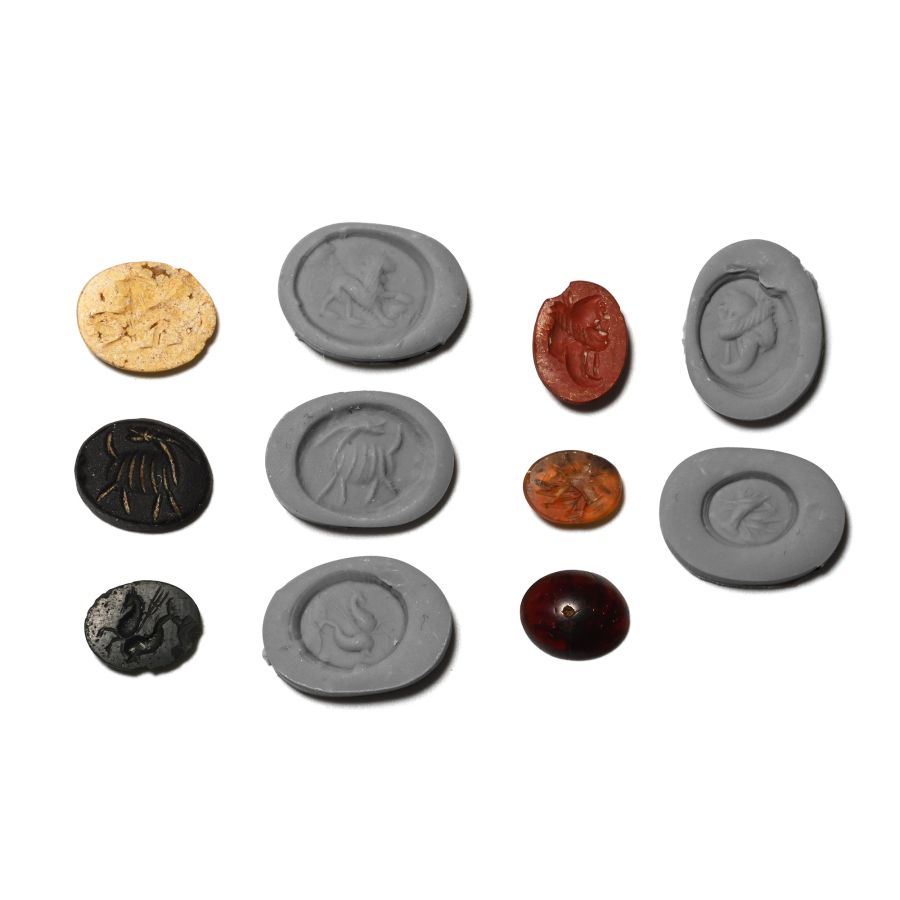
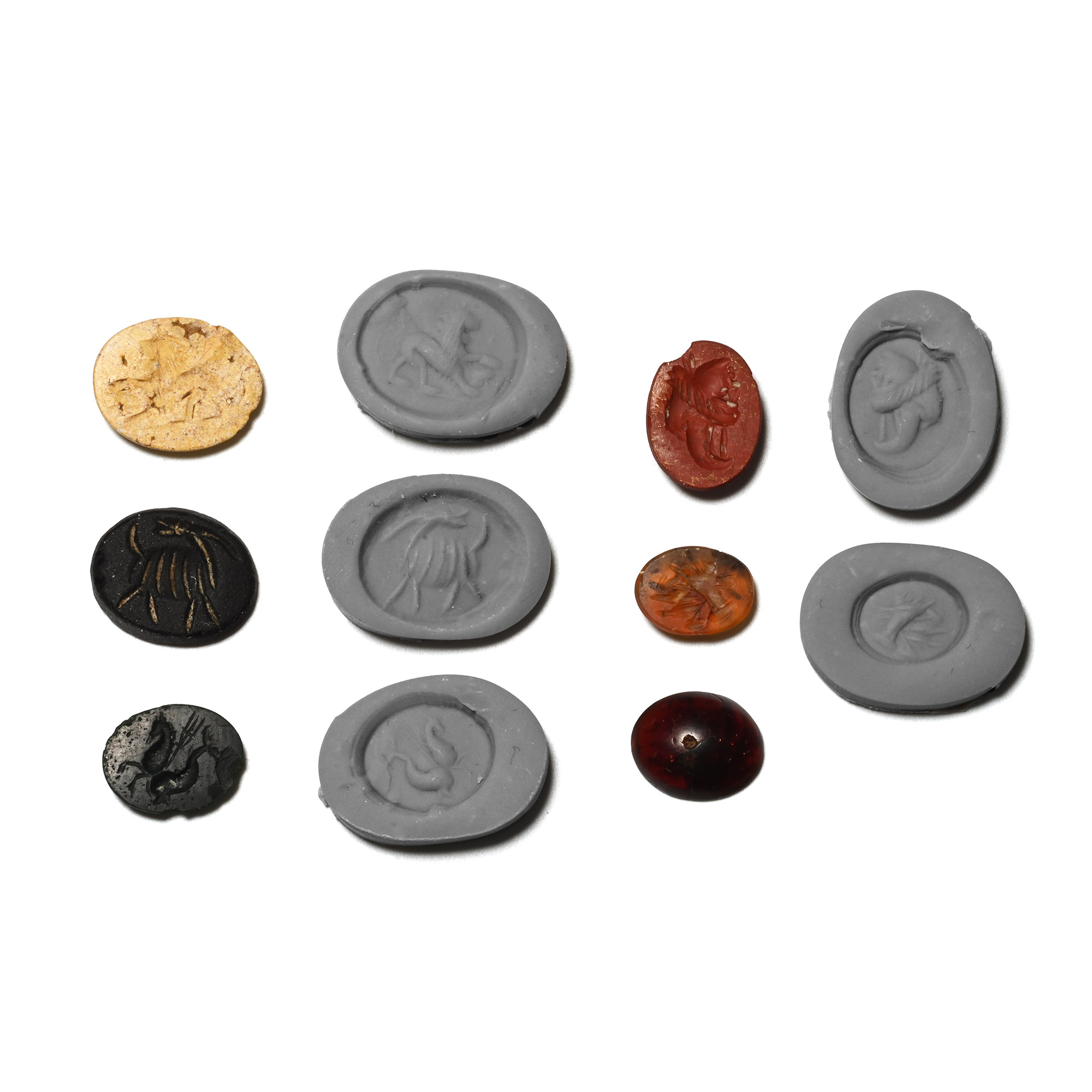
Roman Gemstone Collection
2ND-3RD CENTURY A.D.
1/4 - 1/2 in. (2.9 grams total, 9-13 mm).
Including profile bust, advancing lion, two fish and other types; each supplied with a museum-quality impression. [6]
ProvenanceFrom the collection of a gentleman, acquired on the London art market in the 1990s.
This lot is accompanied by an illustrated lot declaration signed by the Head of the Antiquities Department, Dr Raffaele D'Amato.
TimeLine Auctions follows a vetting process to ensure the authenticity and legality of all items, reinforcing our commitment to integrity and responsible trading. Each antiquity, antique, and coin lot undergoes thorough examination by a vetting committee of at least ten external specialists, professional trade association members, scientists, and archaeologists: Our Vetting Process
AUCTIONS:
TimeLine is a leading auction house specialising in antiquities, ancient art, collectables, natural history, coins, medals, and books. Our auctions offer museums, collectors, historians, and enthusiasts the opportunity to acquire unique and historically significant pieces.
LOT 0655
Roman Gemstone Collection
Estimate £500 - 700€580 - 810 (for guidance only)$680 - 950 (for guidance only)
-
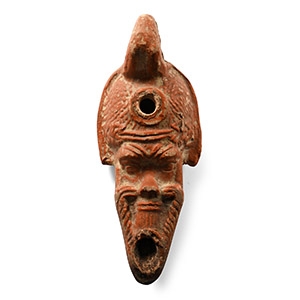
Roman Terracotta Oil Lamp of Head of Silenus
Late 1st century B.C.-early 1st century A.D.Sold for (Inc. bp): £312
Mould-made with the upper half of the body in the form of a male head with well-defined features, long moustache and beard, possibly a representation of the god Silenus; ring handle at the rear. 82 grams, 12.1 cm
Previously Cambridge, UK, private collection, circa 2010. Ex London, UK, gallery. This lot is accompanied by an illustrated lot declaration signed by the Head of the Antiquities Department, Dr Raffaele D'Amato.
Plastic lamps with figurines first appear in the Hellenistic period, possibly originating in Athens. Found in all parts of the Mediterranean basin, they were particularly popular during the first and second centuries AD. -
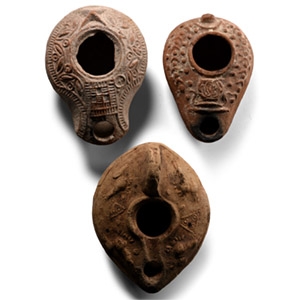
Roman and Byzantine Ceramic Oil Lamp Collection
4th-8th century A.D.Estimate: £300 - 400 (‡+bp*)
Opening Bid: £150
Comprising: a piriform lamp with birds and geometric motifs, low basal ring; a piriform lamp with raised pellets and other motifs; a rounded lamp with short nozzle, low-relief leaves and ring-and-dot motifs within geometric border, a hatched rectangle behind the nozzle, a palm branch underneath the nozzle flanked by crescentic lines and ring-and-dot motifs, raised nipple to base. 190 grams total, 78-90 mm
with Galerie Rhéa, Zurich, Switzerland. This lot is accompanied by an illustrated lot declaration signed by the Head of the Antiquities Department, Dr Raffaele D'Amato. -
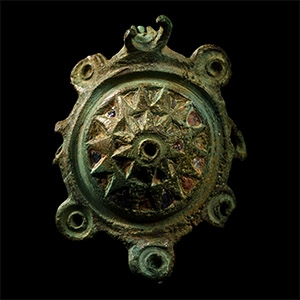
Roman Enamelled Bronze Umbonate Brooch
Circa 100-250 A.D.Sold for (Inc. bp): £65
Domed body decorated with two concentric circles of narrow, inward pointing triangles with traces of blue enamel, small bosses to the outer rim; pin-lugs and remains of pin to the reverse. 10.37 grams, 38 mm
Found Braintree, Essex, UK. Accompanied by a copy of the British Museum's Portable Antiquities Scheme (PAS) report no.ESS-CB128D. This lot is accompanied by an illustrated lot declaration signed by the Head of the Antiquities Department, Dr Raffaele D'Amato.
