
Loading, please wait...
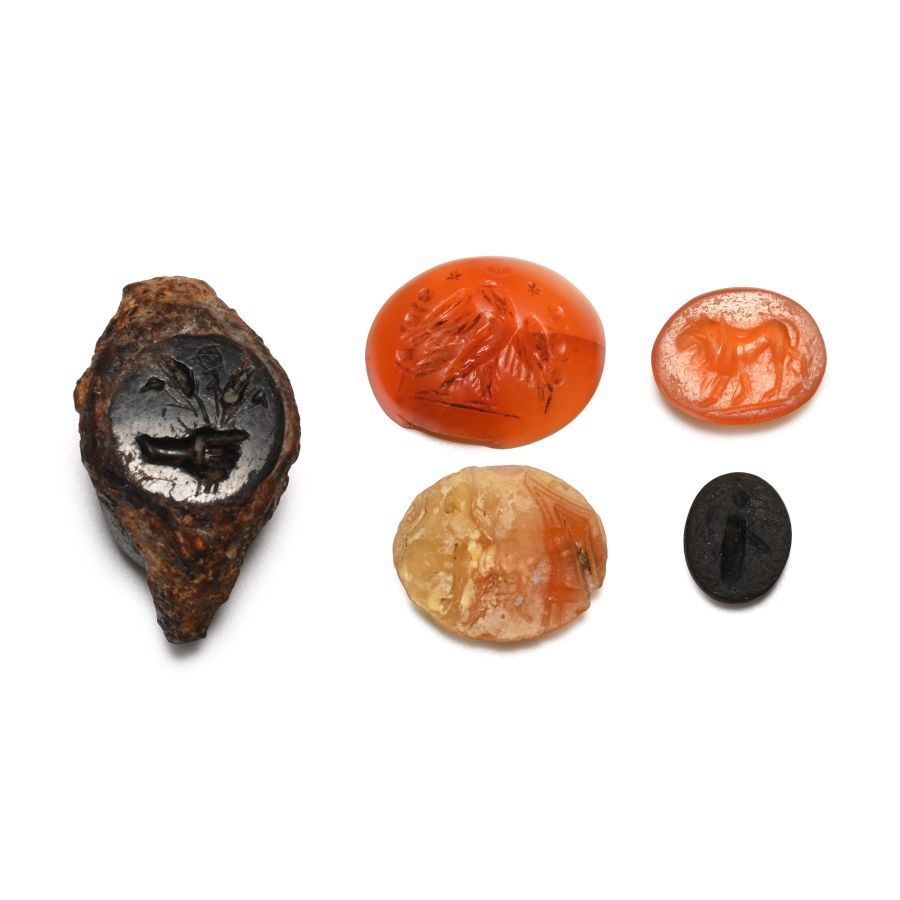
LOT 0820
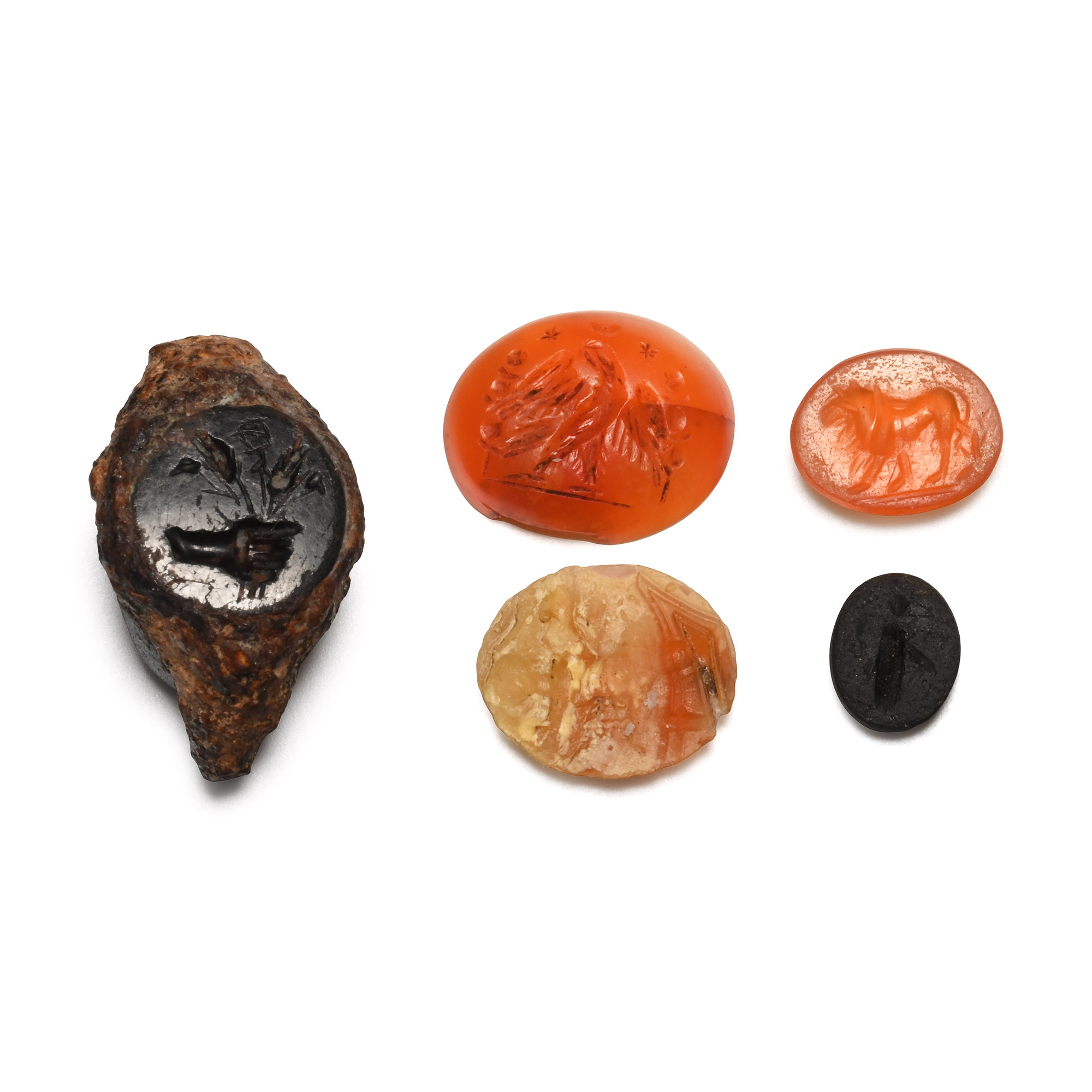
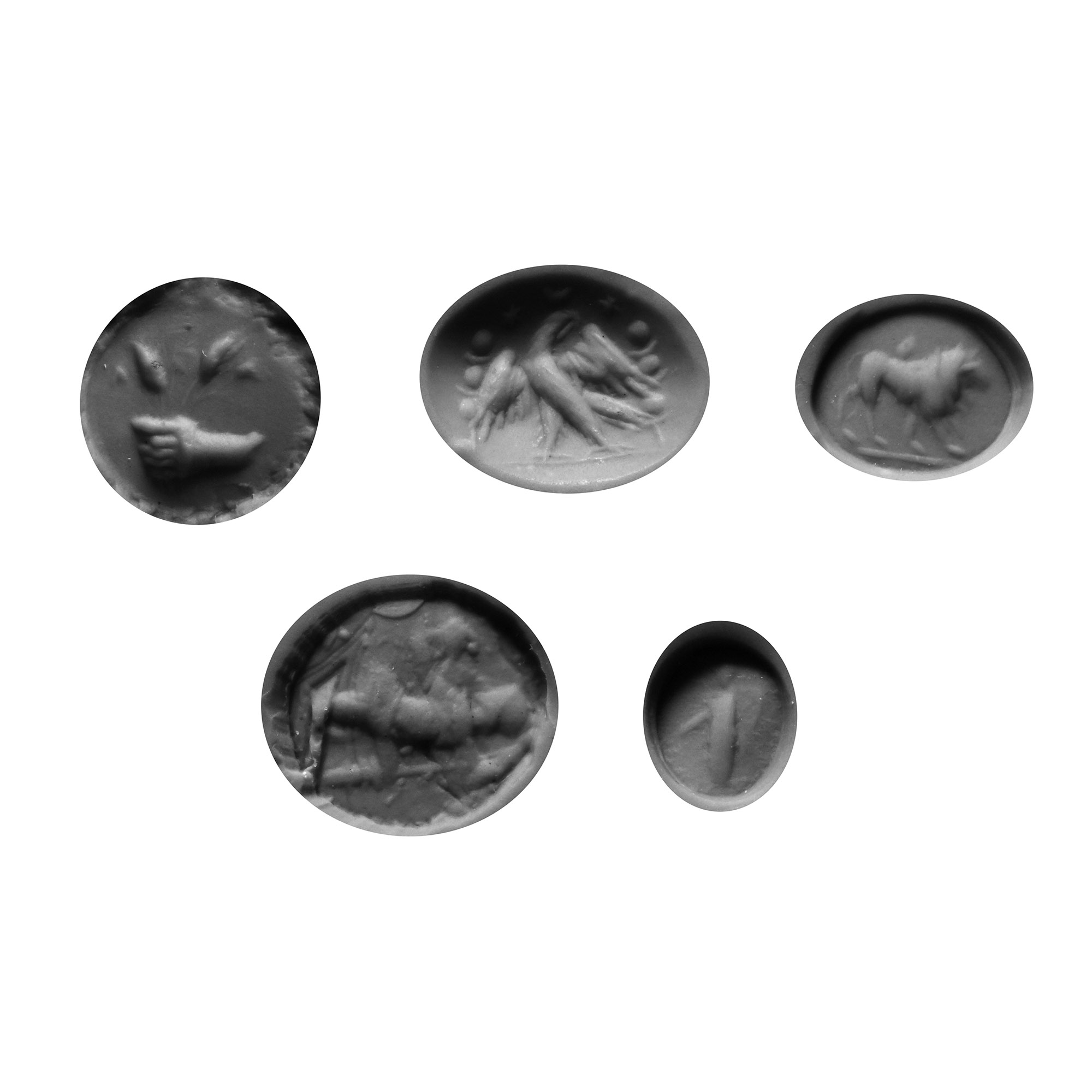
Roman Gemstone Collection
2ND-3RD CENTURY A.D.
1/4 - 3/4 in. (3.82 grams total, 7-19 mm).
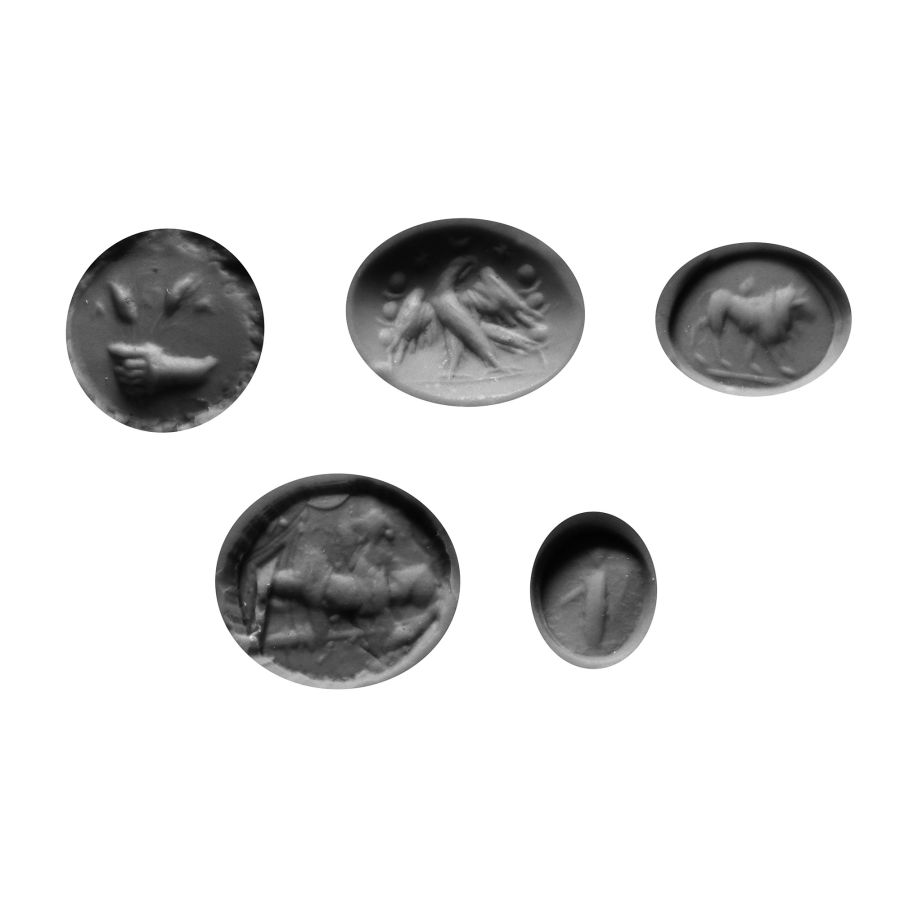
Including advancing lion, perching bird and other types; each supplied with a museum-quality impression. [5]
ProvenanceFrom the collection of a gentleman, acquired on the London art market in the 1990s.
This lot is accompanied by an illustrated lot declaration signed by the Head of the Antiquities Department, Dr Raffaele D'Amato.
TimeLine Auctions follows a vetting process to ensure the authenticity and legality of all items, reinforcing our commitment to integrity and responsible trading. Each antiquity, antique, and coin lot undergoes thorough examination by a vetting committee of at least ten external specialists, professional trade association members, scientists, and archaeologists: Our Vetting Process
AUCTIONS:
TimeLine is a leading auction house specialising in antiquities, ancient art, collectables, natural history, coins, medals, and books. Our auctions offer museums, collectors, historians, and enthusiasts the opportunity to acquire unique and historically significant pieces.
LOT 0820
Roman Gemstone Collection
Estimate £500 - 700€580 - 810 (for guidance only)$680 - 950 (for guidance only)
-
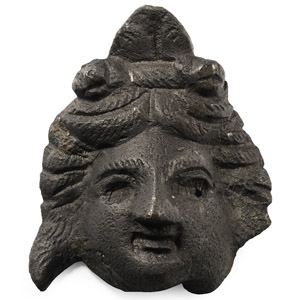
Roman Bronze Theatrical Mask of Dionysus
Circa 2nd century A.D.Sold for (Inc. bp): £98
Modelled in the half-round with large eyes and hair arranged in orderly curls, vine leaf and rosettes on the top of the head. 45.4 grams, 54 mm
Ex German art market, 2000s. Acquired from an EU collector living in London. From the collection of a Surrey, UK, gentleman. This lot is accompanied by an illustrated lot declaration signed by the Head of the Antiquities Department, Dr Raffaele D'Amato. -
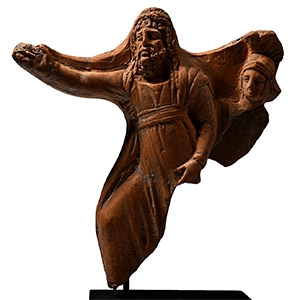
Roman Terracotta Figure of King Priam
1st century B.C.-1st century A.D.Sold for (Inc. bp): £936
A hollow-form figural group comprising an advancing old King Priam with his right arm raised, wearing a belted tunic and a diadem, hair arranged in orderly locks; behind him a smaller figure of a soldier wearing a plumed Pseudo-Attic helmet; the hand of the warrior is holding the old king; mounted on a custom-made display stand. 291 grams total, 18.5 cm high including stand
Private Swiss collection, 1971. with Galerie Rhéa, Zurich, Switzerland. This lot is accompanied by an illustrated lot declaration signed by the Head of the Antiquities Department, Dr Raffaele D'Amato.
The scene probably represents the old King Priam's plea to Achilles' son, Neoptolemus, to spare his son Polites, whom the Greek warrior is about to kill. It is made in a strong classical style with precise costume details, such as the royal diadem, the long sleeved Phrygian-type tunic and the king's belt. -

Two Roman Sandstone Architectural Frieze Sections
Circa 1st century B.C.-1st century A.D.Sold for (Inc. bp): £6,435
Each rectangular with raised upper lip and a raised decorative frieze with rosettes and a bull's head (bucranium) separated by triple pilasters. 76.2 kg total, 76.5 cm each
with Georges Joseph Demotte (1877-1923) and Andrée Macé (1918-2000), Belgium and New York. Collection Demotte/Andrée Macé; Jean-Claude Renard Auction, Suresnes, 3 September 2013, no.87. with Galerie Chenel, Paris, 2021. This lot has been checked against the Interpol Database of stolen works of art and is accompanied by a search certificate number no.12624-236336. This lot has been cleared against the Art Loss Register database, and is accompanied by an illustrated lot declaration signed by the Head of the Antiquities Department, Dr Raffaele D'Amato.
In classical Rome bovine skulls decorated the friezes of entablatures. Often, they were positioned in the metopes of Doric entablatures, but also in Ionic and Corinthian friezes, sometimes connected by floral or drapery swags. The architectural term for these skulls is bucranium (pl. bucrania or bucranes), a word derived from the Latin bos, meaning ox or cow, and cranium, the Medieval Latin term for a skull. The skulls allude to the ancient Greek and Roman ceremonies of sacrifice.
