
Loading, please wait...
LOT 0816
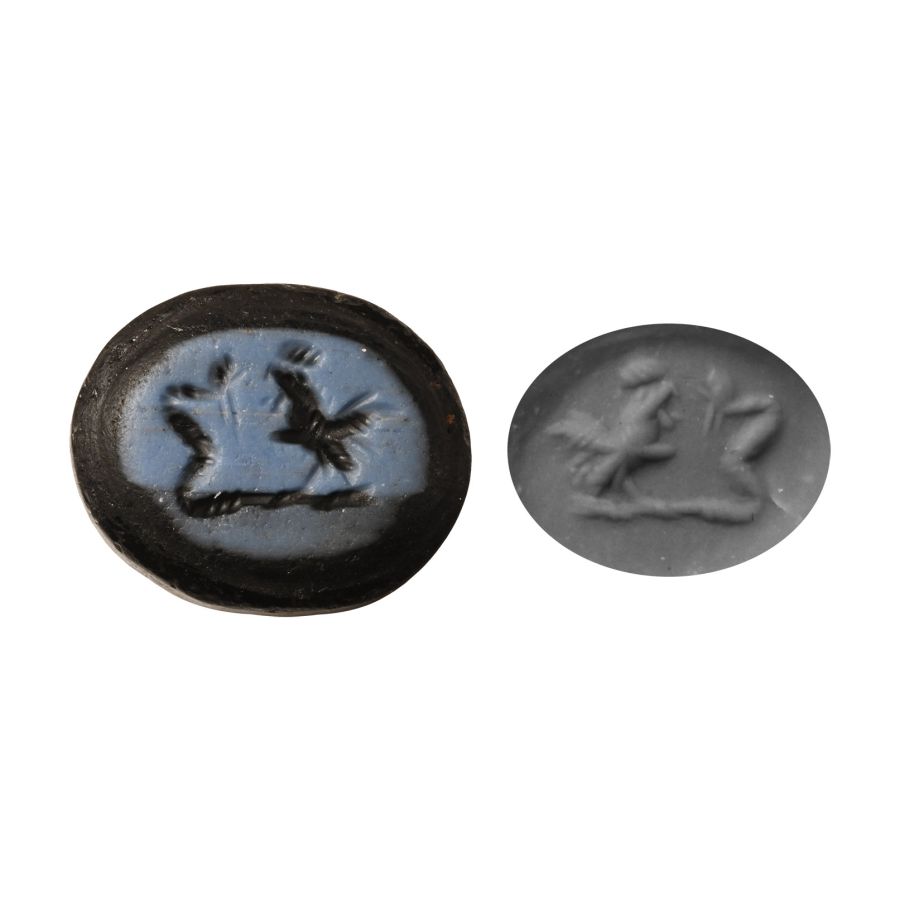
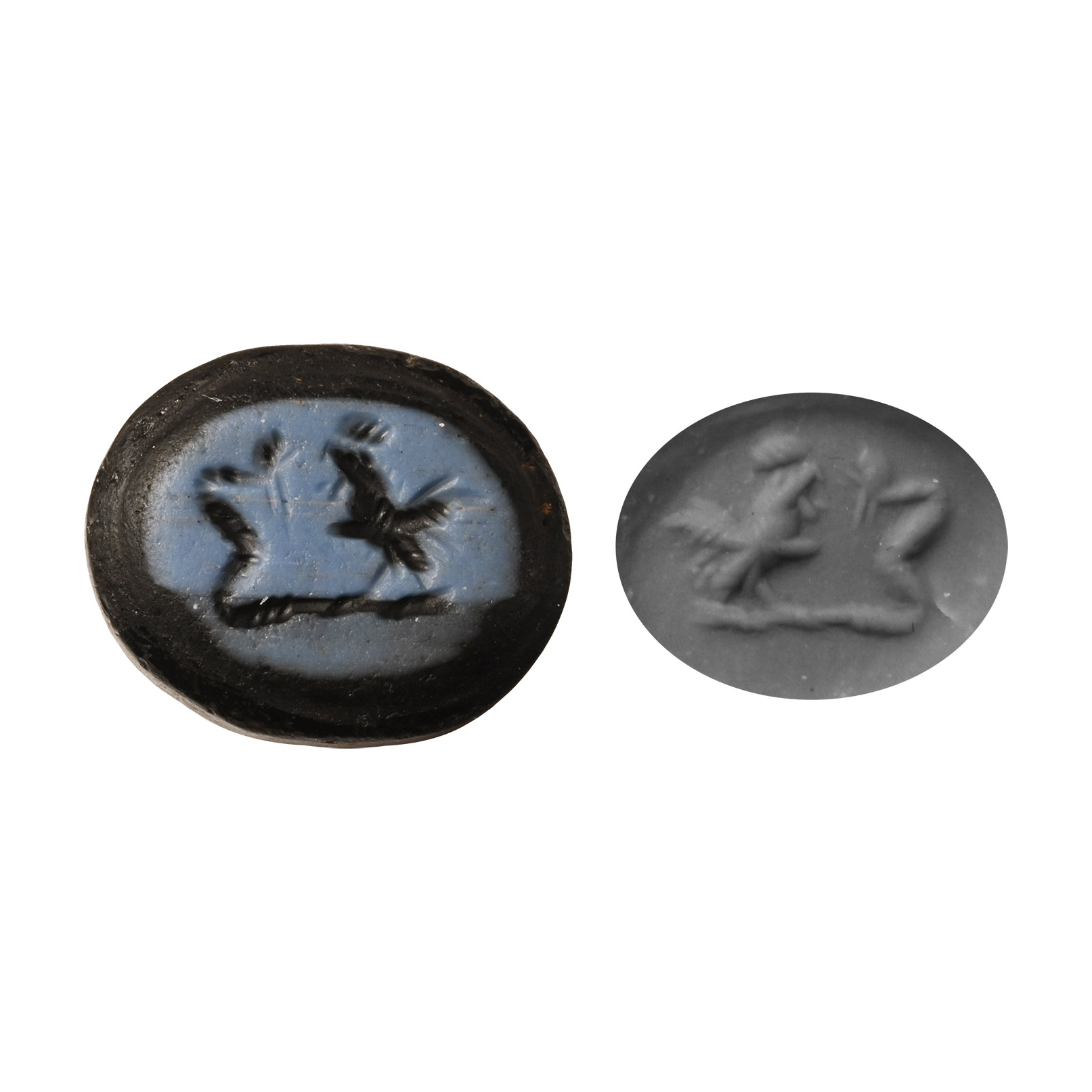
Roman Gem with Cockerel Fighting a Snake
2ND CENTURY A.D.
1/2 in. (0.85 grams, 14 mm).
Glass imitating nicolo with incuse image of a cockerel and a rearing snake on a baseline; supplied with a museum-quality impression. [No Reserve]
ProvenanceFrom the Fadel family collection, London, UK, 1970s.
CONDITIONTimeLine Auctions follows a vetting process to ensure the authenticity and legality of all items, reinforcing our commitment to integrity and responsible trading. Each antiquity, antique, and coin lot undergoes thorough examination by a vetting committee of at least ten external specialists, professional trade association members, scientists, and archaeologists: Our Vetting Process
AUCTIONS:
TimeLine is a leading auction house specialising in antiquities, ancient art, collectables, natural history, coins, medals, and books. Our auctions offer museums, collectors, historians, and enthusiasts the opportunity to acquire unique and historically significant pieces.
-
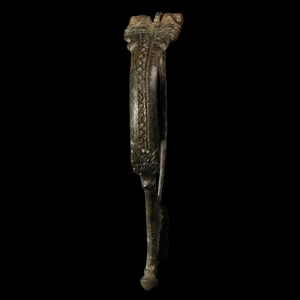
Large Roman Bronze Bow Brooch
1st-2nd century A.D.Sold for (Inc. bp): £59
With wide bow decorated with annular motifs ending to a stylised animal head from which the triangular catch-plate emerges. 36 grams, 10.5 cm
Ex German art market, 2000s. Acquired from an EU collector living in London. From the collection of Surrey, UK, gentleman. -
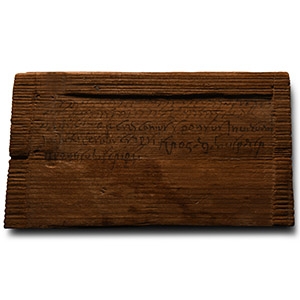
Roman Inked Wooden Legal Document Signed by Felicianus in Actum
Late 4th century A.D.Sold for (Inc. bp): £7,800
A reused tablet with a recessed panel on one side, the lower part absent, on the upper rim one of originally 3 holes necessary for binding together of the tablets of the document, 5 lines in Roman cursive on the recessed panel containing the end of a the record of a legal document in a formulaic legal language; part of a legal document which consisted of two (diptychon) or three tablets (triptychon), with the indication where it was done (actum in …) followed by the so-called chirographum (signature line) of a person called Felicianus, letter forms point to a date in the second half of the 4th century AD; with a recessed slot to verso. 12.4 grams, 14.7 cm
From an important London collection since 1975. Accompanied by a collection of six 1970s photographs of the the tablet.
The contract follows standard Roman legal formulae. -
.jpg)
Roman Bronze Harpocrates Statuette
3rd century A.D.Sold for (Inc. bp): £247
Modelled nude in advancing pose with right arm bent across the body and fist clenched to support an attribute (absent); the facial details in light relief and small forelock to the brow; mounted on a custom-made display stand. 231 grams total, 12 cm high including stand
From a collection acquired on the UK art market from various auction houses and collections mostly before 2000. From an important Cambridgeshire estate; thence by descent.
The cult of Harpocrates, began in Ptolemaic times, expanding considerably in the Imperial Roman period, and absorbing influences from the cult of ram of Mendes, the ithyphallic Min, the crocodile god Sobek, and Hercules. The missing left hand probably held a small cornucopia.
