
Loading, please wait...
LOT 0083
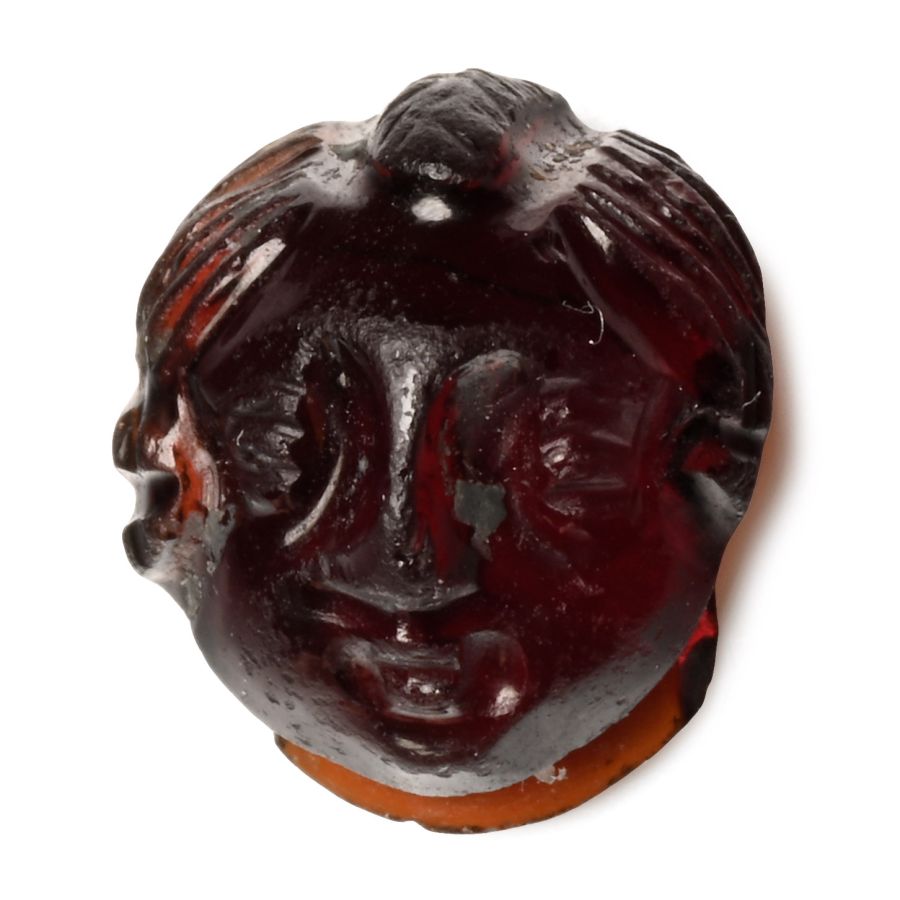
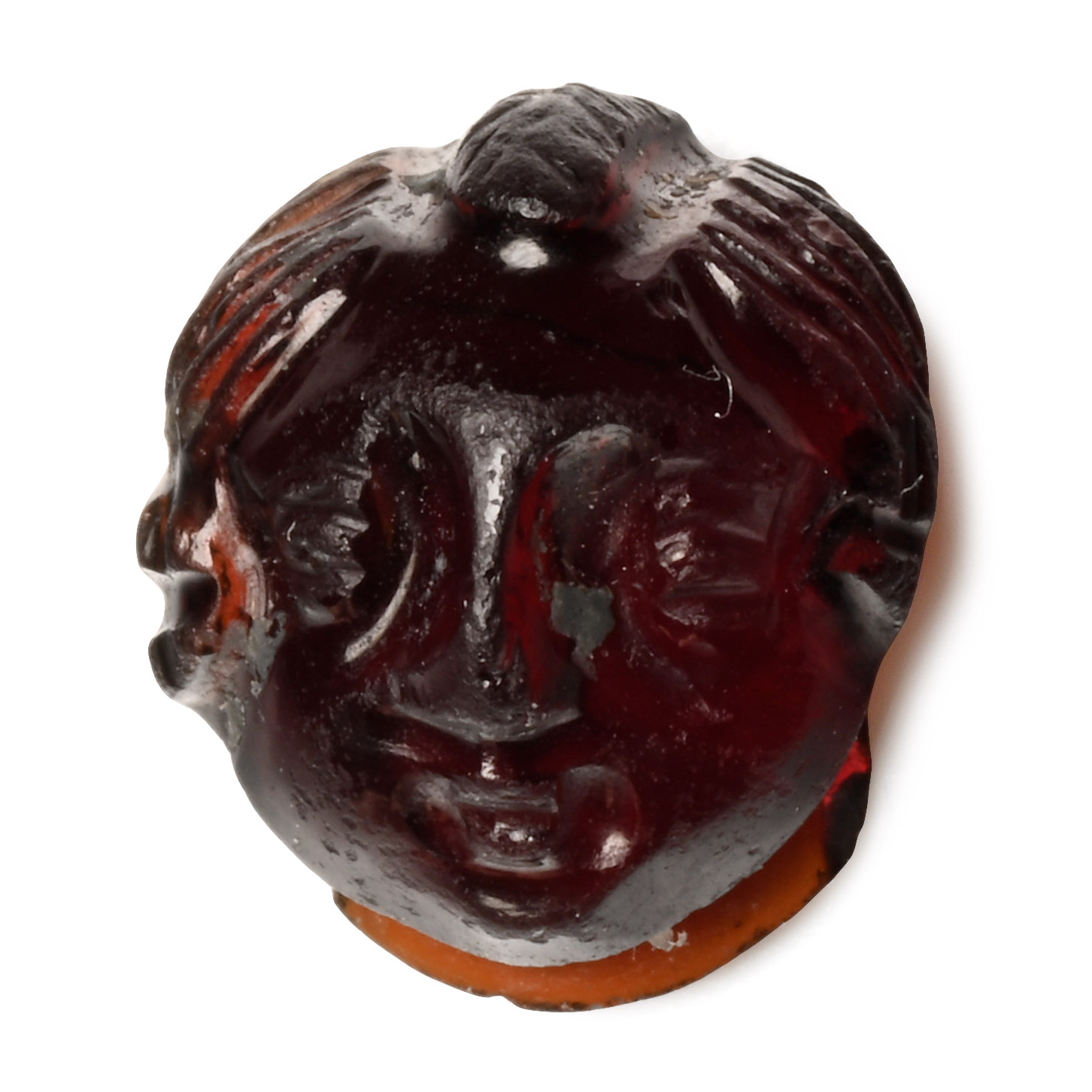
Roman Garnet Cameo of Eros
1ST CENTURY B.C.-1ST CENTURY A.D.
3/8 in. (0.76 grams, 9 mm).
With the head of Eros, the god of love, facing; supplied with a museum-quality impression.
ProvenancePrivate English collection, formed between the late 1970s and early 1990s.
Private collection, London, UK.
TimeLine Auctions follows a vetting process to ensure the authenticity and legality of all items, reinforcing our commitment to integrity and responsible trading. Each antiquity, antique, and coin lot undergoes thorough examination by a vetting committee of at least ten external specialists, professional trade association members, scientists, and archaeologists: Our Vetting Process
AUCTIONS:
TimeLine is a leading auction house specialising in antiquities, ancient art, collectables, natural history, coins, medals, and books. Our auctions offer museums, collectors, historians, and enthusiasts the opportunity to acquire unique and historically significant pieces.
LOT 0083
Roman Garnet Cameo of Eros
Estimate £800 - 1,000€930 - 1,160 (for guidance only)$1,080 - 1,350 (for guidance only)
-
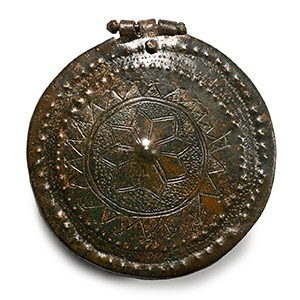
Late Roman Hinged Lidded Pyxis
4th-5th century A.D.Sold for (Inc. bp): £468
Sheet-bronze two-part pyxis with carinated sidewall to the base, lid with reserved octofoil on a pounced field, concentric pointillé rings; working hinge mechanism. 64 grams, 86 mm
Acquired in the 1990s. Ex Abelita family collection. This lot is accompanied by an illustrated lot declaration signed by the Head of the Antiquities Department, Dr Raffaele D'Amato.
Although pyxides were originally made of wood, as their name suggests, the term soon came to refer, in the Graeco-Roman world, to round containers used for both medicinal and domestic purposes. From the time of the Achaeans to the end of the Roman Empire, we find pyxides made of horn, ivory, bronze, silver, and gold. Women used them to store their ointments, makeup, and toiletries. A pyxis used for medical purposes was called a loculus, while the name pyxidicula designated a container for eye drops, and a tripuxium was a pyxis containing extracts from three different containers. -
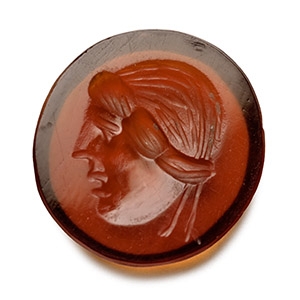
Roman Sard Gemstone with a Maenad Mask
1st century B.C.-1st century A.D.Estimate: £400 - 600 (+bp*)
Opening Bid: £200
With intaglio profile bust of a woman facing left; supplied with a museum-quality impression. 0.49 grams, 11 mm
Private English collection, formed between the late 1970s and early 1990s. Private collection, London, UK. -
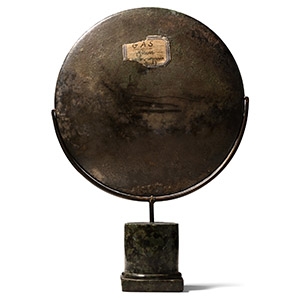
Roman Silver Mirror
1st-3rd century A.D.Sold for (Inc. bp): £1,755
Discoid with raised, rounded rim; a 19th-century collection label bearing a handwritten inscription: ‘GAS, Miroir, Gallo Romain’ indicating the findspot; mounted on a custom-made display stand with serpentine column base. 239 grams, 13.8 cm (426 grams total, 20.1 cm including stand)
19th century collection label inscribed in ink ‘GAS, Miroir, Gallo-Romain’, indicating that the mirror was discovered at Gas, Eure-et-Loir, northern France. Private collection, UK.
The British Museum houses several notable ancient Roman silver hand mirrors, including: 1. Bursa Treasure Mirror – Part of the Bursa Treasure, a 1st-century AD Roman silver hoard discovered near Bursa, Turkey. This collection includes a large silver mirror, reflecting the luxurious personal items used by elite Roman women. 2. Chaourse Treasure Mirror – found in 1883 near Chaourse, France, this 2nd–3rd century AD hoard contains various silver objects, including a silvered bronze mirror, offering insights into the affluent lifestyles of Roman society. These mirrors exemplify the exquisite craftsmanship and refined artistry of Roman silverwork, providing a glimpse into the daily grooming practices and material culture of the Roman elite.
