
Loading, please wait...
LOT 0697
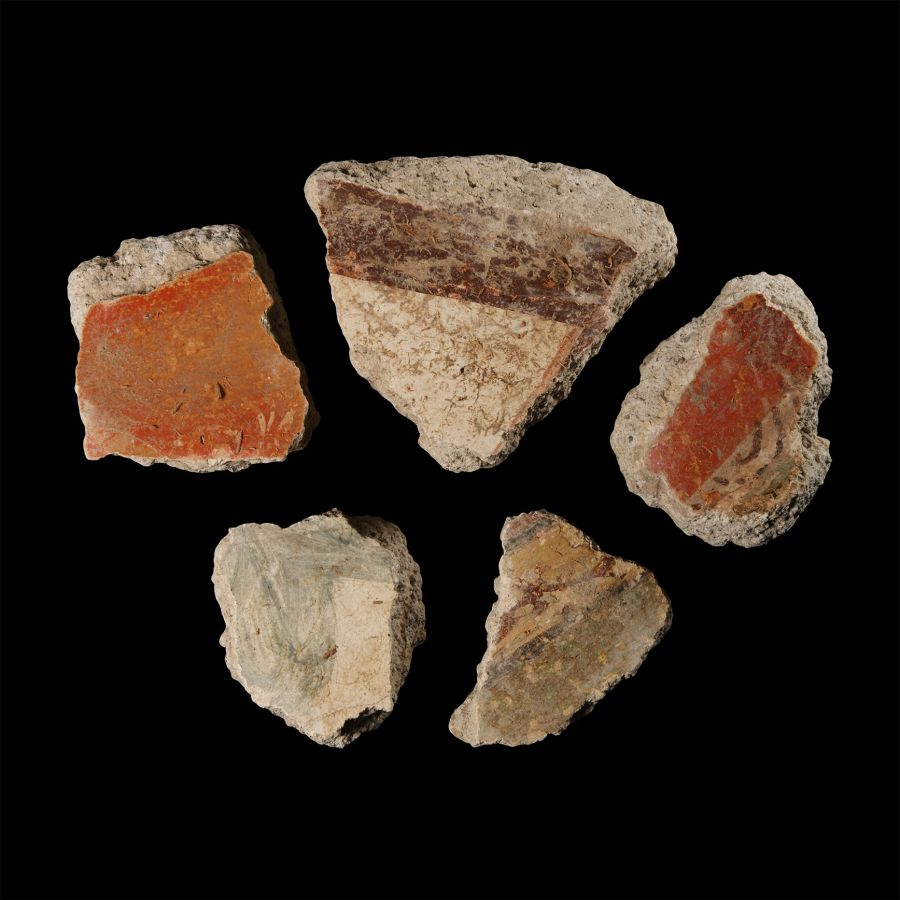
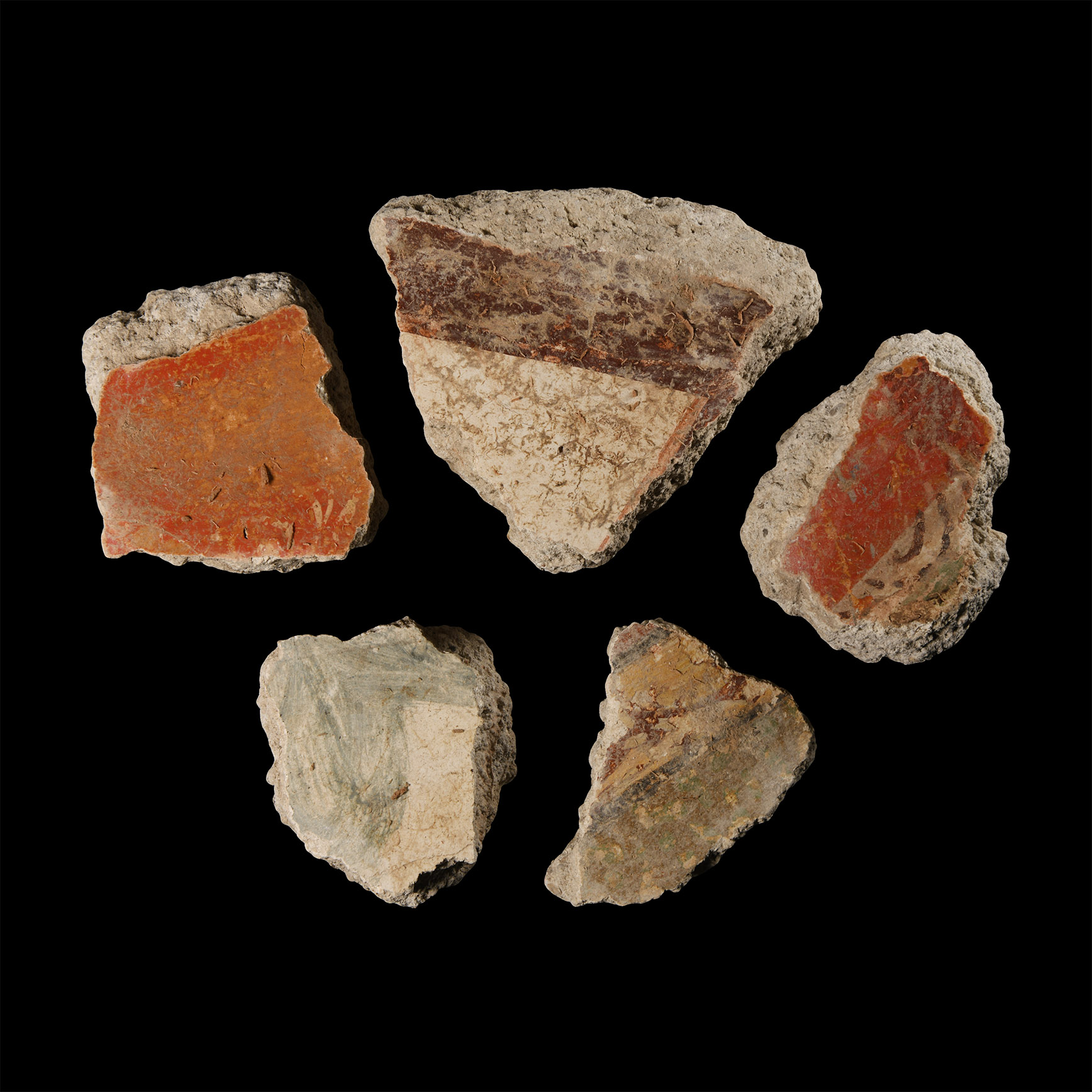
Roman Fresco Wall Plaster Collection
1ST CENTURY B.C.
2 1/2 - 4 1/8 in. (631 grams total, 6.3-10.5 cm).
Second style, painted in red, blue and cream and decorated in contrasting colours. [5, No Reserve]
ProvenanceAcquired in the 19th century.
Ex Jeger collection, Switzerland.
Cf. Hakanen, V., 'VI Wall Plaster Fragments' in Berg, R., Kuivalainen, I., Domus Pompeiana M. Lucretii, IX,3, 5.24, The inscriptions, Works of Art and Finds from the Old and New Excavations, Vantaa, 2019, pp.196-224, figs.3-4.
FootnotesThese small fragments, with analogies with the fragments from Pompeii, seem to belong to the second style of Roman painting, where several simpler walls had an entirely yellow socle or a yellow socle with a darker main zone (more common in the middle phase of the style).
CONDITIONTimeLine Auctions follows a vetting process to ensure the authenticity and legality of all items, reinforcing our commitment to integrity and responsible trading. Each antiquity, antique, and coin lot undergoes thorough examination by a vetting committee of at least ten external specialists, professional trade association members, scientists, and archaeologists: Our Vetting Process
AUCTIONS:
TimeLine is a leading auction house specialising in antiquities, ancient art, collectables, natural history, coins, medals, and books. Our auctions offer museums, collectors, historians, and enthusiasts the opportunity to acquire unique and historically significant pieces.
-
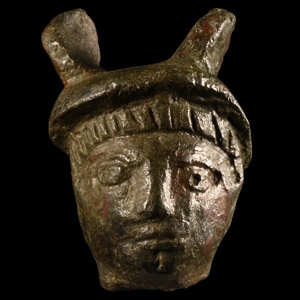
Roman Bronze Mercury Statuette Head
1st-2nd century A.D.Sold for (Inc. bp): £234
With winged petasos traveller's headgear and low-relief facial detailing. 13.3 grams, 20 mm
Property of a Gloucestershire, UK, collector. Property of an East Sussex, UK, gentleman. -
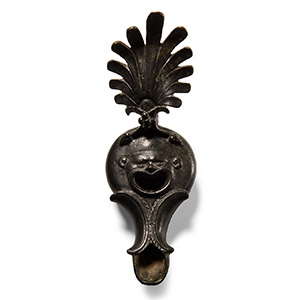
Roman Bronze Lamp with Theatrical Mask
1st-2nd century A.D.Estimate: £2,500 - 3,500 (‡+bp*)
Opening Bid: £1,111
Nozzle with quasi-volutes, theatrical mask surrounding the central opening; ring-handle with palmette attachment; base moulded. 220 grams, 13.3 cm
Acquired from Weber, Kohl. Ex private collection, Rhemish, Germany. with Gorny & Mosch, 14 December 2010, lot 499. Private collection, Europe. This lot has been checked against the Interpol Database of stolen works of art and is accompanied by search certificate number no.11800-206492.
The principal parts of a lamp were the body or reservoir which contained the oil (infundibulum); the flat circular top (discus) on which the design, if any, was placed, sometimes with an ornamented rim (margo), the nozzle, with a hole for the insertion of the wick (rostrum, nasus, myxus), the wick, known as ellydinium, the handle (ansa, manubrium). -
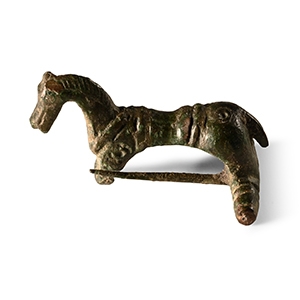
Roman Bronze Horse Brooch
Circa 2nd century A.D.Sold for (Inc. bp): £91
Formed as a standing horse, the hindlegs forming crossbar, tail forming hinged pin, forelegs forming catchplate; ring-and-dot motifs to shoulders, linear detailing to the mane. 11.8 grams, 35 mm
From a collection acquired on the UK art market from various auction houses and collections mostly before 2000. From an important Cambridgeshire estate; thence by descent.
