
Loading, please wait...
LOT 0667
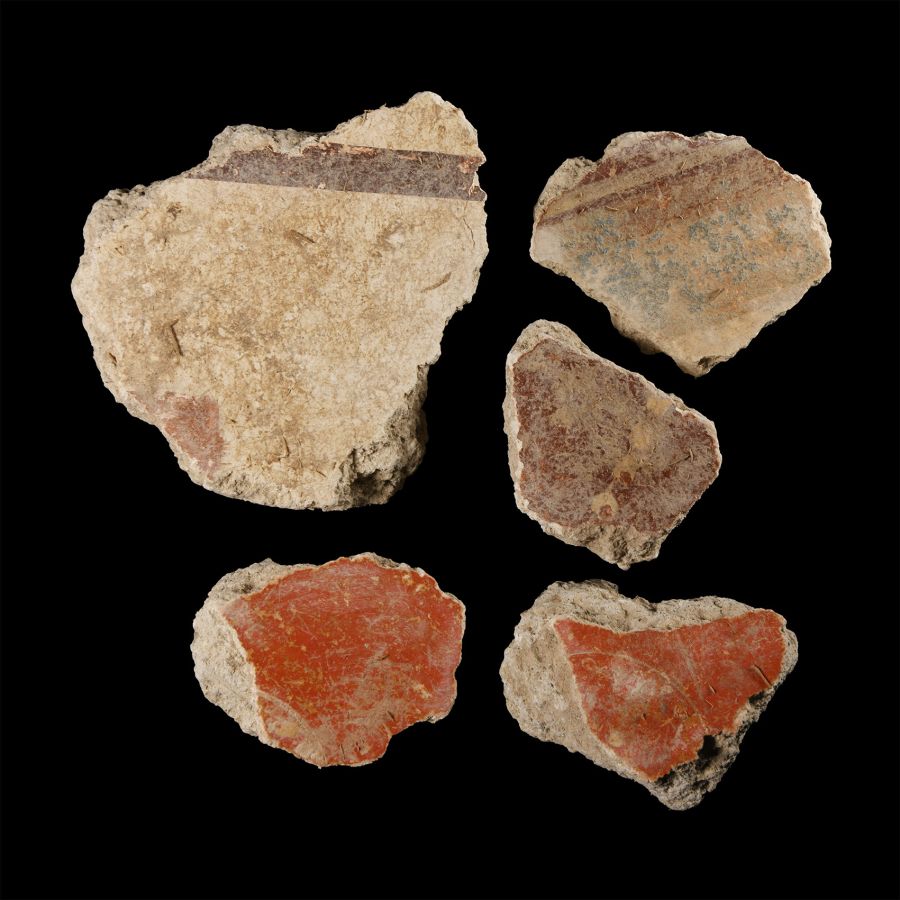
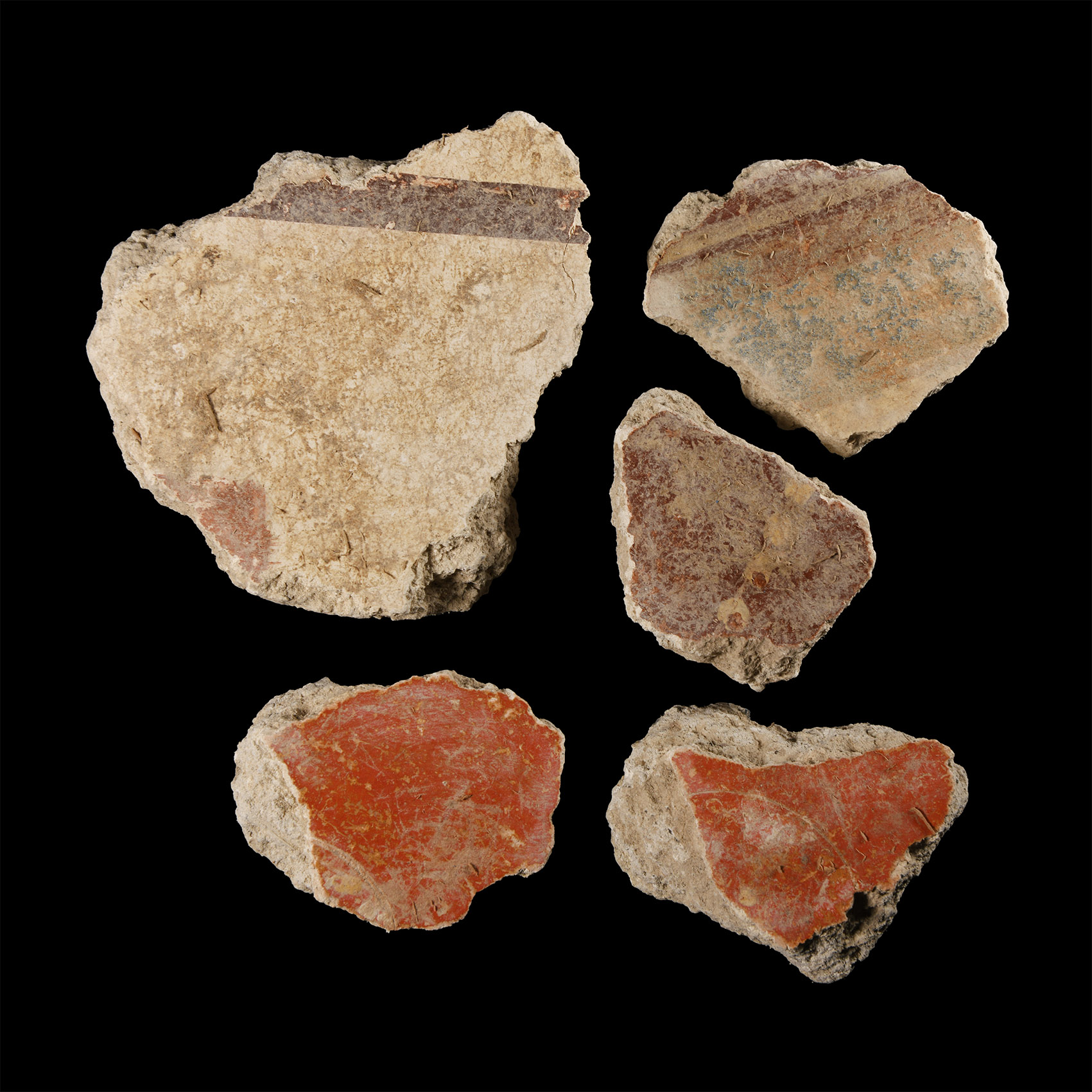
Roman Fresco Wall Plaster Collection
1ST CENTURY B.C.
2 5/8 - 4 5/8 in. (527 grams total, 6.7-11.8 cm).
Second style painted in cream and red, some with decoration. [5, No Reserve]
ProvenanceAcquired in the 19th century.
Ex Jeger collection, Switzerland.
Cf. Hakanen, V., 'VI Wall Plaster Fragments' in Berg, R., Kuivalainen, I., Domus Pompeiana M. Lucretii, IX,3, 5.24, The inscriptions, Works of Art and Finds from the Old and New Excavations, Vantaa, 2019, pp.196-224, figs.3-4.
FootnotesThese small fragments, for analogies with the fragments of Pompeii, seems to belong to the second style of Roman painting, red panels representing highlight and shadow, decorated with vegetal interlaces. Some panels were probably framed by a red grenade fillet. A fragment shows alternate blue and red colour over a cream background, maybe pertinent to a socle.
CONDITIONTimeLine Auctions follows a vetting process to ensure the authenticity and legality of all items, reinforcing our commitment to integrity and responsible trading. Each antiquity, antique, and coin lot undergoes thorough examination by a vetting committee of at least ten external specialists, professional trade association members, scientists, and archaeologists: Our Vetting Process
AUCTIONS:
TimeLine is a leading auction house specialising in antiquities, ancient art, collectables, natural history, coins, medals, and books. Our auctions offer museums, collectors, historians, and enthusiasts the opportunity to acquire unique and historically significant pieces.
-
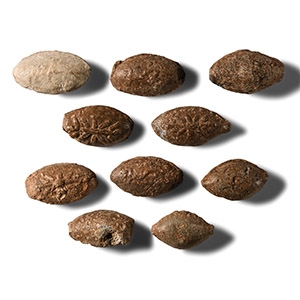
Roman Lead Sling Shot Projectile Collection
1st century B.C.-2nd century A.D.Sold for (Inc. bp): £585
Comprising ten lentoid-section glandes, five with impressed stylised 'fulmen' (thunderbolt) of Jupiter. 384 grams total, 18-36 mm
Acquired in Europe in 1990. European private collection.
The missiles of ovoid shape belong to type Ia of the Völling classification. The sling (funda) with its lead missiles (plumbea pondera or glandae) and stone (lapides) was used by special funditores, illustrated on Trajan’s Column where they are simply dressed in broad tunics with no armour, but carry a shield. A fold in their cloak, or sagulum, acted as an ammunition bag. The effectiveness of the slingers was unquestionable and much appreciated, especially against elephants. Celsus, writing towards the end of the 2nd century A.D., described how a slingshot wound was more dangerous and harder to treat than one inflicted by an arrow. -
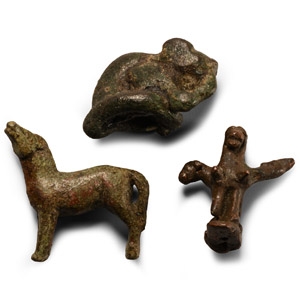
Roman Bronze Animal Statuette Group
1st-2nd century A.D.Sold for (Inc. bp): £104
Mixed group comprising: three-headed dog, Cerberus, on an ellipsoid base; mouse holding an item of food to its mouth; baying hound with head raised. 60.5 grams total, 29- 35 mm
From a collection acquired on the UK art market from various auction houses and collections mostly before 2000. From an important Cambridgeshire estate; thence by descent. -
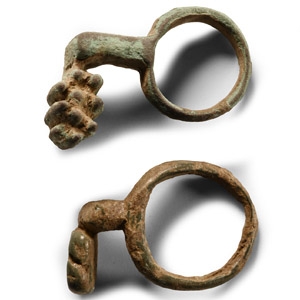
Roman Bronze Key Ring Group
1st-2nd century A.D.Sold for (Inc. bp): £72
Group of two rings each with angled ward and bits to the forward edge. 22.94 grams total, 31-34 mm
Acquired on the London art market in the late 1980s-1990s. From the family collection of an East London, UK, gentleman.
