
Loading, please wait...
LOT 0911
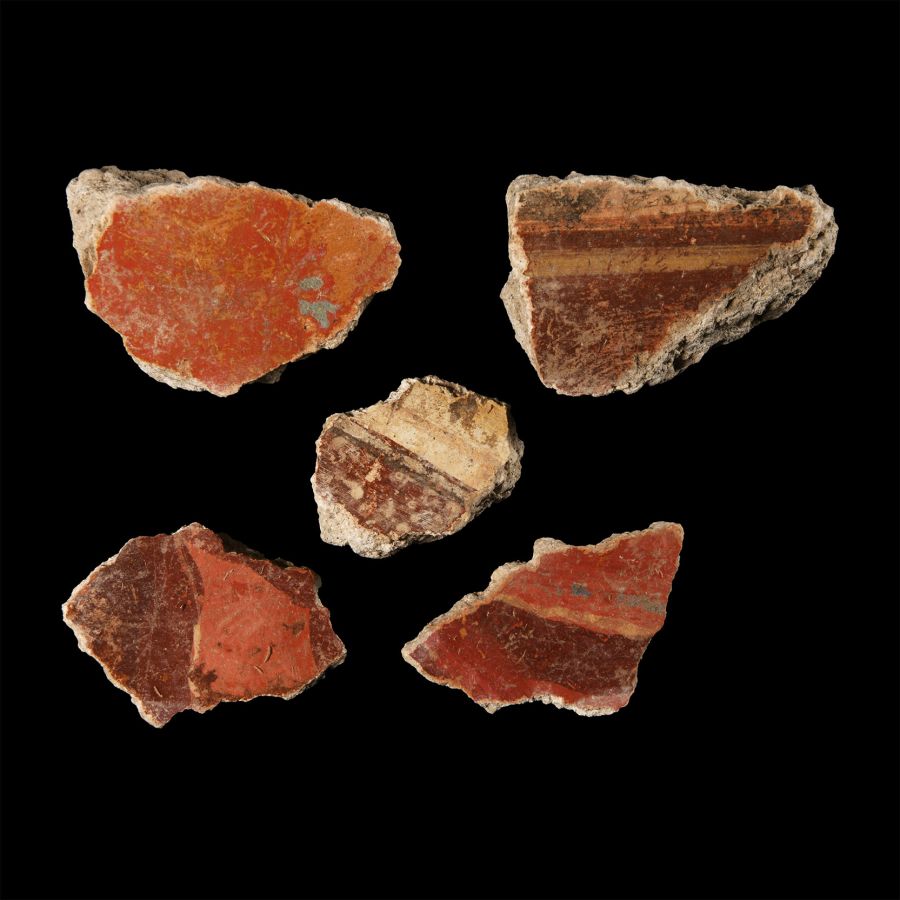
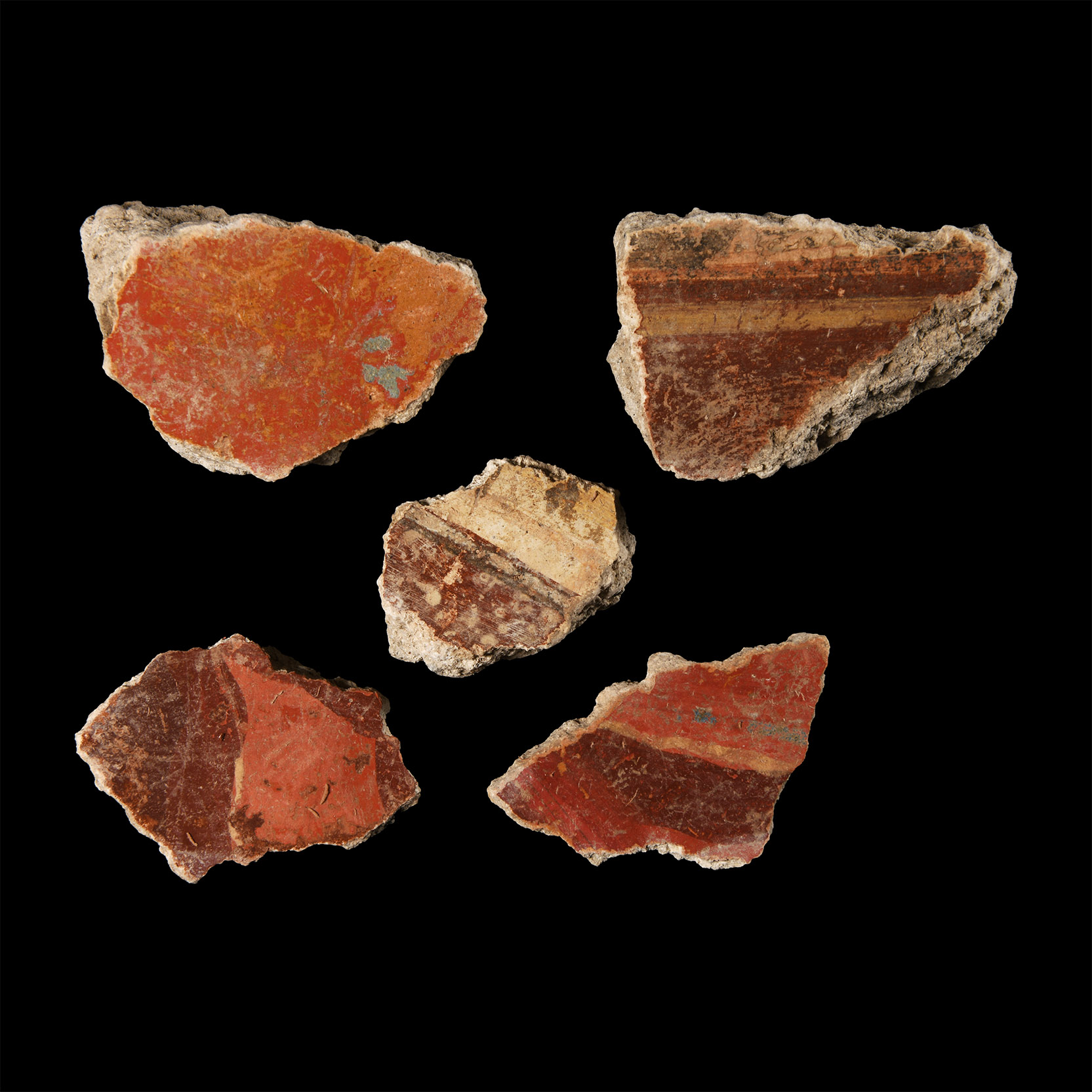
Roman Fresco Painted Wall Plaster Collection
1ST CENTURY A.D.
1 3/4 - 2 3/4 in. (212 grams total, 45-69 mm).
Comprising five pieces in cream, orange, blue and red with painted architectural lines; one with floral decoration and several with border elements. [5, No Reserve]
ProvenanceAcquired in the 19th century.
Ex Jeger collection, Switzerland.
TimeLine Auctions follows a vetting process to ensure the authenticity and legality of all items, reinforcing our commitment to integrity and responsible trading. Each antiquity, antique, and coin lot undergoes thorough examination by a vetting committee of at least ten external specialists, professional trade association members, scientists, and archaeologists: Our Vetting Process
AUCTIONS:
TimeLine is a leading auction house specialising in antiquities, ancient art, collectables, natural history, coins, medals, and books. Our auctions offer museums, collectors, historians, and enthusiasts the opportunity to acquire unique and historically significant pieces.
-
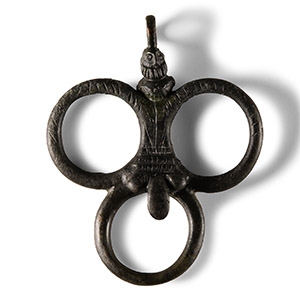
Roman Bronze Looped Figural Pendant with Phallus
Circa 1st century A.D.Sold for (Inc. bp): £286
Composed of three concentric circles surmounted by a bearded figure to which is attached a suspension ring, the body of the figure engraved and ending with phallic attributes. 53 grams, 83 mm
Acquired before 2000. From the collection of a European gentleman living in the UK.
Roman military harness included pendants of various typology, ranging from lunules to other decorative elements, often phallic, with the possible intention of protecting the animal. This particular pendant could be connected to the bearded image of the god Priapus. -
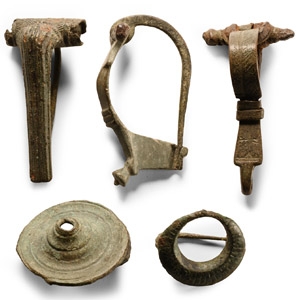
Roman Bronze Brooch Collection
1st-3rd century A.D.Sold for (Inc. bp): £111
Mixed group including tutulus, Langton Down, Aucissa and other types. 35.6 grams total, 23-45 mm
From a collection acquired on the UK art market from various auction houses and collections mostly before 2000. From an important Cambridgeshire estate; thence by descent. -
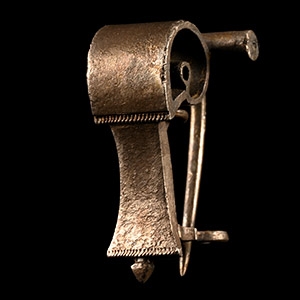
Roman Military Silver Knee Brooch
2nd century A.D.Sold for (Inc. bp): £325
Of 'knee type pattern' incorporating a 90 degree bend, the front plate with additional edge-notched decoration, complete with original pin. 16 grams, 34.7 mm
Ex Ancient Art, Eastpole Farm House, London, N14, early 2000s. From the private collection of Antony John Scammell (1937-2019). Accompanied by a copy of a certificate of authenticity from Ancient Art, London, UK.
