
Loading, please wait...
LOT 0115
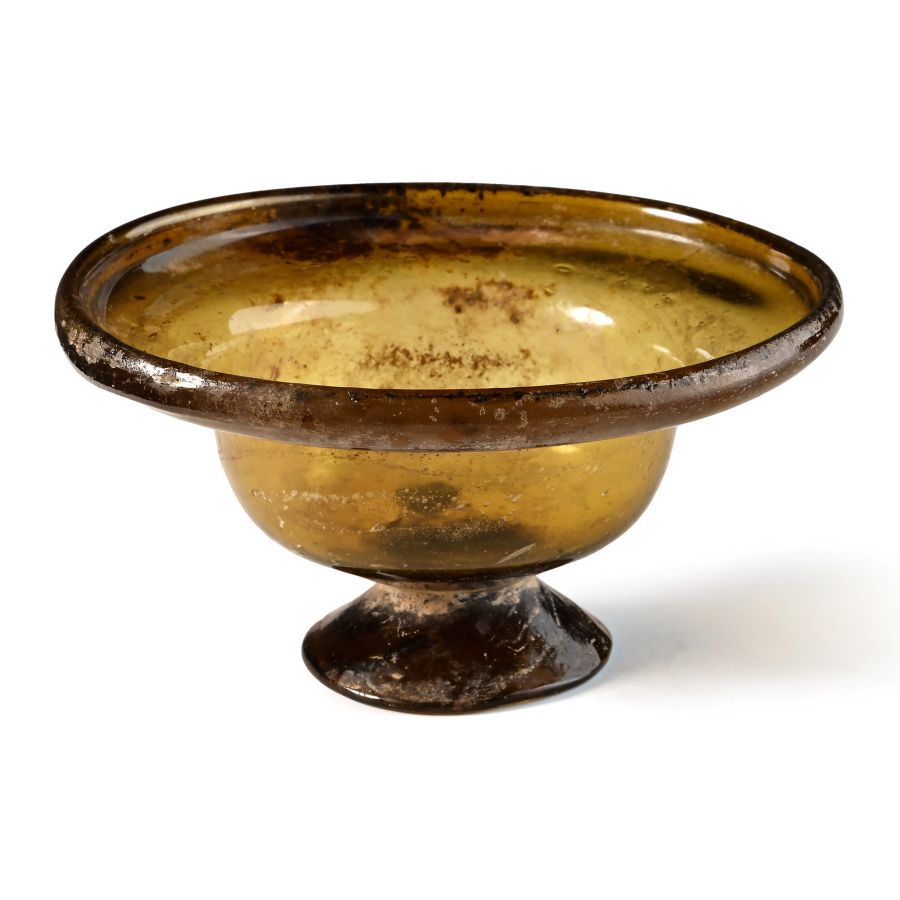
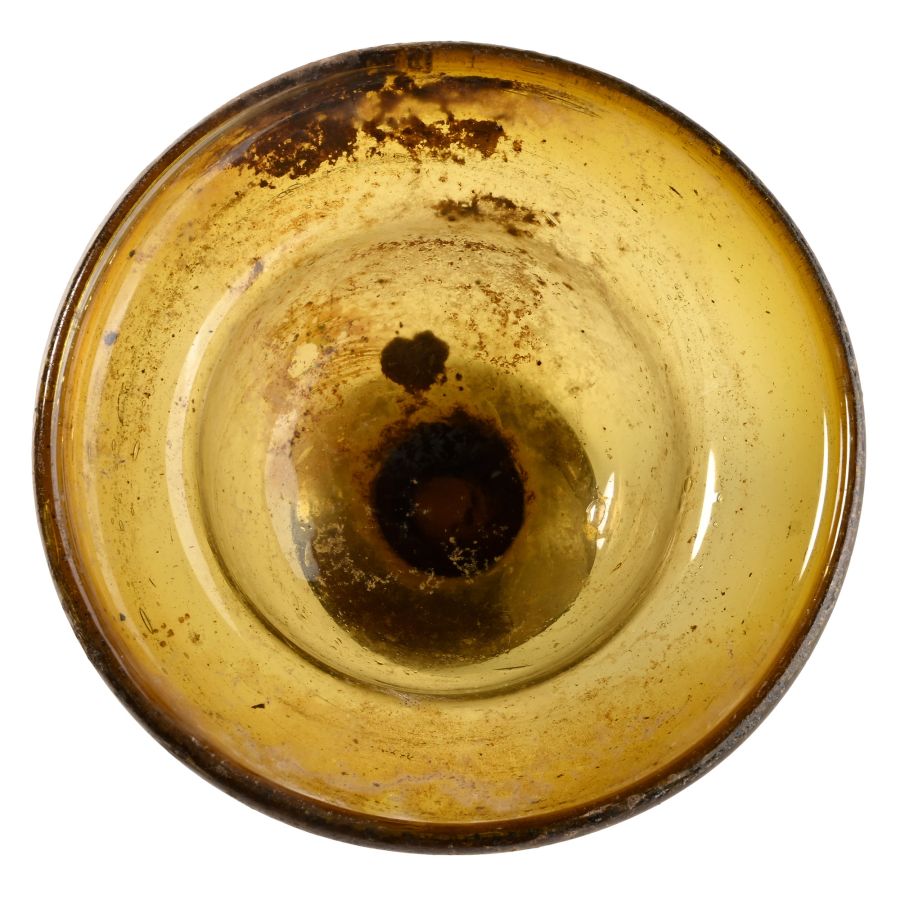
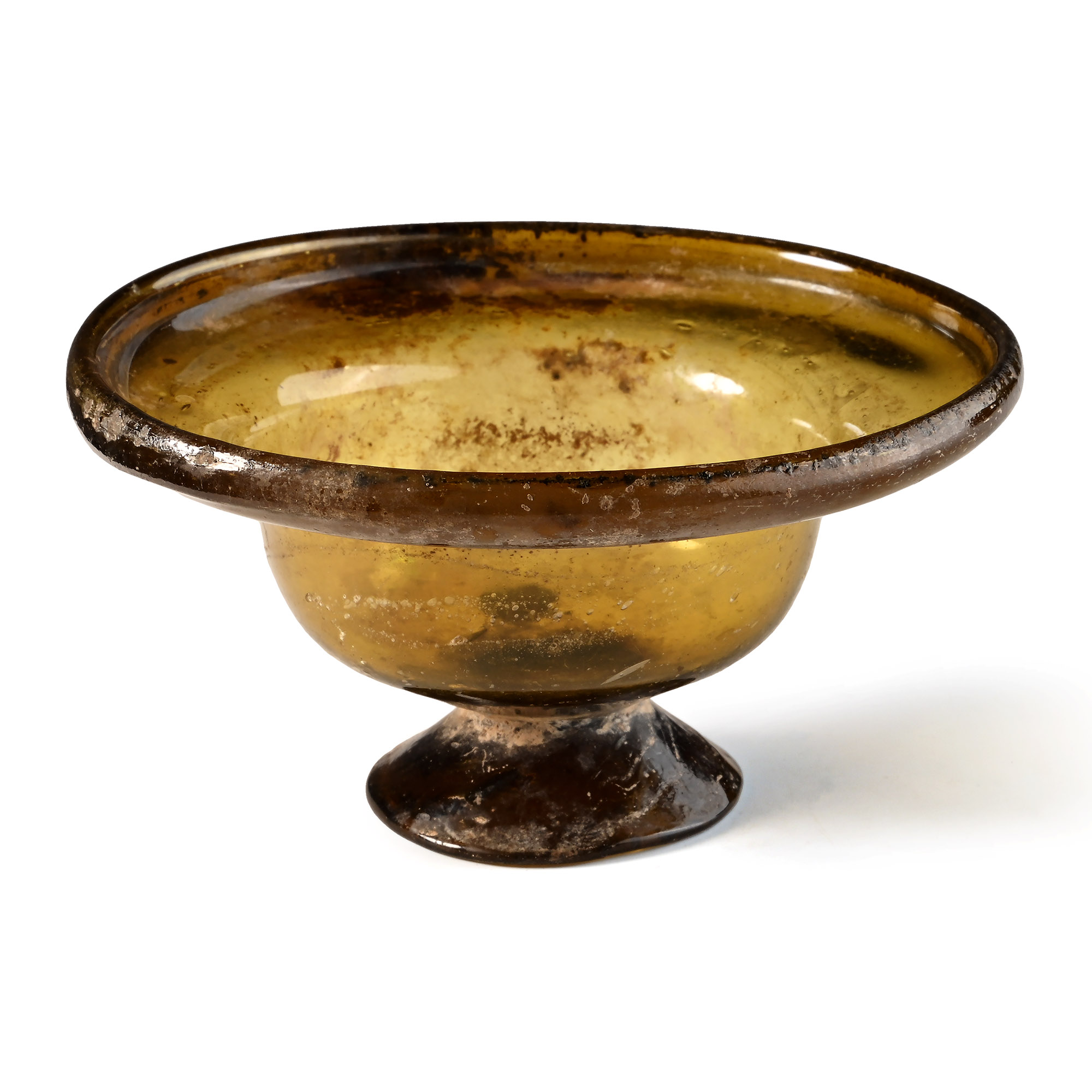
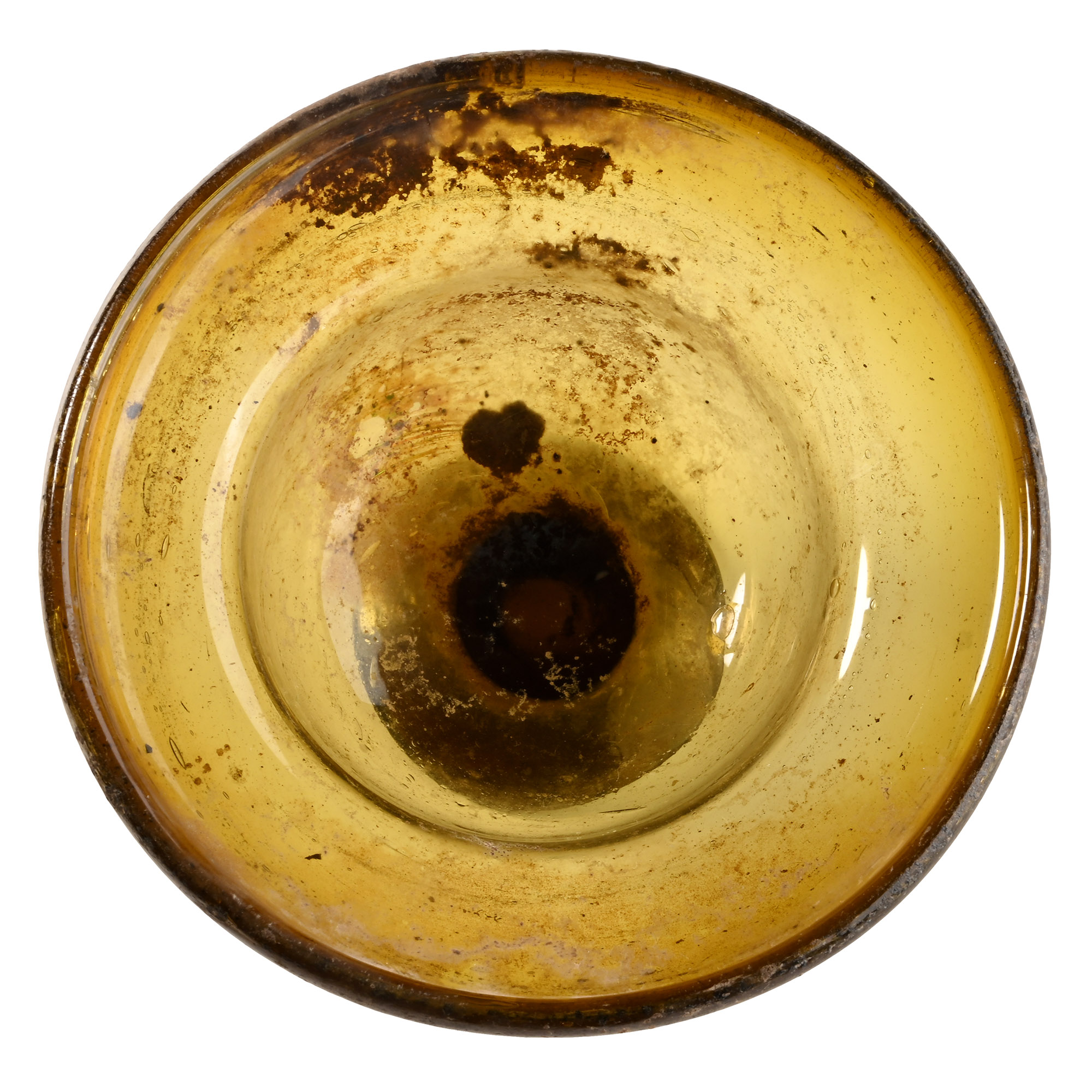
Roman Footed Amber Glass Cup
2ND-3RD CENTURY A.D.
4 1/2 in. (100 grams, 11.3 cm wide).
Comprising a deep body with a wide, upturned rim; applied conical foot.
ProvenancePreviously from a German private collection.
Acquired Sotheby's, London, 13 & 14 July 1981, no.482 (illus).
From a private Wiltshire, UK, collection.
Accompanied by a copy of the relevant Sotheby's catalogue pages.
TimeLine Auctions follows a vetting process to ensure the authenticity and legality of all items, reinforcing our commitment to integrity and responsible trading. Each antiquity, antique, and coin lot undergoes thorough examination by a vetting committee of at least ten external specialists, professional trade association members, scientists, and archaeologists: Our Vetting Process
AUCTIONS:
TimeLine is a leading auction house specialising in antiquities, ancient art, collectables, natural history, coins, medals, and books. Our auctions offer museums, collectors, historians, and enthusiasts the opportunity to acquire unique and historically significant pieces.
-
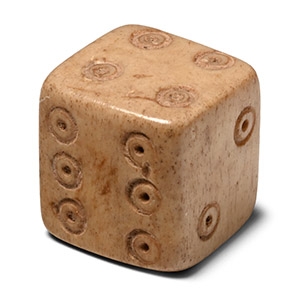
Roman Bone Gaming Dice
1st-2nd century A.D.Sold for (Inc. bp): £156
With incised ring-and-dot markings disposed 1:6, 2:5, 3:4. 5.42 grams, 14 mm
From a collection of gaming items, formed 1980-1990s. -
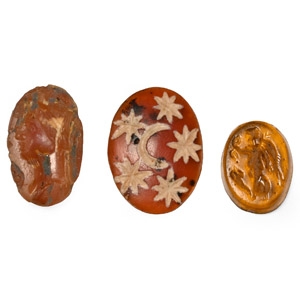
Roman Carnelian Gemstone Group
1st-4th century A.D.Sold for (Inc. bp): £91
Comprising three oval intaglios, one with etched crescent moon surrounded by five stars, one with standing Victory, and one with a profile bust. 1.35 grams total, 9-13 mm
From the collection of a gentleman, acquired on the London art market in the 1990s. -
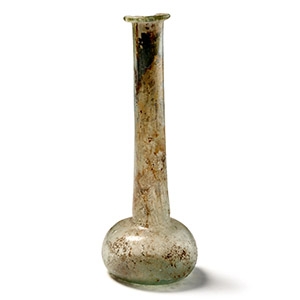
Roman Tall Glass Flask
1st-4th century A.D.Sold for (Inc. bp): £78
With squat body, tubular neck with everted rolled rim. 29.3 grams, 12.4 cm
Ex Norri collection, Milton Keynes, UK, 1980s-1990s.
