
Loading, please wait...
LOT 0833
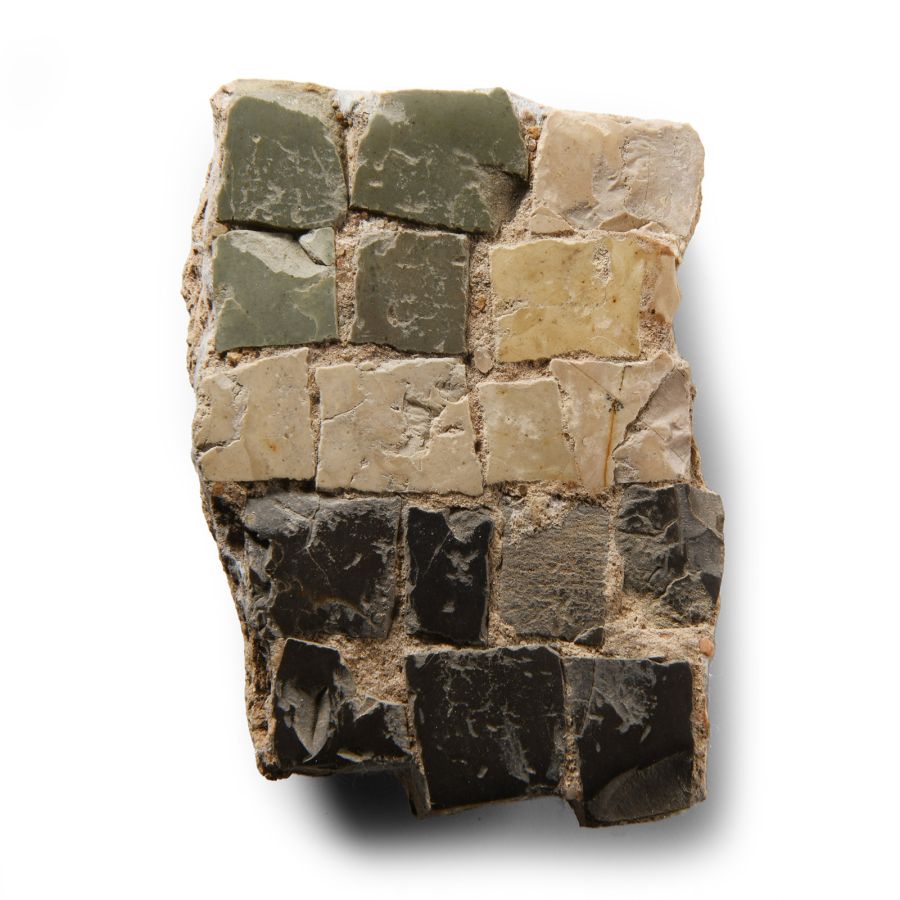
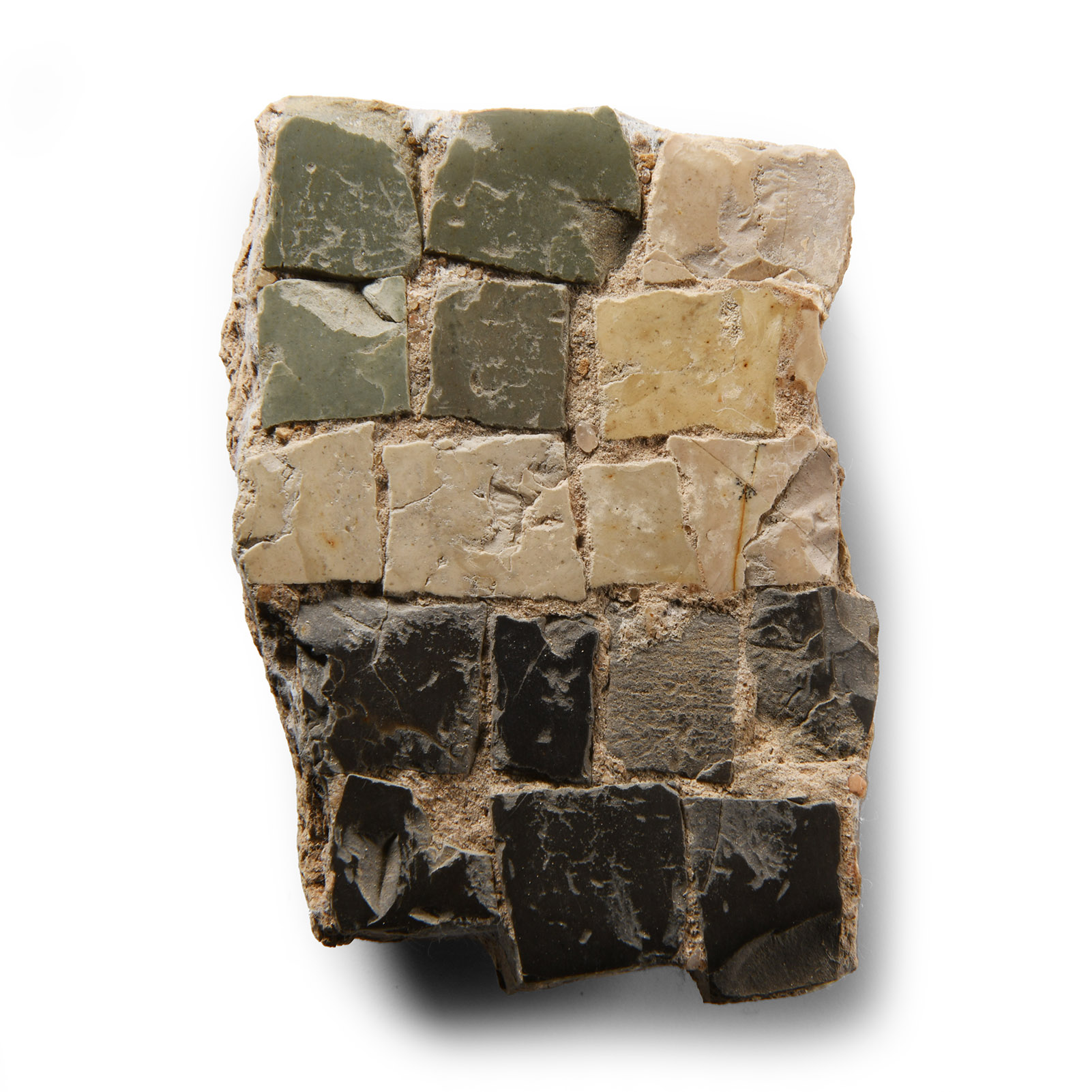
Roman Floor Mosaic Section
NORTH AFRICA, 2ND CENTURY A.D.
3 1/8 in. (213 grams, 79 mm).
With portion of original matrix and five rows of tesserae in grey, black, cream and white. [No Reserve]
ProvenanceAcquired Tunisia, North Africa.
From a pre World War II collection, thence by descent.
Ian Wilkinson collection, Nottinghamshire, UK, formed since 1985.
Cf. Béjaoui, F., Ben Mansour, M.H., Fantar, L., Foucher, L., Ghedini, F. Jeddi, N., Khanoussi, M., Picard, G.C., Slim, H., Yacoub, M., I Mosaici Romani di Tunisia, Milano, 1995, fig.p.6, for frames in similar style.
FootnotesIn African mosaics, combinations of black and white and cream tessellated mosaics often form the borders of important mosaics, such as those of El Jem, representing the love between Satyrs and Bacchants, or the myth of Leda and the Swan.
CONDITIONTimeLine Auctions follows a vetting process to ensure the authenticity and legality of all items, reinforcing our commitment to integrity and responsible trading. Each antiquity, antique, and coin lot undergoes thorough examination by a vetting committee of at least ten external specialists, professional trade association members, scientists, and archaeologists: Our Vetting Process
AUCTIONS:
TimeLine is a leading auction house specialising in antiquities, ancient art, collectables, natural history, coins, medals, and books. Our auctions offer museums, collectors, historians, and enthusiasts the opportunity to acquire unique and historically significant pieces.
-
Roman Terracotta Lamp with Fighting Gladiators
1st-2nd century A.D.Estimate: £500 - 700 (+bp*)
Opening Bid: £222
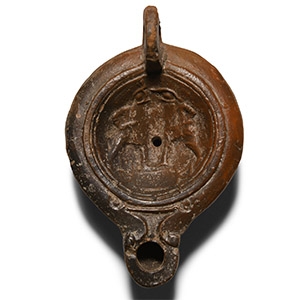
Composed of a discoid body with sunken discus bearing a scene of two gladiators in combat in relief, tabula ansata below, ring handle and roughly D-shaped nozzle with volutes; old crack to base. 84 grams, 12.4 cm
From a German collection. Ex Cambridge, UK, collection, 1980s.
The two gladiators seem to be wearing the armaturae of murmillones. All gladiators began their career as provocatores; the learning of their combat technique was polyvalent and allowed the fighters to specialise as a large shield-bearer (the scutati) like murmillones, or as a small shield-bearer, parmati, like the oplomachus. -
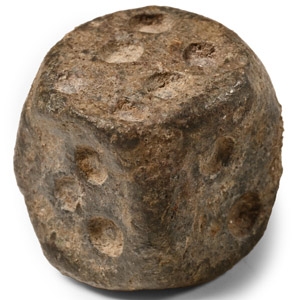
large Roman Lead Gaming Dice
1st-4th century A.D.Sold for (Inc. bp): £85
Cuboid with irregular impressed point markings disposed 1:3, 2:4, 5:6. 20 grams, 14 mm
Acquired 21 July 1997. From the important private collection of dice and gaming pieces of Colin Narbeth, London, UK, collection no.89. Accompanied by a Colin Narbeth catalogue identification slip. -
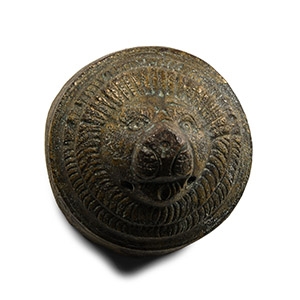
Roman Bronze Lion's Head Casket Mount
2nd-3rd century A.D.Sold for (Inc. bp): £91
Domed in profile with concentric stepped tiers and hatched fur texture, central lion-mask with lateral piercings for the muzzle, slightly flared rim; lead plug to interior. 168 grams, 55 mm
Found Wiltshire, UK, before 1974.
