
Loading, please wait...


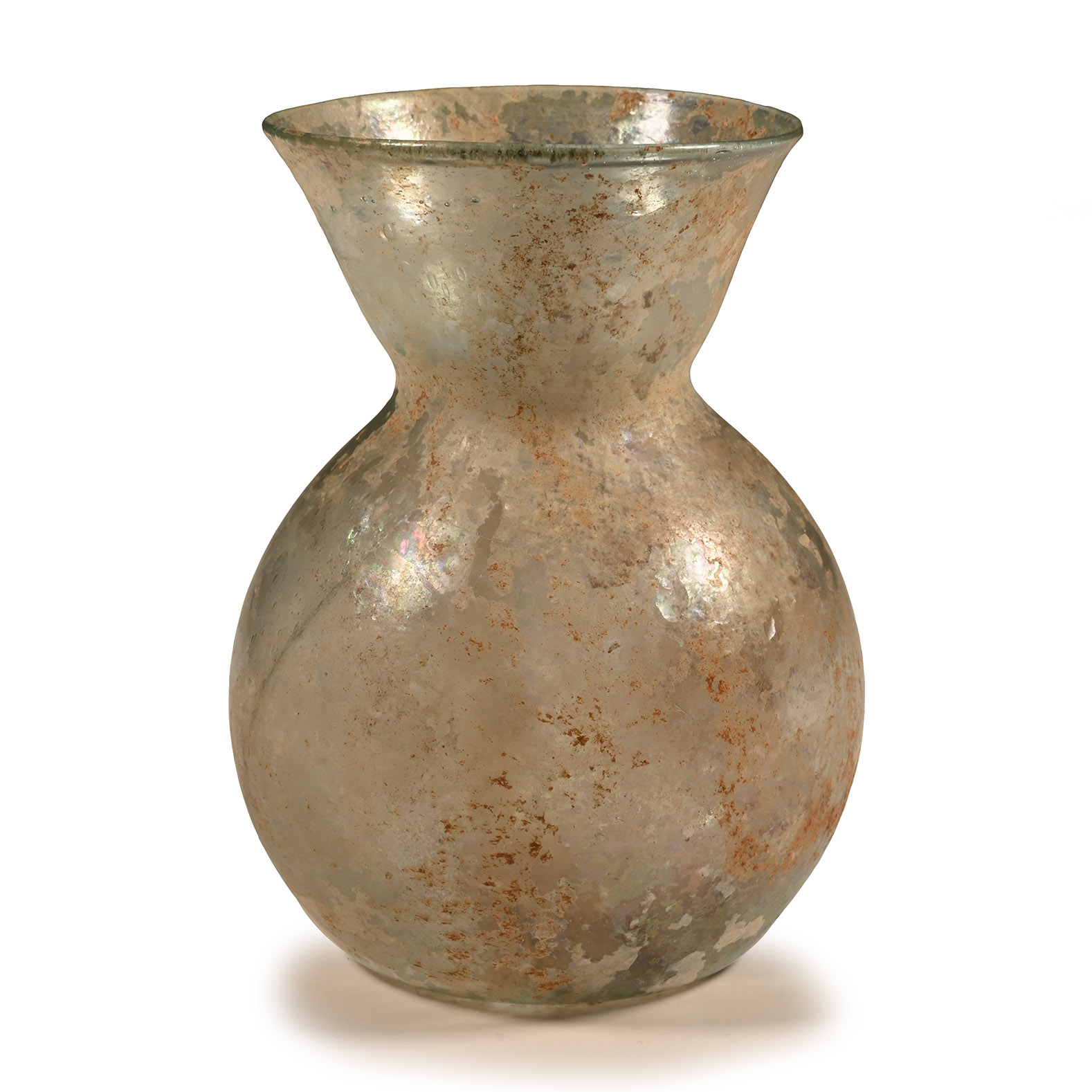
LOT 0663
Roman Flared Glass Vessel
3RD-4TH CENTURY A.D.
4 3/4 in. (47 grams, 12 cm).
With dimple base, globular body, pinched neck and flared mouth with thickened rim; some iridescence to the pale blue-green glass.
ProvenanceEx London, UK, collection, 1980-1990s.
LiteratureCf. Whitehouse, D., Roman Glass in the Corning Museum of Glass, vol.1, New York, 1997, item 227, for type.
CONDITIONTimeLine Auctions follows a vetting process to ensure the authenticity and legality of all items, reinforcing our commitment to integrity and responsible trading. Each antiquity, antique, and coin lot undergoes thorough examination by a vetting committee of at least ten external specialists, professional trade association members, scientists, and archaeologists: Our Vetting Process
AUCTIONS:
TimeLine is a leading auction house specialising in antiquities, ancient art, collectables, natural history, coins, medals, and books. Our auctions offer museums, collectors, historians, and enthusiasts the opportunity to acquire unique and historically significant pieces.
-

Roman Bronze Hand-Shaped Military Standard Finial
1st-3rd century A.D.Estimate: £4,000 - 6,000 (‡+bp*)
Opening Bid: £2,222
Hollow-formed with fine detailing to the fingers and nails; with fixing points for a military standard (signum) used by each unit under a centurion, originally fixed with the palm facing forwards inside a wreath. 718 grams, 21 cm
Generally intact and good defined, except for the lower part.
Acquired in Europe before 2000. European private collection. Accompanied by an academic report by Dr Raffaele D'Amato. This lot has been checked against the Interpol Database of stolen works of art and is accompanied by a search certificate number no.12003-211851.
Roman military signa decorated by phalerae and surmounted by a right hand were used from the Late Consular Age. The hand (manus) symbolised the fides, i.e. the allegiance between the soldiers and the Res Publica. It is also possible that the hand belonged to a statue in which it was extended as a sign of silence, to allow the speaker to speak. However, the iconography of military hands, and also the resemblance with a bronze hand (military signum) preserved in the Vindonissa museum (Windisch), support the possibility that the object was part of a military standard. -

Roman Marble Head of Euripides
2nd century A.D.Estimate: £18,000 - 24,000 (‡+bp*)
Opening Bid: £10,000
An impressive carved herm of the tragic author of the tragic author Euripides, portrayed as an elderly man with full beard and long hair forming compact, slightly wavy strands, radiating from a single point at the back of the head and combed forwards over the forehead; heavy brow and small mouth; cracked and repaired. 7.46 kg, 25 cm
English private collection, acquired in the late 1970s/early 1980s. David Cambridge, Cheltenham. with Galerie Chenel, Paris, acquired from the above in 1998. French private collection, acquired from the above in 1999/2000. Ancient Marbles, Classical Sculpture and works of art; Sotheby's, London, 13 June 2016, no.49. Accompanied by an academic report by Dr Raffaele D’Amato. This lot has been checked against the Interpol Database of stolen works of art and is accompanied by search certificate number no.12191-222443.
Euripides was a classical Athenian playwright and one of the three great tragedians of ancient Greece, alongside Aeschylus and Sophocles. Born in 480 B.C., his work is renowned for its complex characters and psychological depth, often exploring the darker aspects of human nature and societal norms. Euripides' plays, such as Medea, The Bacchae, and Hippolytus, are marked by their innovative use of mythological themes to comment on contemporary issues. -
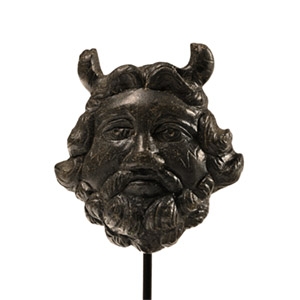
Roman Bronze Head Mount of Oceanus
1st-2nd century A.D.Sold for (Inc. bp): £845
Bust of Oceanus in high-relief, hollow to the reverse, with flowing hair and beard, large lentoid eyes and broad nose, with crab/lobster claws emerging from his locks; mounted on a custom-made stand. 68.2 grams total, 83 mm including stand
Identified by the British Museum as depicting Oceanus on 8th January 1996. From a collection acquired on the UK art market from various auction houses and collections mostly before 2000. From an important Cambridgeshire estate; thence by descent. Accompanied by a copy of the British Museum letter dated 8th January 1996.
