
Loading, please wait...
LOT 0881
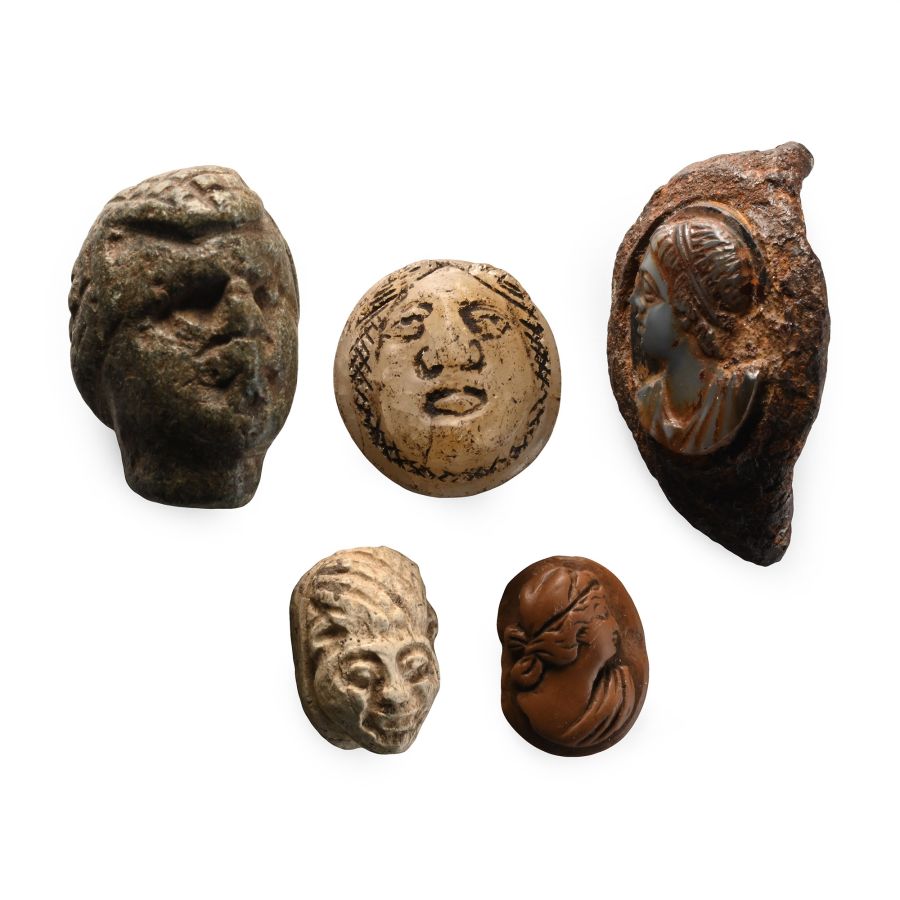
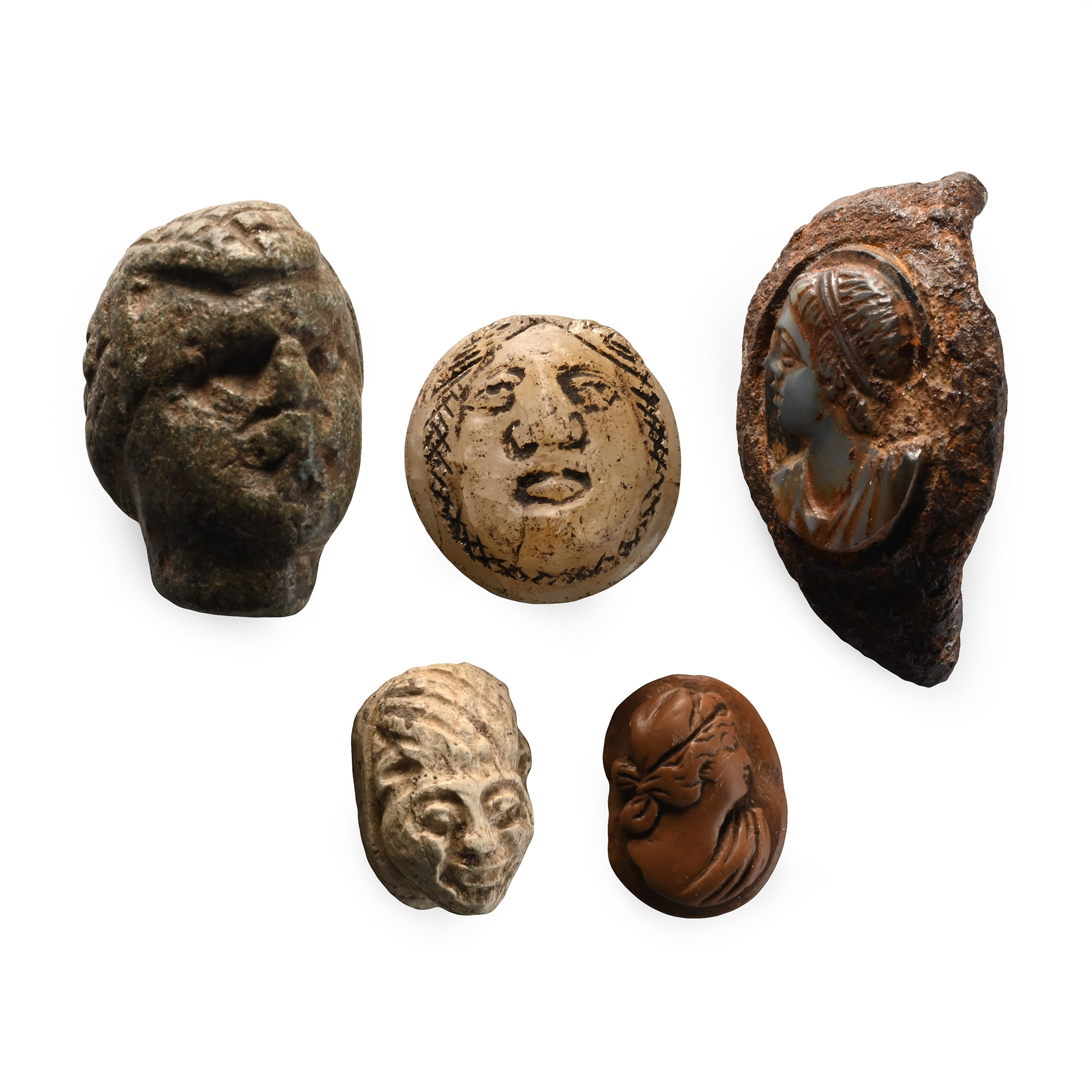
Roman Face Artefact Collection
1ST-3RD CENTURY A.D. AND LATER
1/2 - 1 1/8 in. (21 grams total, 14-29 mm).
Including ring bezel with glass insert, face bead, and other types. [5, No Reserve]
Provenancewith Archaeologia, Switzerland, before 1983.
Ex private North American collection.
London private collection, 2016.
TimeLine Auctions follows a vetting process to ensure the authenticity and legality of all items, reinforcing our commitment to integrity and responsible trading. Each antiquity, antique, and coin lot undergoes thorough examination by a vetting committee of at least ten external specialists, professional trade association members, scientists, and archaeologists: Our Vetting Process
AUCTIONS:
TimeLine is a leading auction house specialising in antiquities, ancient art, collectables, natural history, coins, medals, and books. Our auctions offer museums, collectors, historians, and enthusiasts the opportunity to acquire unique and historically significant pieces.
-
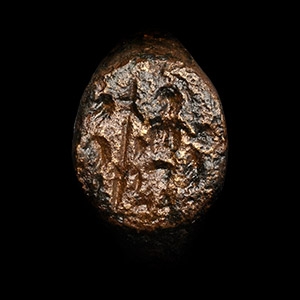
Roman Bronze Ring with Mars Holding a Spear
1st-2nd century A.D.Sold for (Inc. bp): £124
With a discoid bezel, an impressed standing figure with a horsetail plume on his helmet holding a lance or spear in one hand and supporting a shield with the other. 6.59 grams, 24.65 mm overall, 20.84 mm internal diameter (approximate size British V 1/2, USA 10 3/4, Europe 24.4, Japan 23)
Acquired on the UK art market before 2000. Property of an Essex, UK, gentleman. -
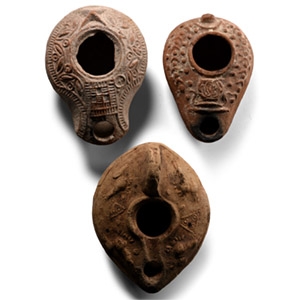
Roman and Byzantine Ceramic Oil Lamp Collection
4th-8th century A.D.Sold for (Inc. bp): £293
Comprising: a piriform lamp with birds and geometric motifs, low basal ring; a piriform lamp with raised pellets and other motifs; a rounded lamp with short nozzle, low-relief leaves and ring-and-dot motifs within geometric border, a hatched rectangle behind the nozzle, a palm branch underneath the nozzle flanked by crescentic lines and ring-and-dot motifs, raised nipple to base. 190 grams total, 78-90 mm
with Galerie Rhéa, Zurich, Switzerland. -
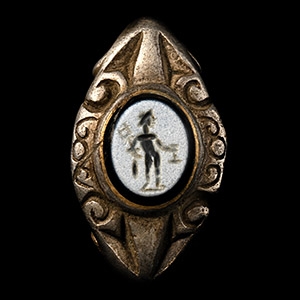
Roman Silver Ring with Mercury Gemstone
3rd century A.D.Sold for (Inc. bp): £390
A D-section silver hoop with flared shoulders, flat scaphoid plaque with openwork scrolls to the edges, scroll detailing to the plaque, inset glass bezel with intaglio image of Mercury in petasos standing with caduceus and marsupium(?) in his right hand. 20.69 grams, 33.42 mm overall, 21.22 x 15.43 mm internal diameter (approximate size British L 1/2, USA 6, Europe 11.87, Japan 11)
Ex property of a London gentleman; acquired in the 1980s.
