
Loading, please wait...
LOT 0599
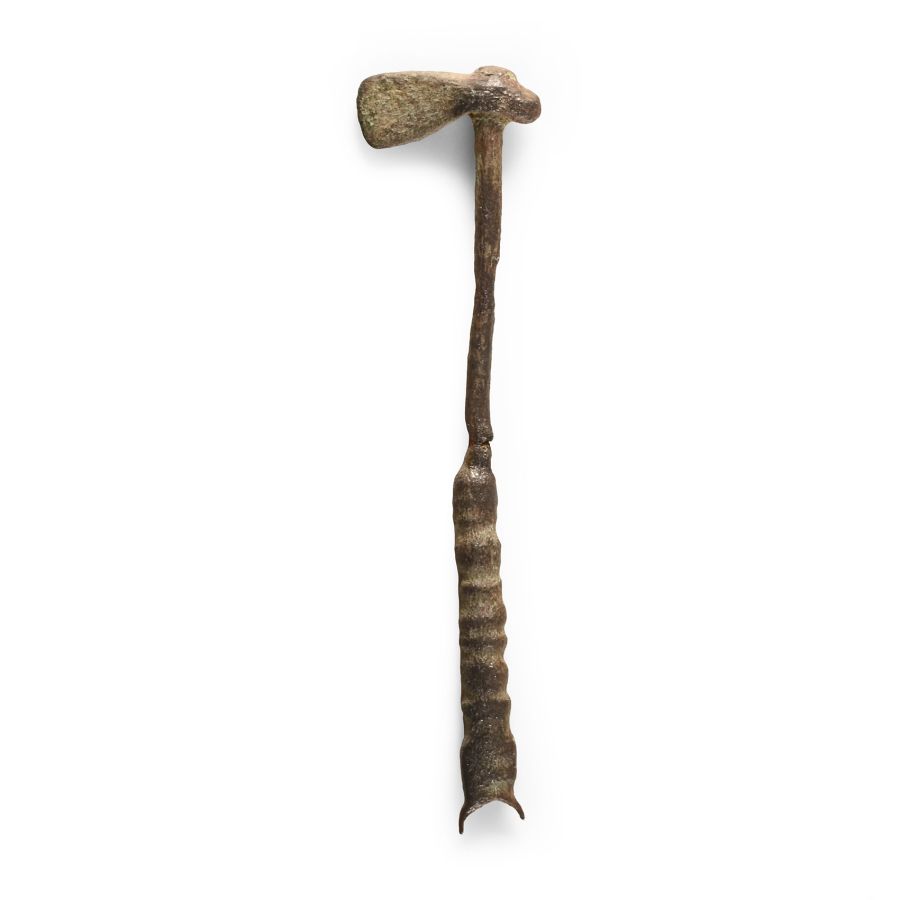
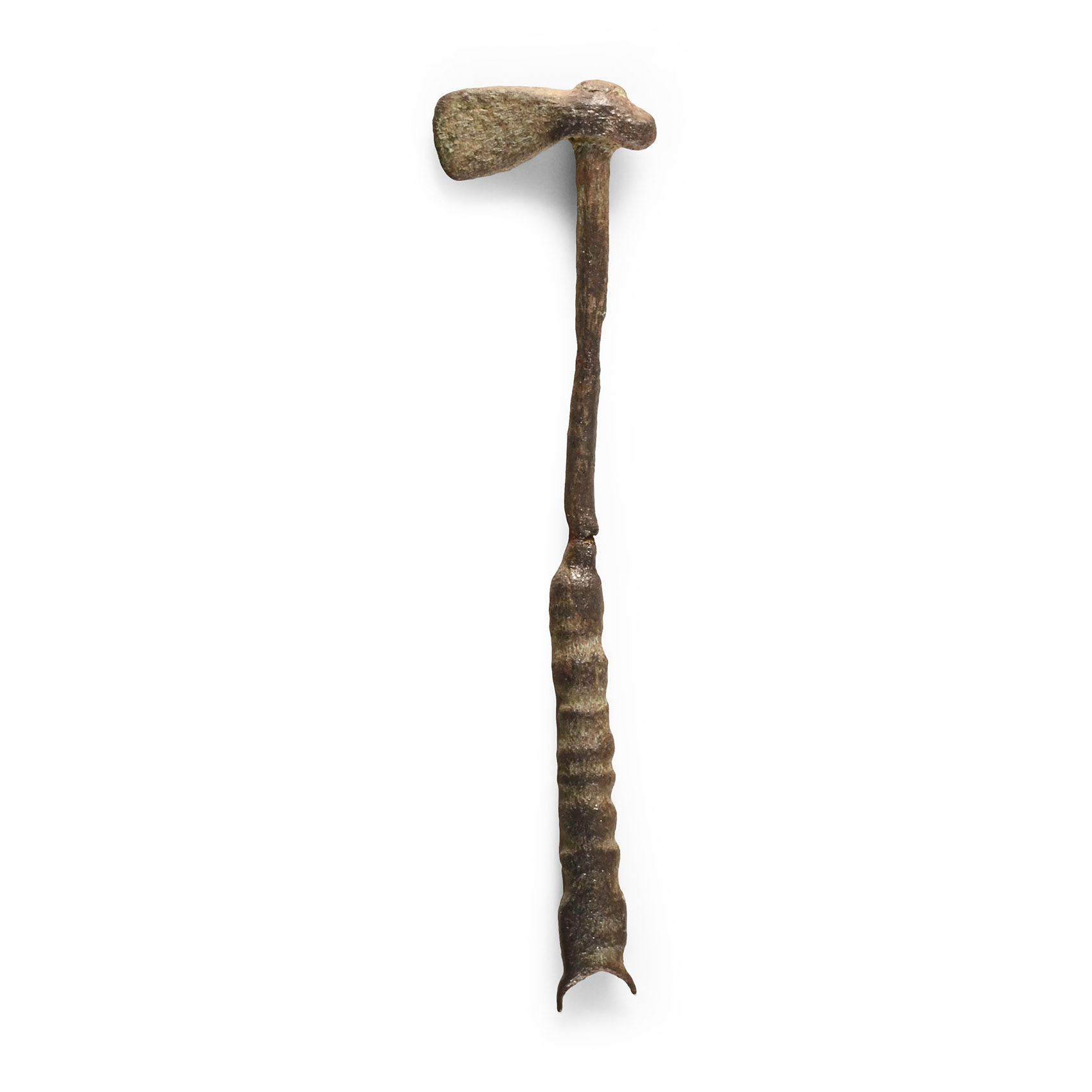
Roman 'Essex' Bronze Votive Axehead Amulet
1ST-2ND CENTURY A.D.
2 in. (2.16 grams, 50 mm).
Comprising a round-section shaft with ribbed handle detailing, loop finial, head with trapezoidal blade. [No Reserve]
ProvenanceFound Essex, UK.
Property of an Essex collector.
Cf. similar in the British Museum under accession no.1982,0602.10.
CONDITIONTimeLine Auctions follows a vetting process to ensure the authenticity and legality of all items, reinforcing our commitment to integrity and responsible trading. Each antiquity, antique, and coin lot undergoes thorough examination by a vetting committee of at least ten external specialists, professional trade association members, scientists, and archaeologists: Our Vetting Process
AUCTIONS:
TimeLine is a leading auction house specialising in antiquities, ancient art, collectables, natural history, coins, medals, and books. Our auctions offer museums, collectors, historians, and enthusiasts the opportunity to acquire unique and historically significant pieces.
-
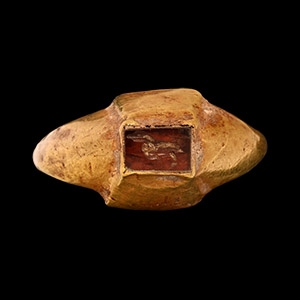
Roman Gold Ring with Bird Gemstone
2nd-4th century A.D.Estimate: £1,000 - 1,400 (+bp*)
Opening Bid: £500
With hollow-formed bezel set with a carnelian cloison, intaglio bird motif. 3.30 grams, 22.60 mm overall, 15.67 mm internal diameter (approximate size British H, USA 3 3/4, Europe 6.18, Japan 6)
Ex property of a late Japanese collector, 1970s. -
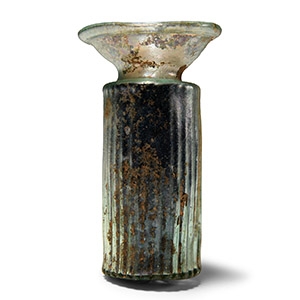
Roman Finely Ribbed Iridescent Glass Jar
1st-4th century A.D.Sold for (Inc. bp): £650
Comprising an iridescent glass tubular body with vertical ribbing reminiscent of an architectural column, narrow flat shoulder, funicular mouth with folded rim. 40 grams, 95 mm
Ex property of a late Japanese collector, 1970-2000s. -
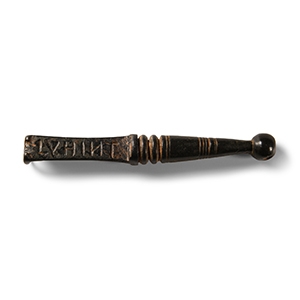
Roman Bronze Medical Implement with Inscription
1st-4th century A.D.Sold for (Inc. bp): £169
Comprising a pierced bulb finial and tapering shank with horizontal bands, ribbed median section and flat panel with perpendicular pierced disc finia; inscribed with Latin letters 'LV. HINT'. 25 grams, 84 mm
Acquired on the London, UK, art market in the 1990s. From a gentleman's private collection.
The fragment is possibly the upper part of a sharp pointed retractor, which was used for delicate operations on the tonsils and other internal parts of the body. The inscription probably refers to the name of the doctor, possibly LV[CIV]S HINT[IUS].
