
Loading, please wait...
LOT 0925
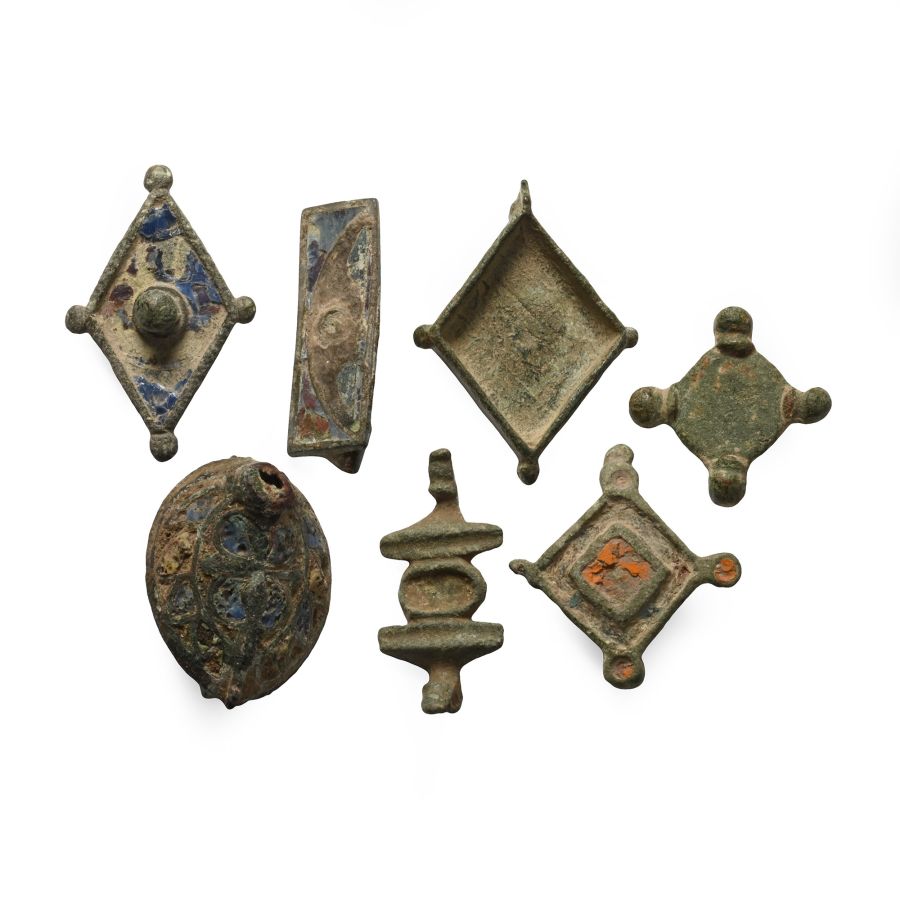
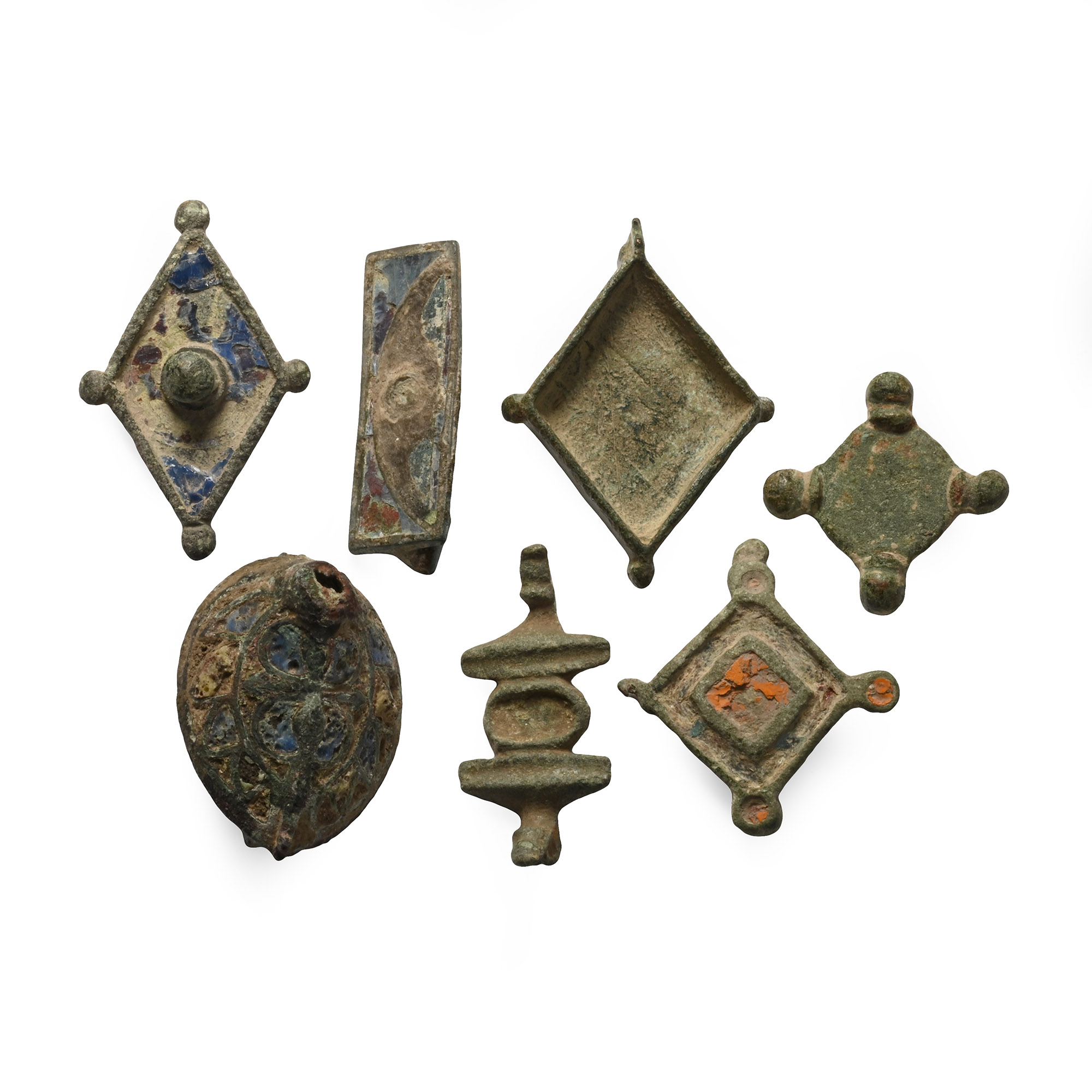
Roman Enamelled Bronze Plate Brooch Group
CIRCA 2ND CENTURY A.D.
7/8 - 1 1/4 in. (28.4 grams total, 22-33 mm).
Comprising seven brooches, most with remaining enamel. [7, No Reserve]
ProvenanceFrom a Dunmow, UK, collection; formed from 1970.
CONDITIONTimeLine Auctions follows a vetting process to ensure the authenticity and legality of all items, reinforcing our commitment to integrity and responsible trading. Each antiquity, antique, and coin lot undergoes thorough examination by a vetting committee of at least ten external specialists, professional trade association members, scientists, and archaeologists: Our Vetting Process
AUCTIONS:
TimeLine is a leading auction house specialising in antiquities, ancient art, collectables, natural history, coins, medals, and books. Our auctions offer museums, collectors, historians, and enthusiasts the opportunity to acquire unique and historically significant pieces.
-
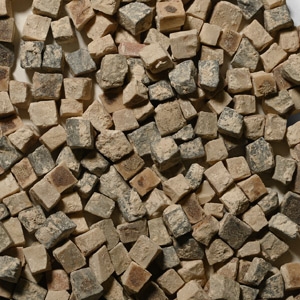
Roman Mosaic Stone Tesserae Group
1st-4th century A.D.Sold for (Inc. bp): £195
A mixed group of two hundred and fifty single tesserae of various colours and sizes, mostly cuboid. 350 grams total, 7-14 mm
From a collection acquired on the UK art market from various auction houses and collections mostly before 2000. From an important Cambridgeshire estate; thence by descent.
Roman mosaics were made from small cubes of natural stone and terracotta possibly cut from tile or brick. Each of these small cubes was called a tessera (plural tesserae) from the Latin word for dice. -
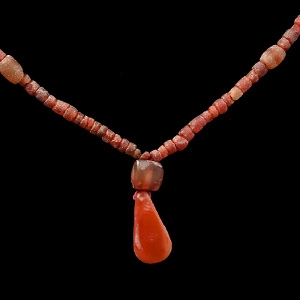
Roman Orange Glass Bead Necklace String
1st-4th century A.D. and laterSold for (Inc. bp): £65
A restrung group of tubular, annular and other types with teardrop pendant centrepiece, including some carnelian beads. 6.41 grams, 40.7 cm
London, UK, collection, 2000s. -

Roman Terracotta Oil Lamp with Grape Vines
1st-2nd century A.D.Sold for (Inc. bp): £98
Mould-made, the round handle absent, deep body, broad outward-sloping shoulder with grapes and vine decorations, separated from concave discus by two thin circular ridges with a groove between, central filling-hole, short round-tipped nozzle with two volutes on flat space between the discus edge and wick-hole, base marked by three circular grooves. 58 grams, 94 mm
From the collection of Mr W.A. Stewart, Director of School of Arts and Crafts, Cairo, 1919-1929. Acquired Christie's, London, Antiquities, Works of Art and Important Renaissance Bronzes, Plaquettes and Limoges Enamels, 8 July 1981, no.126 (part). From a private Wiltshire, UK, collection. Accompanied by a copy of the relevant Christie's catalogue page.
The lamp belongs to the Loeschke type VIII, eastern variants. These lamps appeared in the second half of the 1st century but were long-lived, for a number have been found in a 3rd century A.D. context in the necropolis of Beth Shearim. Whether this decor of typical double volutes was devised by lamp makers in Asia Minor or Attica, and who influenced whom, is not yet possible to determine. But it is worth signalling the use of this decor as anchored in the eastern part of the Mediterranean.
