Loading, please wait...
LOT 0886
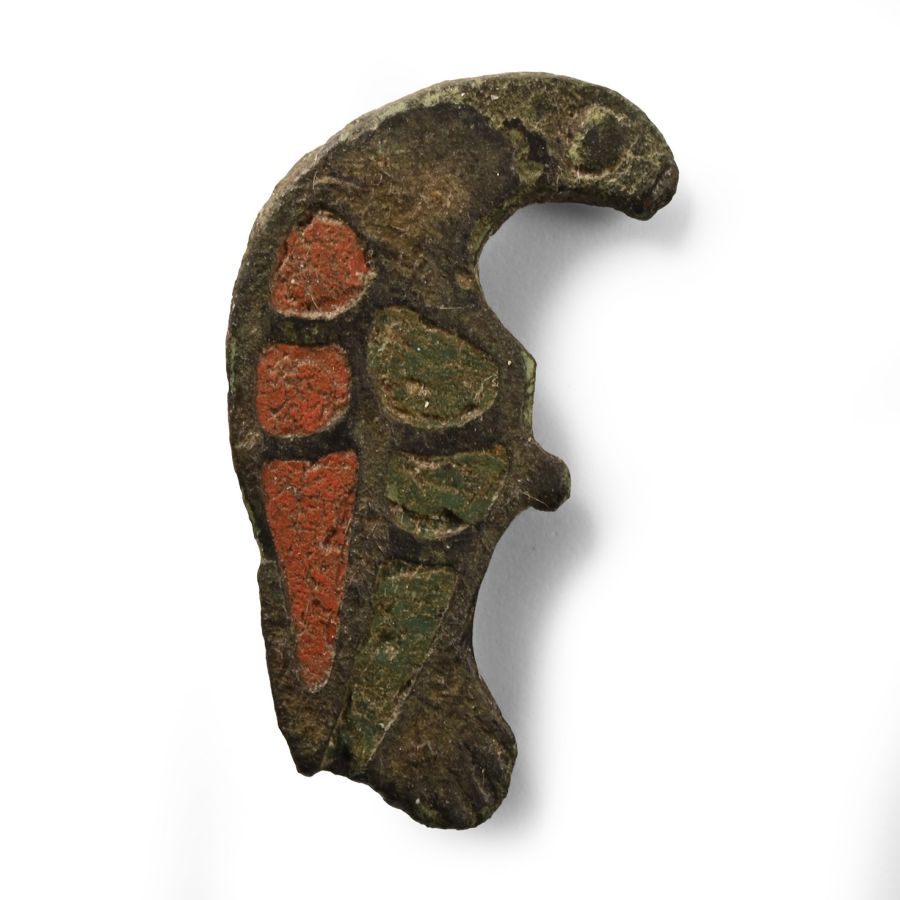
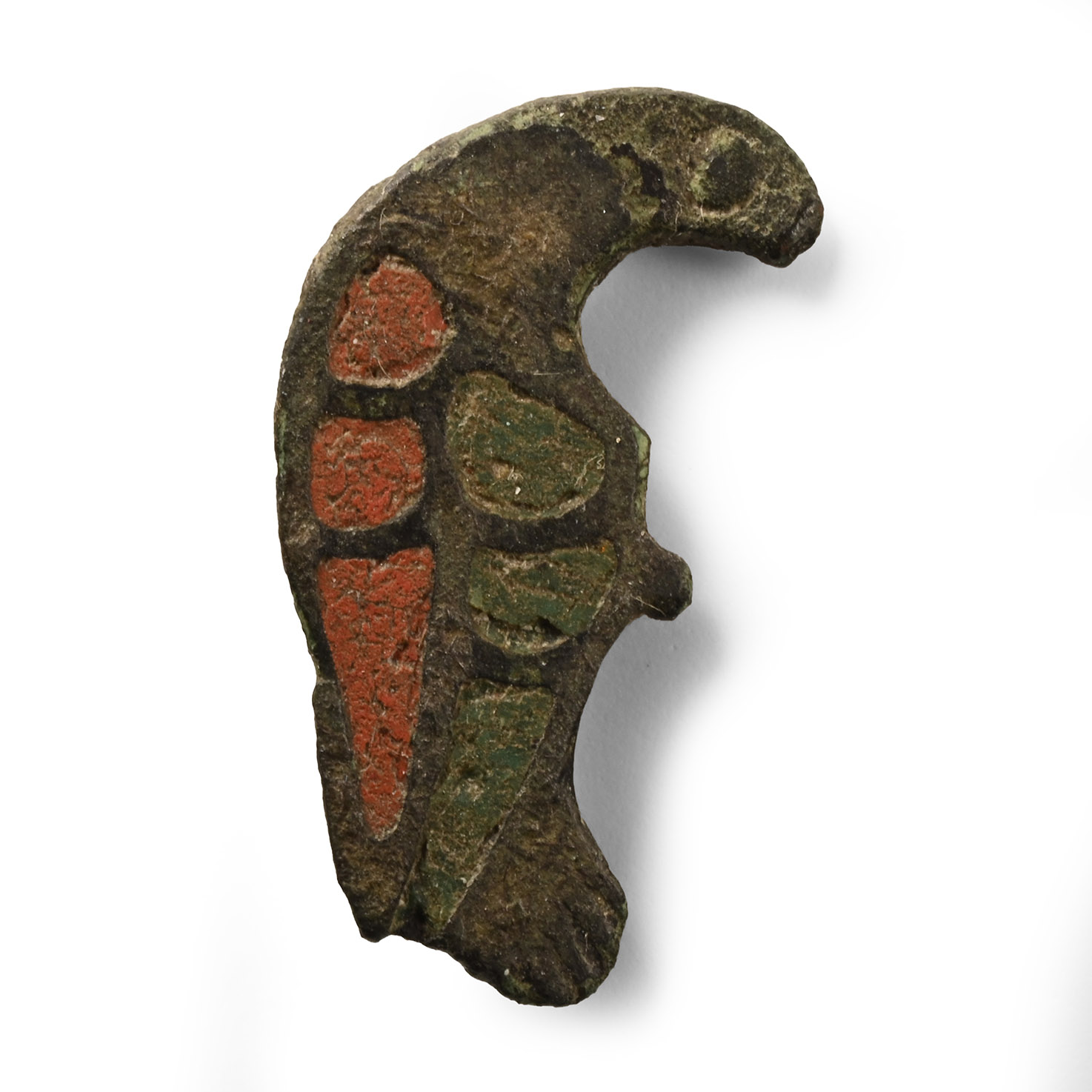
Roman Enamelled Bronze Eagle Plate Brooch
CIRCA 2ND CENTURY A.D.
1 in. (2.64 grams, 26 mm).
Aviform plate with enamel-filled cells to body and wing, remains of catch and pin-lug to reverse. [No Reserve]
ProvenanceFound Wiltshire, UK, before 1974.
LiteratureCf. Hattatt, R., Iron Age and Roman Brooches, Oxford, 1985, item 617, for type.
CONDITIONTimeLine Auctions follows a vetting process to ensure the authenticity and legality of all items, reinforcing our commitment to integrity and responsible trading. Each antiquity, antique, and coin lot undergoes thorough examination by a vetting committee of at least ten external specialists, professional trade association members, scientists, and archaeologists: Our Vetting Process
AUCTIONS:
TimeLine is a leading auction house specialising in antiquities, ancient art, collectables, natural history, coins, medals, and books. Our auctions offer museums, collectors, historians, and enthusiasts the opportunity to acquire unique and historically significant pieces.
-
Roman Bronze Figure of the Goddess Flora
Circa 2nd century A.D.Sold for (Inc. bp): £5,720
A rare depiction of Flora standing holding a separately cast garland in her left hand, wearing pointed shoes, a long tunica talaris and a himation as a veil over her head, her hair surmounted by a diadem decorated with rosettes and falling in long wavy tresses in front, the pupils of her eyes indented; mounted on a custom-made tiered base. 617 grams total, 25.7 cm high including stand
From an Egyptian family collection, Alexandria and Cairo, acquired in the early part of the 20th century in Egypt and Europe, and transferred from Egypt to northern European family residences in the early 1950s. Northern European private collection, by direct descent from the above in the 1970s. Acquired from the above by the previous owner in 2002. with Sotheby’s, New York, 5 June 2013, no.88. German private collection. Accompanied by copies of the German cultural export licence and copies of the relevant Sotheby’s catalogue pages. Accompanied by an academic report by Dr Raffaele D’Amato. This lot has been checked against the Interpol Database of stolen works of art and is accompanied by a search certificate number no.12042-216438.
Statuettes like the present one were used in the service of domestic cults and reflected native Greek or Roman cult practices. The Roman household shrine, or lararium, receives its name from the lares, the guardian spirits of the house and household, who were frequently displayed in the shrine, either in painted or sculpted form. -
Romano-British 'Colchester' Samian Ware Sherd Group with Makers' Stamps
1st-2nd century A.D.Sold for (Inc. bp): £390
Including sherds of rim and base with inked accession numbers; some with impressed stamps; inked collector's notes including 'Base Sherd / Potter's Stamp: Patrici.M. / (Patricius of Lezoux) / Provenance: Colchester'; with three display cards. 540 grams total, 6.5-16 cm
Found Colchester, Essex, UK, and Gaul. From the collection of a late East Anglian teacher and antiquarian who retired to the Isle of Wight in Hampshire, UK. He amassed a large collection of objects between the 1960s-1980s. Accompanied by two old handwritten collection display cards noting the provenance as from 'South Gaul' and two original typed slips noting the provenance as 'Colchester'. -
Romano-British 'Burgh Castle Fort' Decorated Sherd Collection
1st-4th century A.D.Sold for (Inc. bp): £195
Group of sherds of various types with impressed, slipped and moulded decoration; mounted on a card display board with title: 'DECORATED ROMAN POTTERY. / BURGH CASTLE.'. 295 grams, 31.2 x 20.5 cm
Found Burgh Castle, Norfolk, UK. From the collection of a late East Anglian teacher and antiquarian who retired to the Isle of Wight in Hampshire, UK. He amassed a large collection of objects between the 1960s-1980s.