
Loading, please wait...
LOT 0669
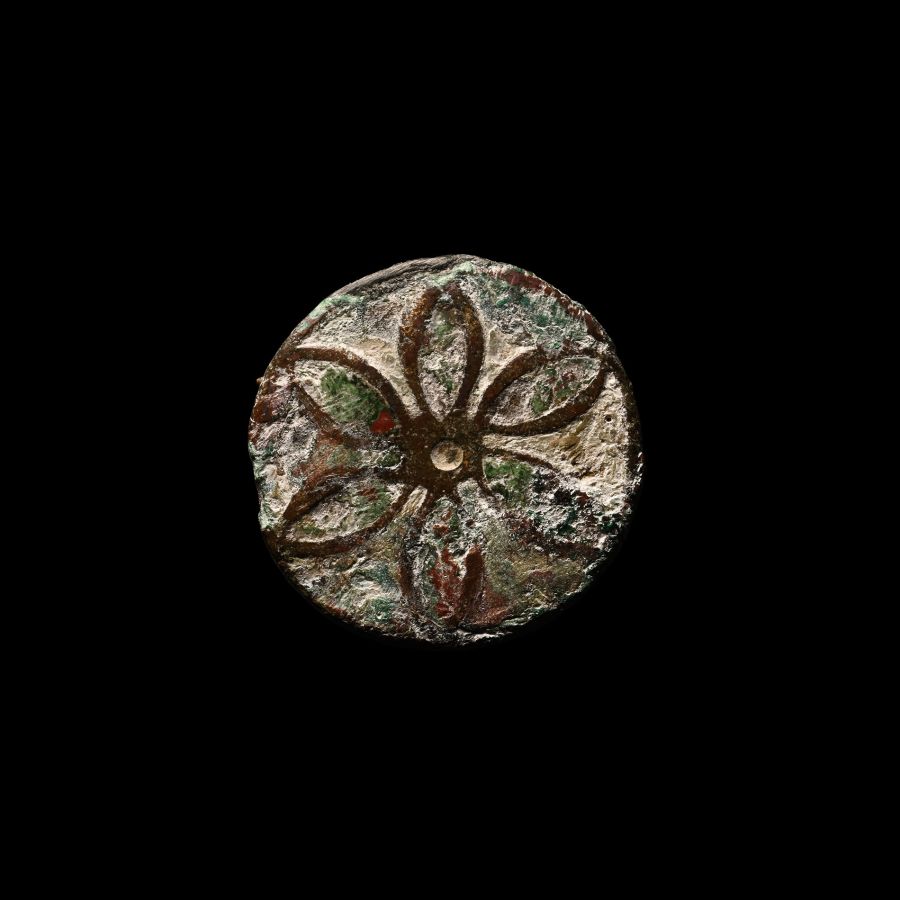
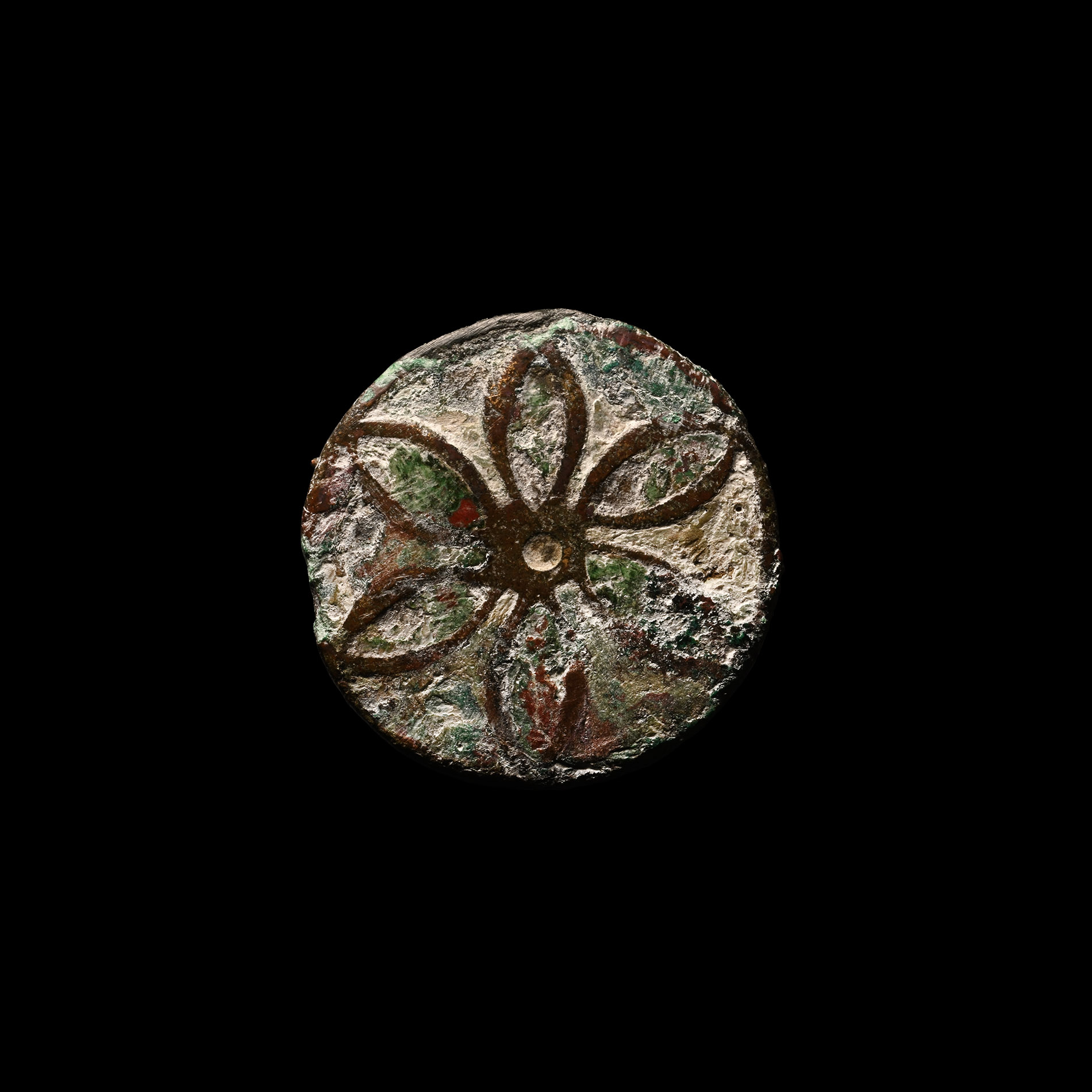
Roman Enamelled Bronze Disc Brooch
CIRCA 2ND CENTURY A.D.
1 1/4 in. (12.16 grams, 32 mm).
Complete with pin lug, pin and catchplate to reverse, displaying a floral design with remains of polychrome enamelling. [No Reserve]
ProvenanceAcquired from Gary Edwards at York Antiques Centre.
Accompanied by a certificate of authenticity signed by Gary Edwards.
TimeLine Auctions follows a vetting process to ensure the authenticity and legality of all items, reinforcing our commitment to integrity and responsible trading. Each antiquity, antique, and coin lot undergoes thorough examination by a vetting committee of at least ten external specialists, professional trade association members, scientists, and archaeologists: Our Vetting Process
AUCTIONS:
TimeLine is a leading auction house specialising in antiquities, ancient art, collectables, natural history, coins, medals, and books. Our auctions offer museums, collectors, historians, and enthusiasts the opportunity to acquire unique and historically significant pieces.
-
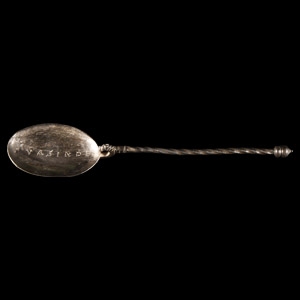
Roman Silver Cochlear Spoon Inscribed 'May You Live in God'
Circa 4th century A.D.Sold for (Inc. bp): £715
Composed of a decoratively twisted slender stem with onion knop finial and roughly D-shaped neck formed as the arched neck of a horse, the restored oval bowl bearing a Latin inscription '[V]IVASINDEO' to the interior, the underside gently carinated. 13.5 grams, 13.4 cm
Ex Garcia collection, France, 1990s-2000s.
According to the British Museum, the inscription corresponds to the phrase 'Vivas in deo', meaning 'May you live in God'. This inscription was common in the Roman Empire and especially in Roman Britain after the advent of Christianity. A small Roman silver disc, thought to have been part of a signet ring, dated to 4th-5th century and found near Swaffham, is inscribed 'Antonius, may you live in God (Antoni, vivas in Deo)'. It is highly possible that our spoon, if a liturgical object, was used to administer Holy Communion. -
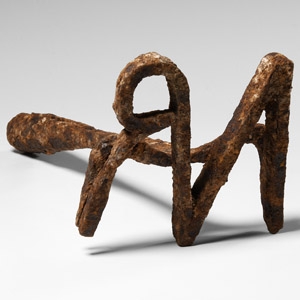
Late Roman Iron Branding Signaculum
5th-6th century A.D.Estimate: £100 - 140 (+bp*)
Opening Bid: £40
Featuring an elaborate monogram composed of Greek letters M, A, and P; rectangular section bar with tapering cylindrical socket. 432 grams, 21 cm
Acquired 1990s-early 2000s. East Anglian private collection.
Branding stamps or signacula, in particular those with large single letters, were used for marking livestock to identify the ownership, the breed, the quality and other features of the animal. These signacula were usually made in bronze, but iron examples are also preserved. -
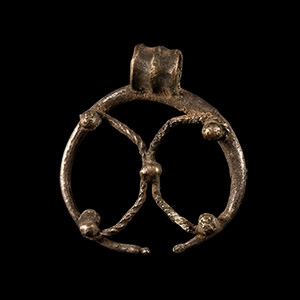
Roman Silver Lunar Pendant
1st-3rd century A.D. or laterSold for (Inc. bp): £85
Slender bodied and tapering towards the terminals, filigree crescents across the body adorned with five granules; integral gusseted suspension loop. 2.1 grams, 23 mm
From the collection of an EU gentleman formed in the 1990s. Acquired on the UK art market.
