
Loading, please wait...
LOT 0769
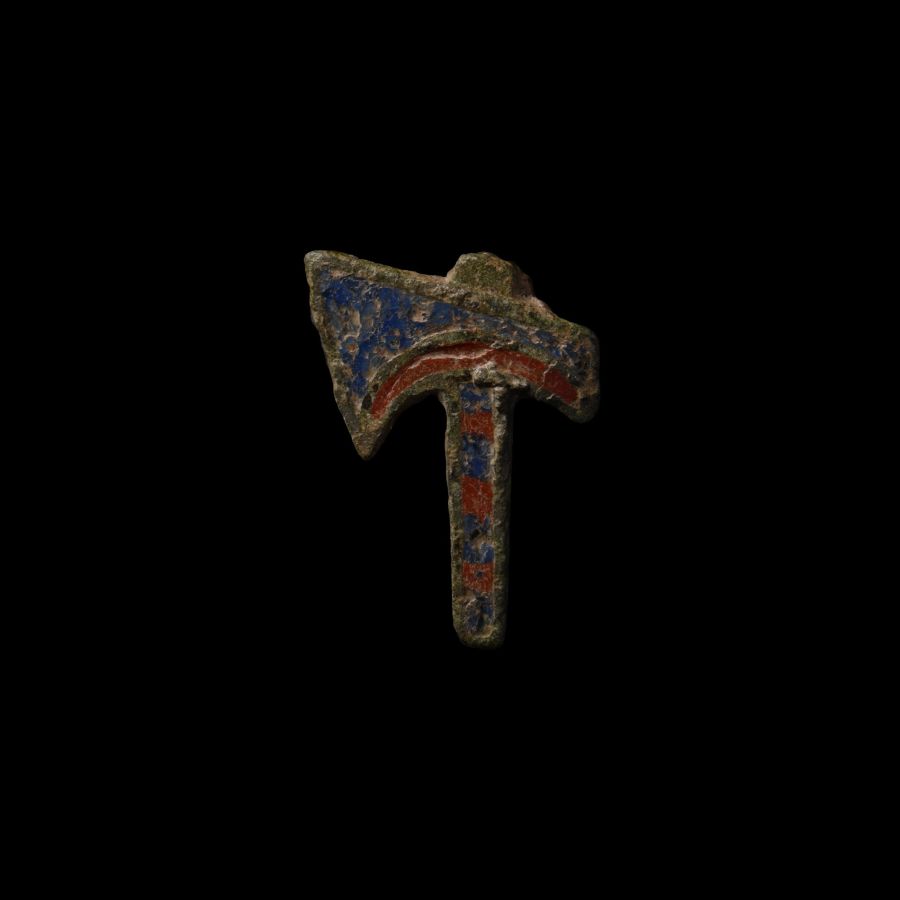
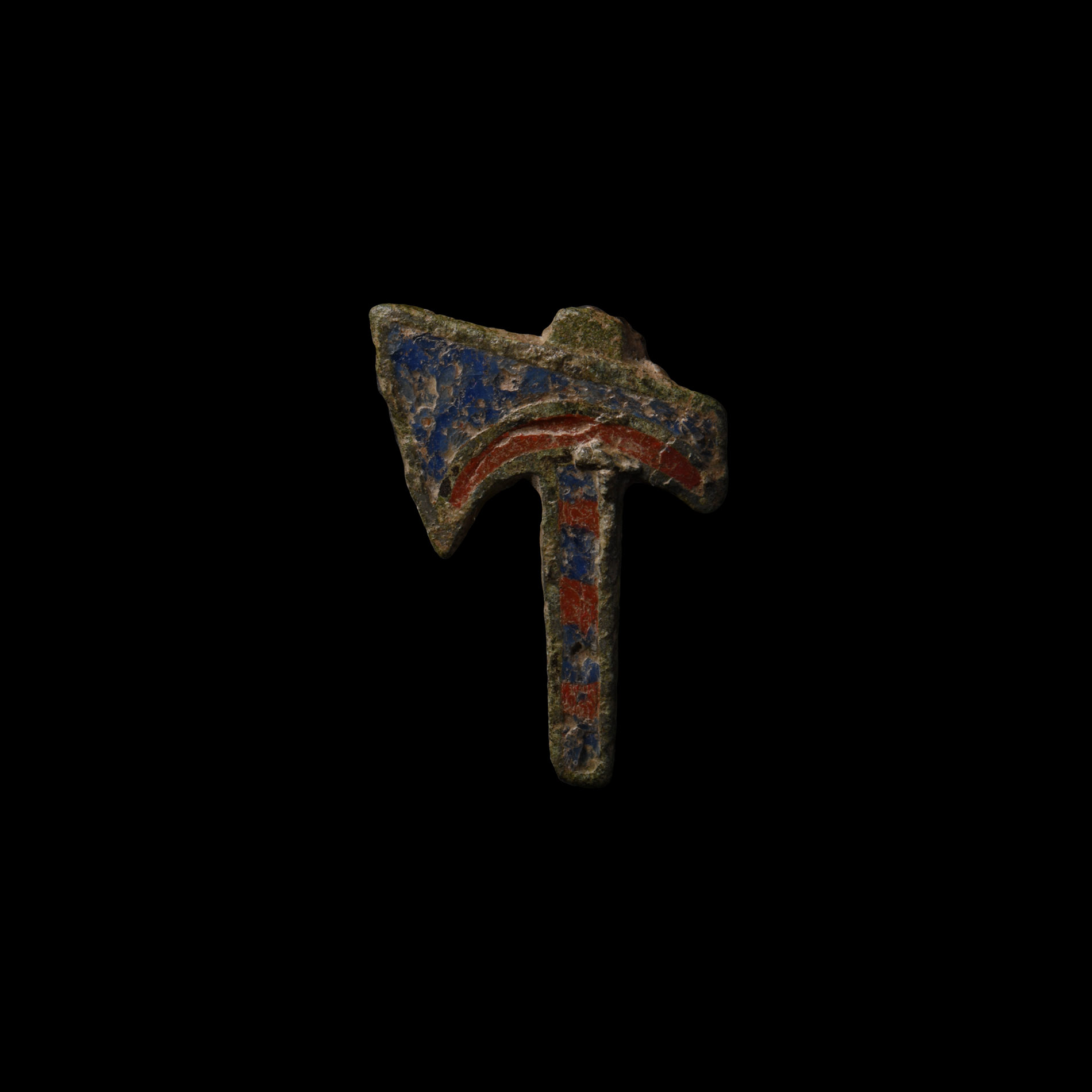
Roman Enamelled Bronze Axe Brooch
2ND CENTURY A.D.
1 in. (3.17 grams, 26 mm).
Complete with pin and catchplate to reverse; the axe decorated with blue and red enamel fill. [No Reserve]
ProvenanceAcquired in the 1970s.
Ex Clark collection, Dorset; UK.
TimeLine Auctions follows a vetting process to ensure the authenticity and legality of all items, reinforcing our commitment to integrity and responsible trading. Each antiquity, antique, and coin lot undergoes thorough examination by a vetting committee of at least ten external specialists, professional trade association members, scientists, and archaeologists: Our Vetting Process
AUCTIONS:
TimeLine is a leading auction house specialising in antiquities, ancient art, collectables, natural history, coins, medals, and books. Our auctions offer museums, collectors, historians, and enthusiasts the opportunity to acquire unique and historically significant pieces.
-
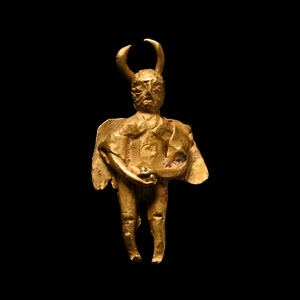
Roman Gold Miniature God Pendant
2nd century A.D.Sold for (Inc. bp): £364
The male figure shown nude with his hands held in front of his genitals, depicted with beard and stylised facial features; remains of suspension loop above. 1.08 grams, 16 mm
UK private collection before 2000. UK art market. Property of a London gentleman. -
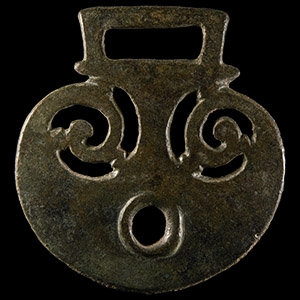
Roman Bronze Military Equestrian Pelta Fitting
1st-3rd century A.D.Sold for (Inc. bp): £169
Formed with an openwork pelta-shaped body with roughly circular void; sub-rectangular projecting fitting lug. 94 grams, 86 mm
Acquired on the EU art market around 2000. From the collection of a North American gentleman. -
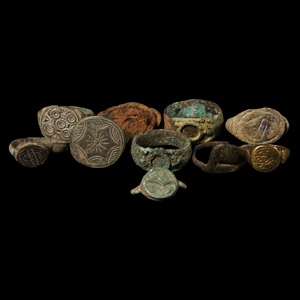
Roman and Other Bronze Ring Group
2nd century B.C. and laterSold for (Inc. bp): £130
Comprising mainly bronze finger rings and fragments, including one with a hatched field and reserved panel with central asterisk. 43.4 grams total, 18-25 mm
From the private collection of the late Mr S.M., London, UK.
