
Loading, please wait...
LOT 0683
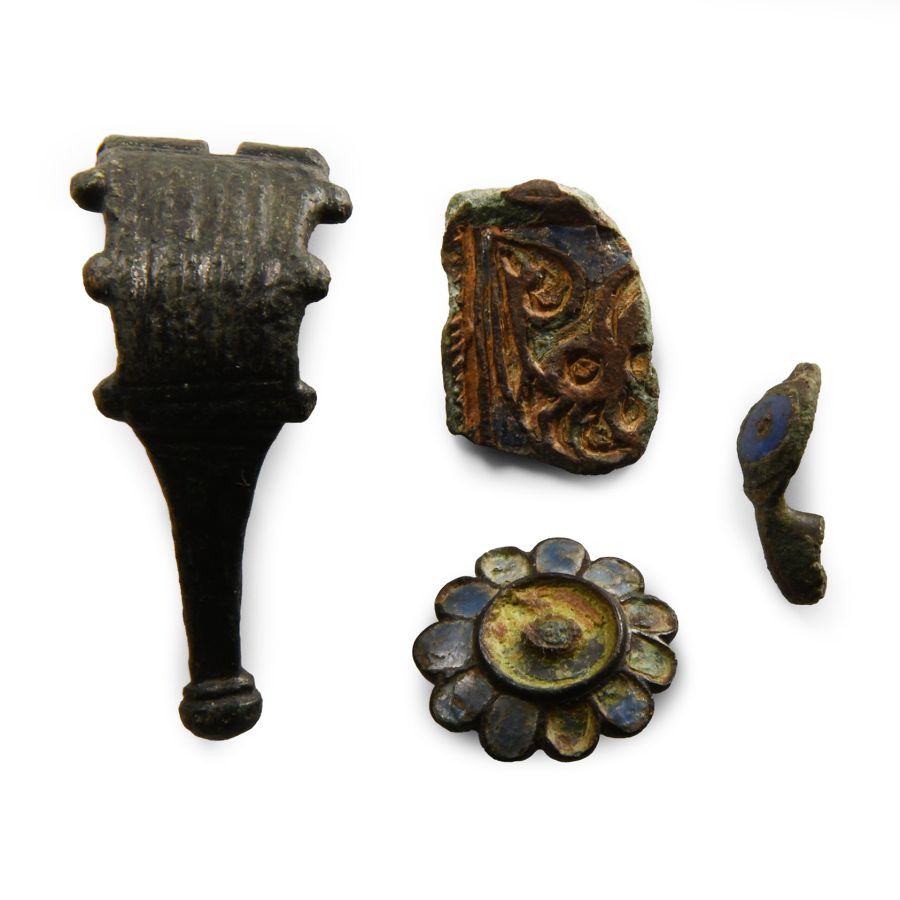
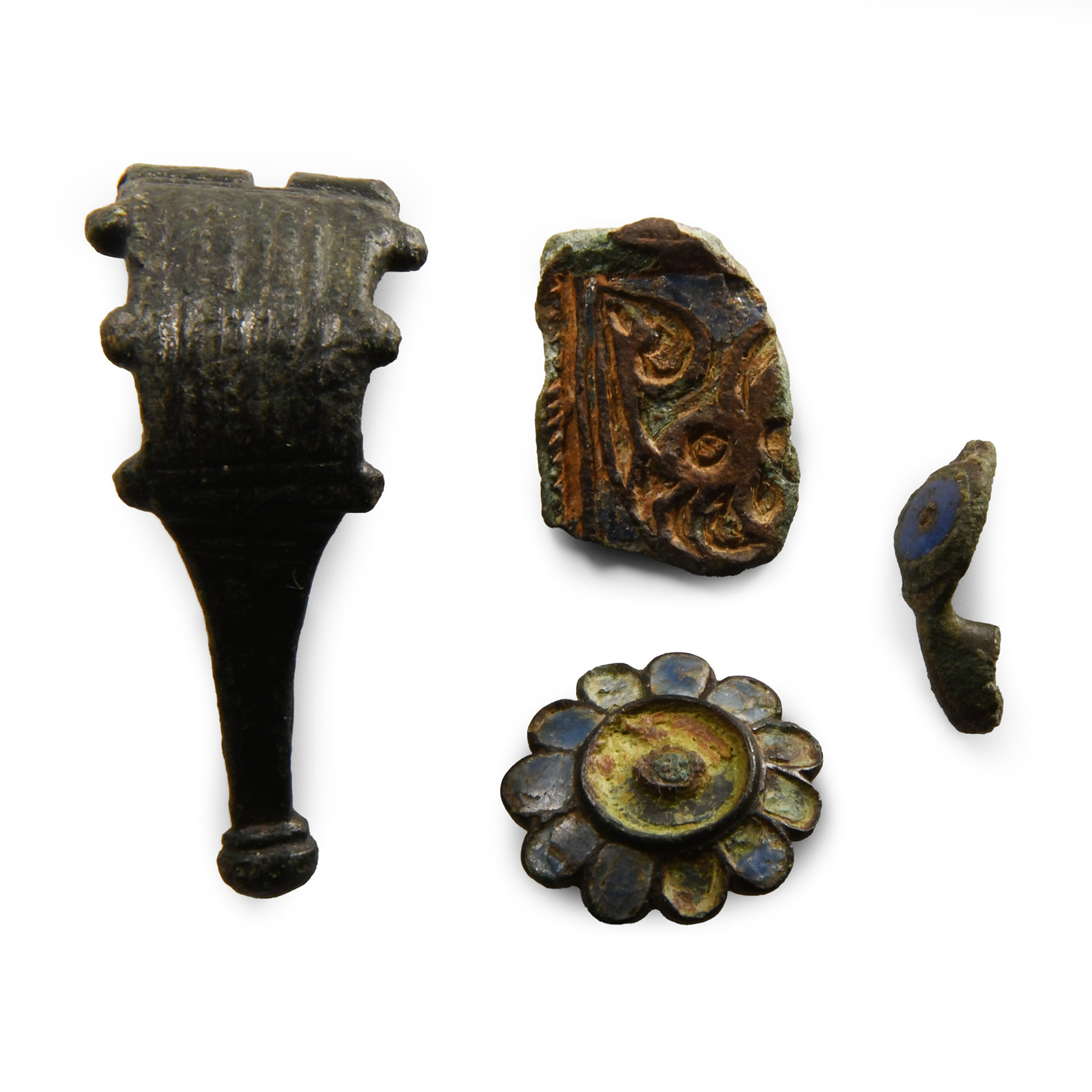
Roman Enamelled Bronze and Other Artefact Group
2ND CENTURY A.D.
3/4 - 2 1/8 in. (43.1 grams total, 22-55 mm).
Including a substantial Aucissa-type brooch, floral strap-slider and other items. [4, No Reserve]
ProvenanceFound whilst searching with a metal detector in Yorkshire, UK.
CONDITIONTimeLine Auctions follows a vetting process to ensure the authenticity and legality of all items, reinforcing our commitment to integrity and responsible trading. Each antiquity, antique, and coin lot undergoes thorough examination by a vetting committee of at least ten external specialists, professional trade association members, scientists, and archaeologists: Our Vetting Process
AUCTIONS:
TimeLine is a leading auction house specialising in antiquities, ancient art, collectables, natural history, coins, medals, and books. Our auctions offer museums, collectors, historians, and enthusiasts the opportunity to acquire unique and historically significant pieces.
-
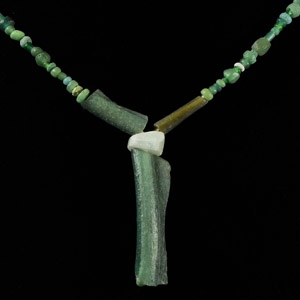
Roman and Other Bead Necklace
1st-4th century A.D. and laterSold for (Inc. bp): £59
Restrung designer necklace with fusiform and graduated seed beads, the centrepiece a hollow-formed rim fragment. 12.3 grams, 31.5 cm
Acquired on the London, UK, art market in the 1990s. Ex London, UK, gallery. -
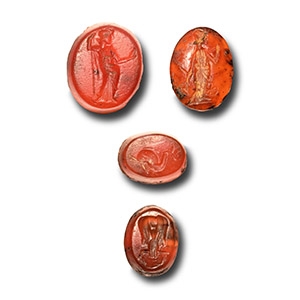
Roman Carnelian Gemstone Collection
2nd-4th century A.D.Sold for (Inc. bp): £416
Two with intaglio standing figure, one with a dolphin and one with a scarab. 1.2 grams total, 8-10 mm
From the Altstetton collection, Switzerland, 1969. -
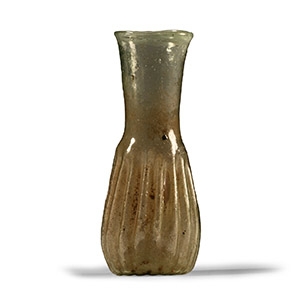
Late Roman Green Glass Vessel
1st-3rd century A.D.Sold for (Inc. bp): £46
A small mould-blown vessel with body formed from asymmetrical pleats, long neck, flared and rolled rim, pontil on base. 10.4 grams, 70 mm
Acquired from Allan Cherry, Bournemouth, UK, 2004. Ian Wilkinson collection, Nottinghamshire, UK.
