
Loading, please wait...
LOT 0796
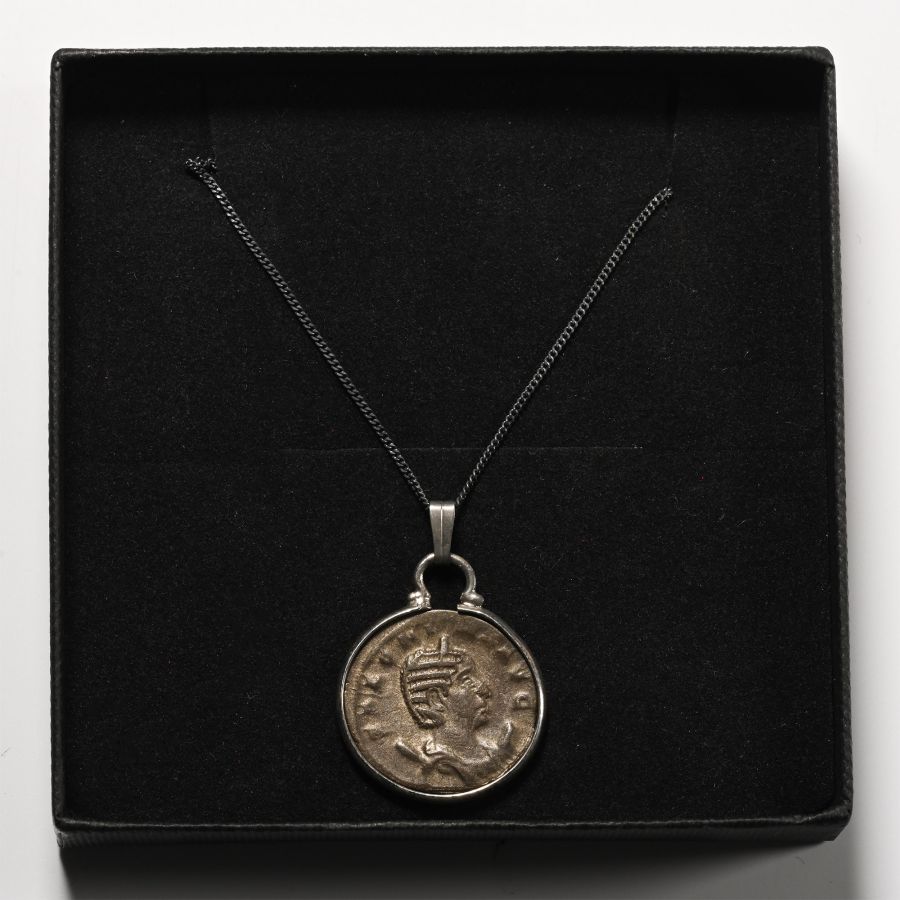
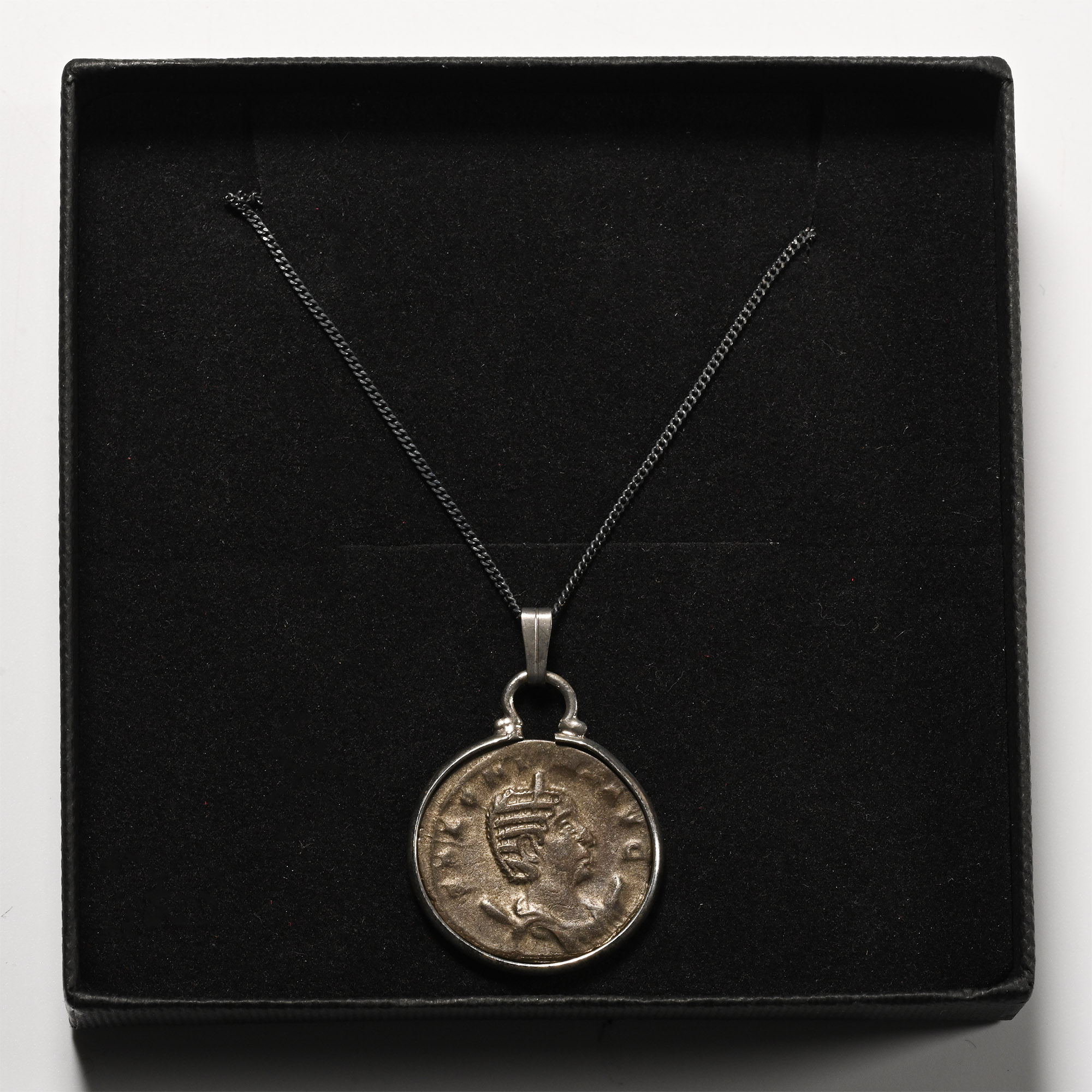
Roman Empress Salonina Silver Coin in Pendant Necklace
MID 3RD CENTURY A.D.
1 in. (6.2 grams total, pendant: 27 mm).
Antoninianus showing the bust of the empress diademed and draped, facing right and set on crescent, legend 'SALONINA AVG' surrounding; the reverse with seated Pietas reaching towards two children before him, legend 'PIETAS AVGG' surrounding; set in a metal frame with loop and chain. [No Reserve]
ProvenanceProperty of a Cambridgeshire, UK, gentleman.
This lot is accompanied by an illustrated lot declaration signed by the Head of the Antiquities Department, Dr Raffaele D'Amato.
Publia Licinia Julia Cornelia Salonina (died 268, Mediolanum) was an Augusta of the Roman Empire, married to Roman Emperor Gallienus and mother of Valerian II, Saloninus, and Marinianus.
CONDITIONTimeLine Auctions follows a vetting process to ensure the authenticity and legality of all items, reinforcing our commitment to integrity and responsible trading. Each antiquity, antique, and coin lot undergoes thorough examination by a vetting committee of at least ten external specialists, professional trade association members, scientists, and archaeologists: Our Vetting Process
AUCTIONS:
TimeLine is a leading auction house specialising in antiquities, ancient art, collectables, natural history, coins, medals, and books. Our auctions offer museums, collectors, historians, and enthusiasts the opportunity to acquire unique and historically significant pieces.
-
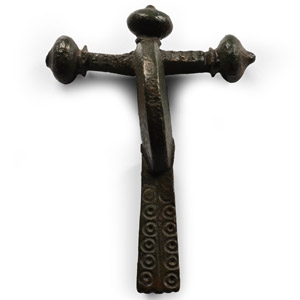
Roman Bronze Crossbow Brooch
4th century A.D.Sold for (Inc. bp): £117
With onion knop finials, deep bow, stepped junction with foot, trapezoidal foot with ring-and-dot motifs and integral catch; hinged pin to reverse. 90 grams, 86 mm
Ex German collection, 1990s. This lot is accompanied by an illustrated lot declaration signed by the Head of the Antiquities Department, Dr Raffaele D’Amato. This lot is accompanied by an illustrated lot declaration signed by the Head of the Antiquities Department, Dr Raffaele D'Amato. -
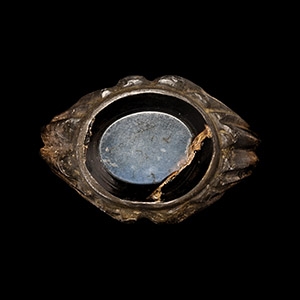
Large Roman Ring with Nicolo Gemstone
Mid to late 3rd century A.D.Sold for (Inc. bp): £715
Comprising a substantial hoop with angled and fluted shoulders, oval bezel set with a nicolo gemstone. 32.96 grams, 33.36 mm overall, 18.51 mm internal diameter (approximate size British K 1/2, USA 5 1/2, Europe 10.58, Japan 10)
Ex German art market, 2000s. Acquired from an EU collector living in London. From the collection of a Surrey, UK, gentleman. This lot is accompanied by an illustrated lot declaration signed by the Head of the Antiquities Department, Dr Raffaele D'Amato. -
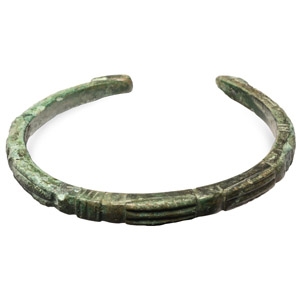
Late Roman Decorated Bronze Military Bracelet
4th-5th century A.D.Sold for (Inc. bp): £124
Thick penannular body with tapering finials, the upper faces divided into decorative panels with linear motifs. 24.1 grams, 65 mm
Ex German art market, 2000s. Acquired from an EU collector living in London. From the collection of a Surrey, UK, gentleman. This lot is accompanied by an illustrated lot declaration signed by the Head of the Antiquities Department, Dr Raffaele D'Amato.
