
Loading, please wait...
LOT 0145
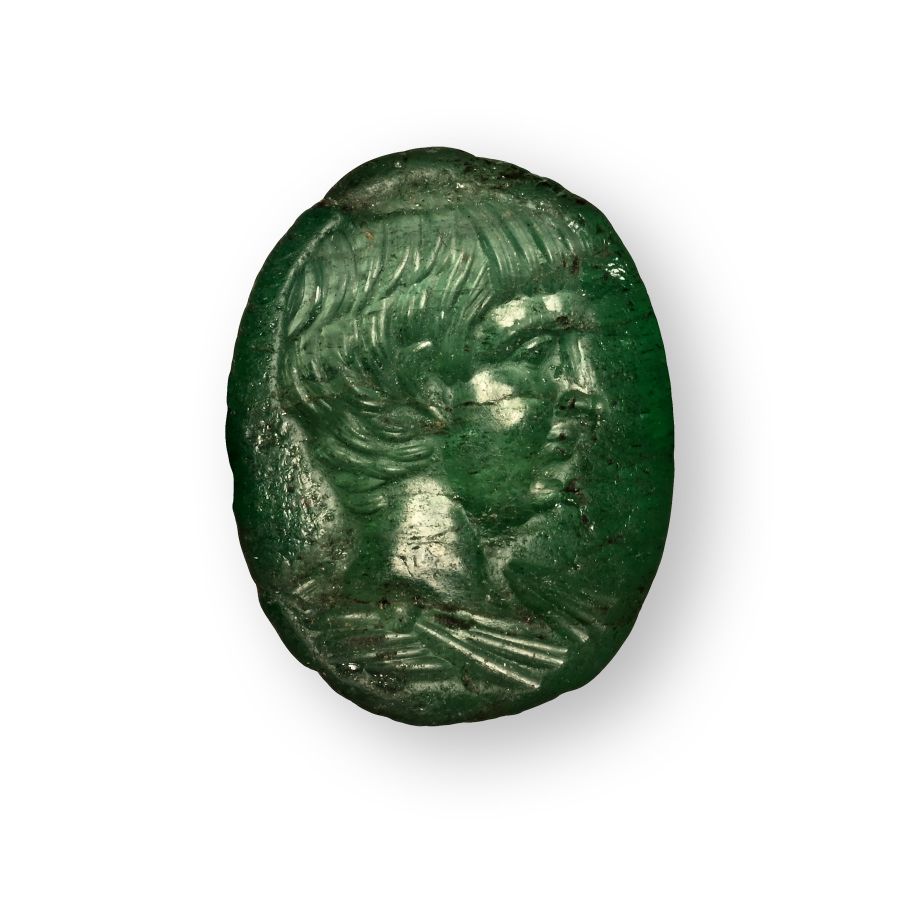
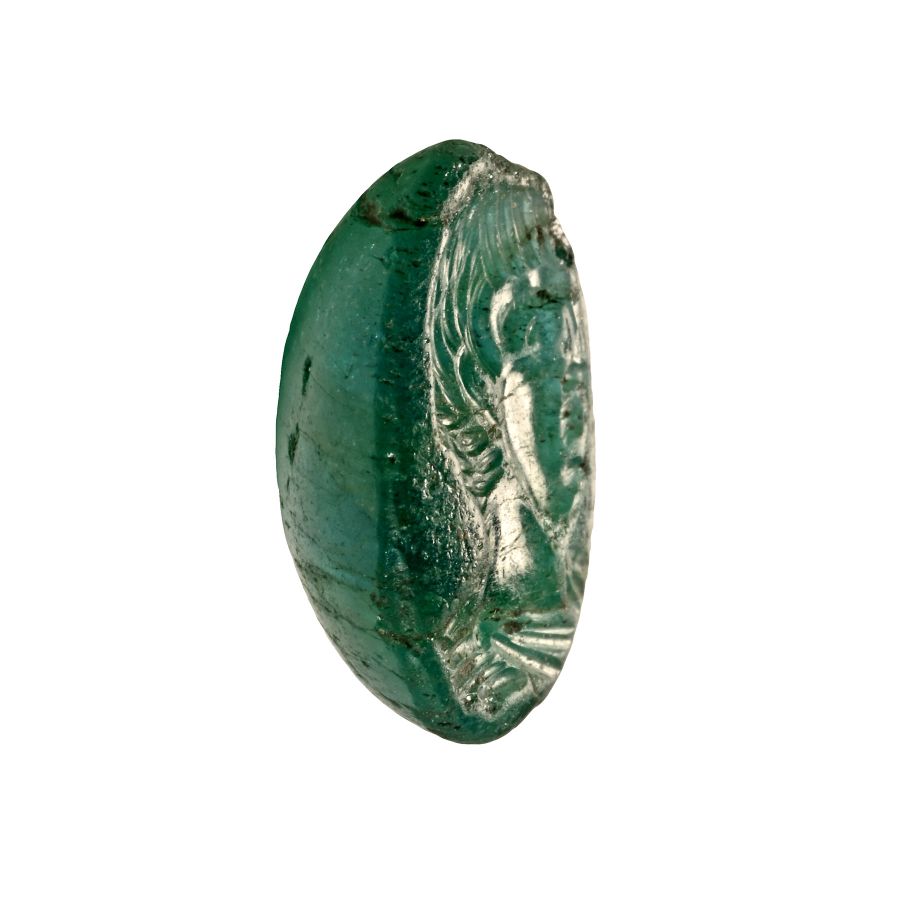
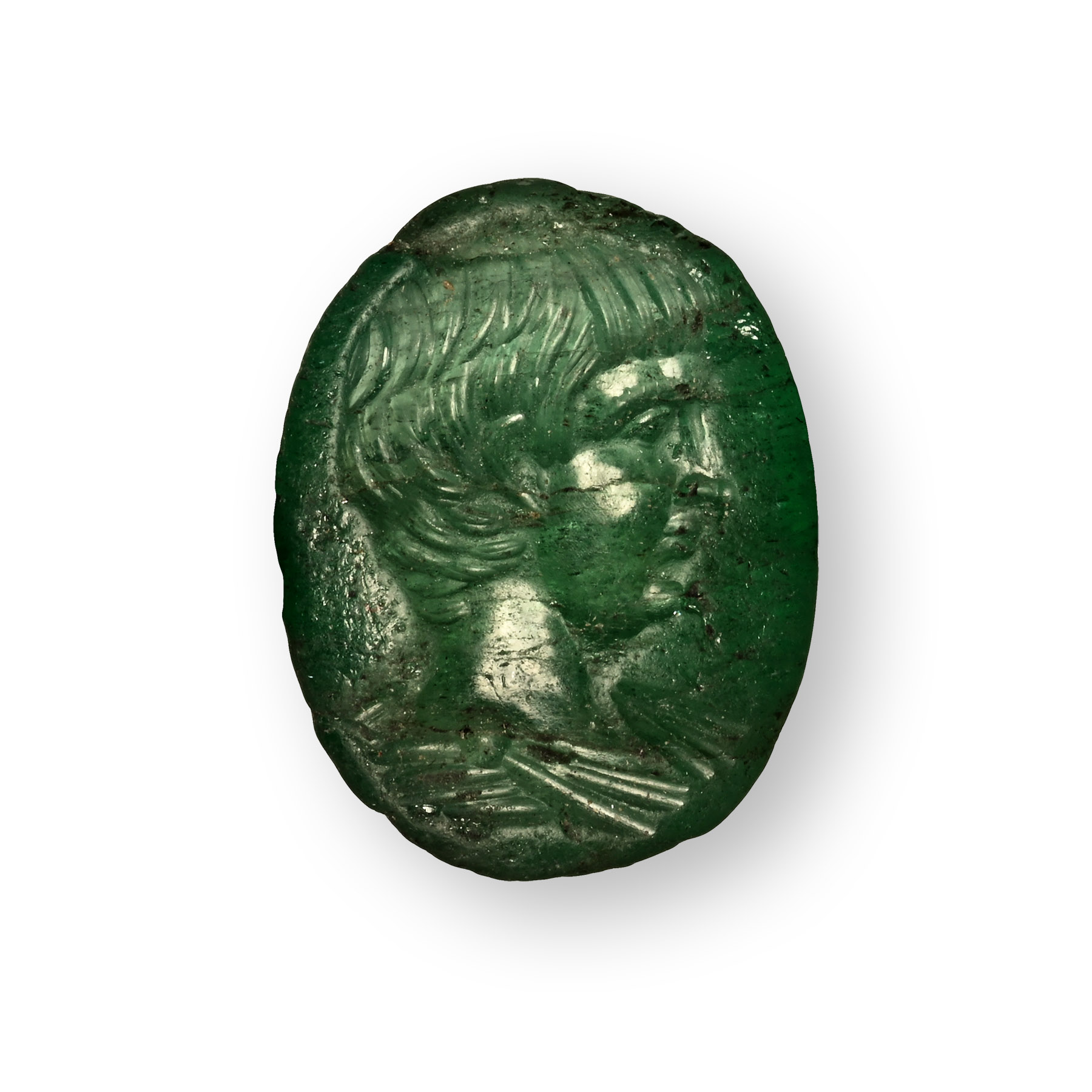
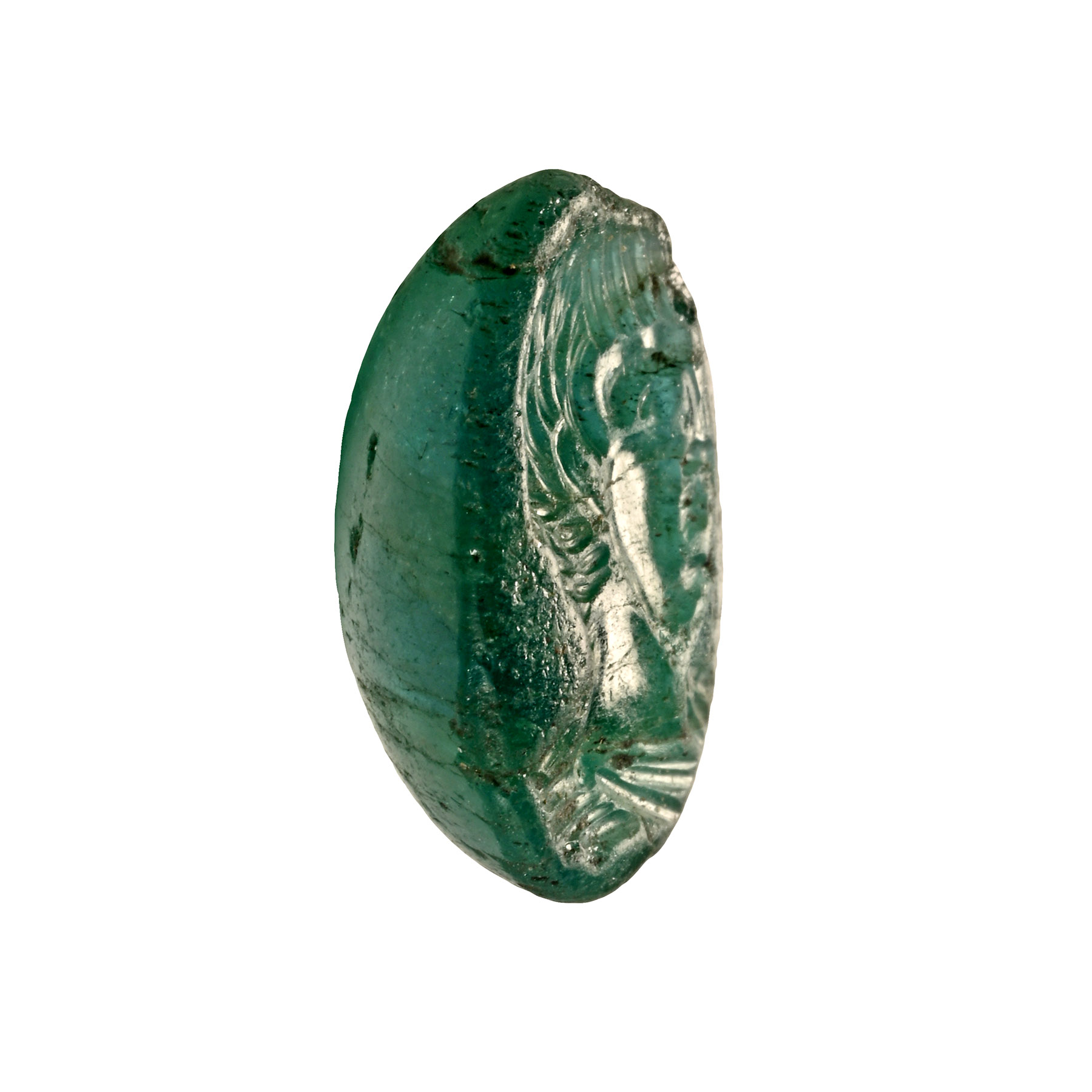
Roman Emerald Gemstone with Portrait of Young Nero
51-55 A.D.
5/8 in. (2.17 grams, 17 mm).
Depicting Nero as a young boy, either as crown prince or within the first year of his reign in his first known portrait type, unequivocal with his long hair fringe.
ProvenanceEx Paul Munro Walker collection, Bournemouth, UK, 1970s.
Private collection of Alexander Cotton, Hampshire, UK, sold October 1986.
From a London gentleman's, UK, collection, in the 1990s.
This lot has been checked against the Interpol Database of stolen works of art and is accompanied by a search certificate number no.12104-216215.
For the bust type cf. denarius of Nero and Agrippina dating to 55 AD; Roman Silver Coins: RSC 4, Roman Imperial Coins: RIC 7, and Roman Coins and their values, Sear 2044.
FootnotesDr Ittai Gradel writes: 'Date is AD 51-55. On most glyptic portraits from shortly after he became emperor, so 54-55, he is shown laurelled ... However, on the coins he is shown also bare-headed even as emperor in 54-55 (second coin, denarius). Again, on coins his bust is shown draped only before he became emperor in 54 (first coin, aureus), but cameos show him draped also as emperor (as e. g. the Marlborough one: but there are several known). It is therefore not possible to say if the emerald shows him as crown prince or as emperor, and I cannot date it more precisely than 51-55.'
CONDITIONTimeLine Auctions follows a vetting process to ensure the authenticity and legality of all items, reinforcing our commitment to integrity and responsible trading. Each antiquity, antique, and coin lot undergoes thorough examination by a vetting committee of at least ten external specialists, professional trade association members, scientists, and archaeologists: Our Vetting Process
AUCTIONS:
TimeLine is a leading auction house specialising in antiquities, ancient art, collectables, natural history, coins, medals, and books. Our auctions offer museums, collectors, historians, and enthusiasts the opportunity to acquire unique and historically significant pieces.
-
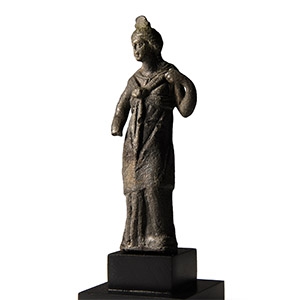
Roman Bronze Statuette of Isis
1st-3rd century A.D.Sold for (Inc. bp): £546
The goddess standing, wearing an Ionic chiton and himation secured by a characteristic knot tied between her breasts, the folds cascading to the floor; her left hand modelled open and held above her breast; her centre-parted wavy locks fastened with a band, pulled back in a chignon at the nape of her neck and surmounted by a hair-comb; mounted on a custom-made display stand. 280 grams total, 13.3 cm including stand
From a collection acquired on the UK art market from various auction houses and collections mostly before 2000. From an important Cambridgeshire estate; thence by descent.
Statuettes of Fortuna, the goddess of chance, were evidently popular during the Roman Imperial times judging by the large number that have been found, and with the advent of the cult of Isis within the Roman Empire, the two divinities were identified as a single goddess. -
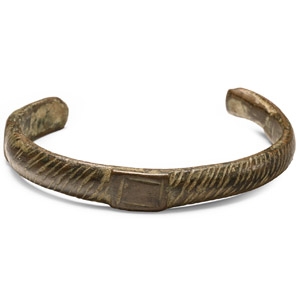
Roman Bronze Bracelet
1st-4th century A.D.Sold for (Inc. bp): £72
Penannular D-section in form with three raised rectangular panels, incised hatching. 16.70 grams, 52 mm
Ex German art market, 2000s. Acquired from an EU collector living in London. From the collection of Surrey, UK, gentleman. -
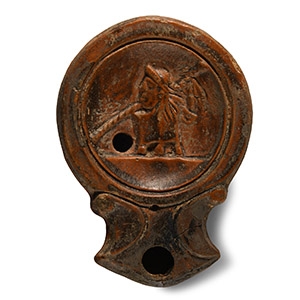
Roman Oil Lamp with Theatre Scene
Late 1st century A.D.Sold for (Inc. bp): £481
Depicting a theatre scene to central discus; voluted angular-tipped nozzle; base marked off by a circular groove. 45.7 grams, 86 mm
Private collection since the 1990s. with Gorny & Mosch, 12 December 2012, lot 491. Property of a Bristol, UK, gentleman. Accompanied by copies of the relevant Gorny & Mosch catalogue pages.
