
Loading, please wait...
LOT 0824
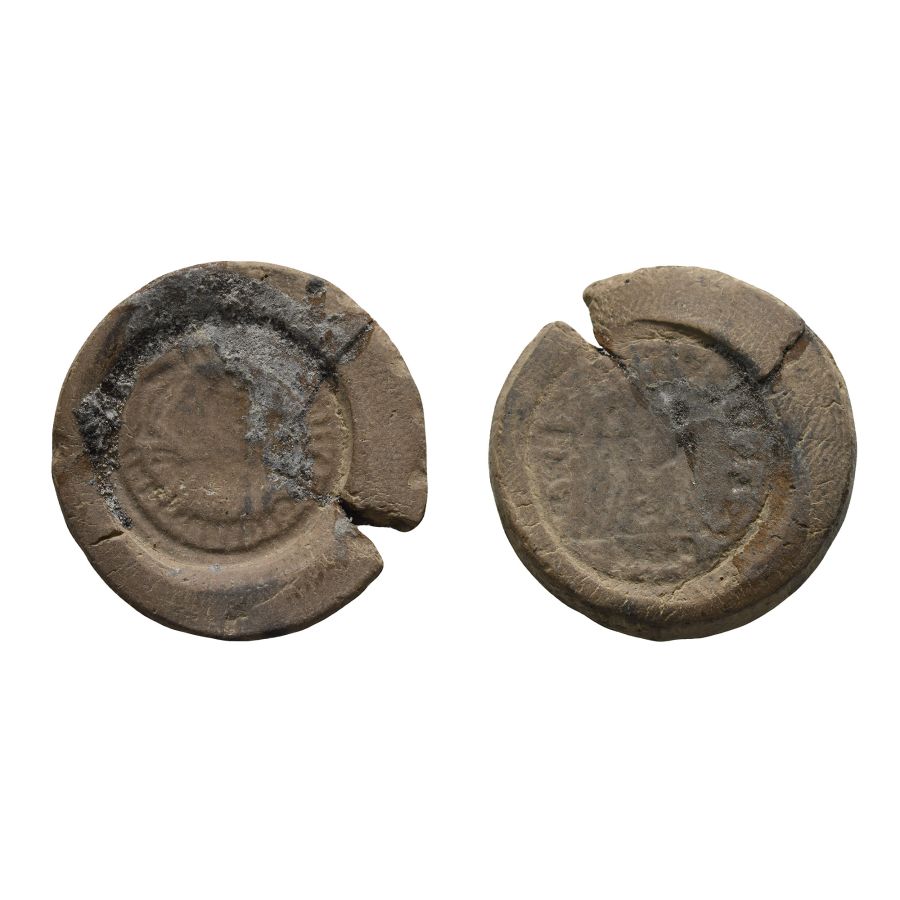
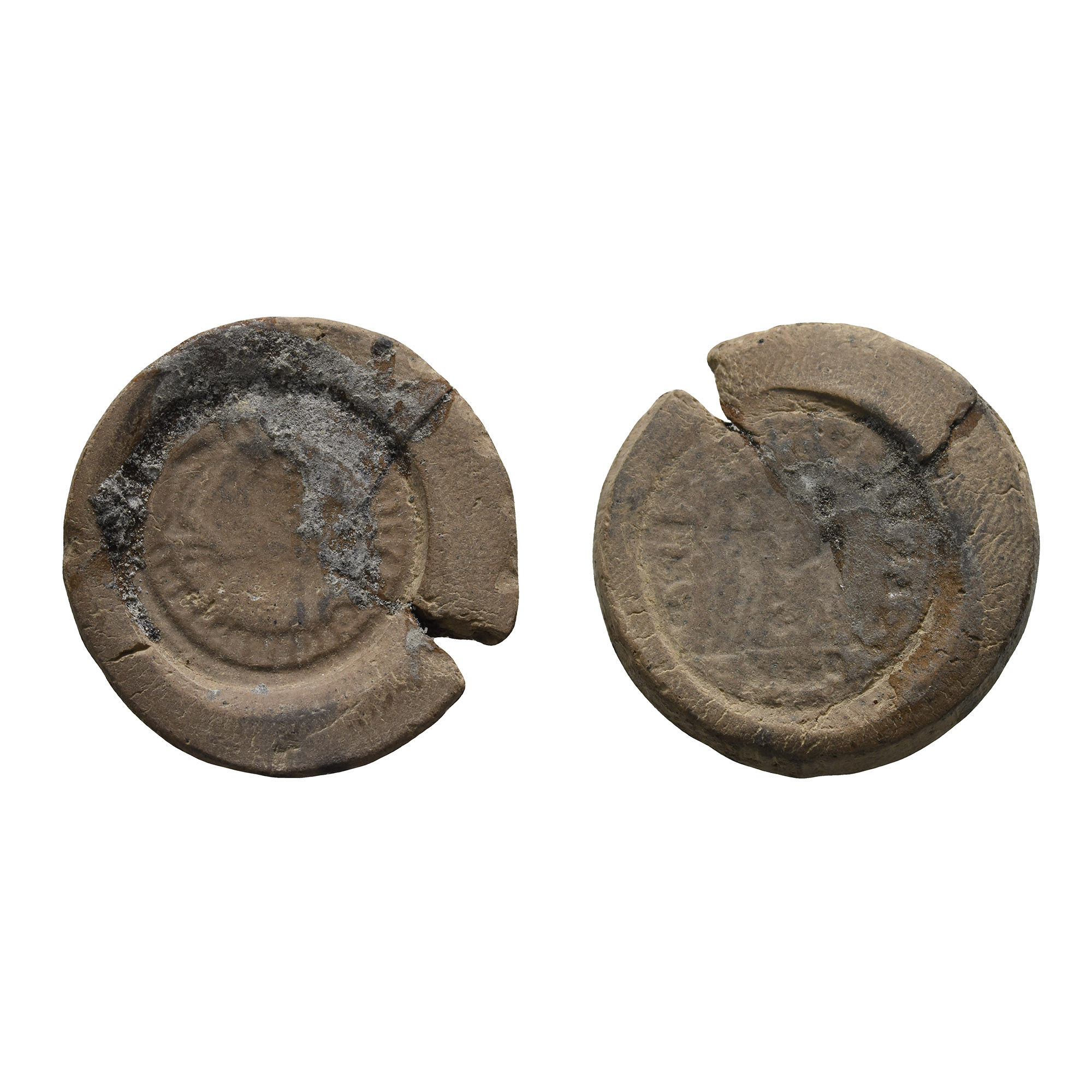
Roman Diocletian Terracotta Forger's Coin Mould
CIRCA LATE 3RD CENTURY A.D.
1 1/8 in. (4.59 grams, 28 mm).
Terracotta disc with possibly Diocletian (284-305 A.D.) coin impression to each face from which to cast counterfeit coins; chipped. [No Reserve]
ProvenanceFrom the collection of a gentleman, acquired on the London art market in the 1990s.
This lot is accompanied by an illustrated lot declaration signed by the Head of the Antiquities Department, Dr Raffaele D'Amato.
TimeLine Auctions follows a vetting process to ensure the authenticity and legality of all items, reinforcing our commitment to integrity and responsible trading. Each antiquity, antique, and coin lot undergoes thorough examination by a vetting committee of at least ten external specialists, professional trade association members, scientists, and archaeologists: Our Vetting Process
AUCTIONS:
TimeLine is a leading auction house specialising in antiquities, ancient art, collectables, natural history, coins, medals, and books. Our auctions offer museums, collectors, historians, and enthusiasts the opportunity to acquire unique and historically significant pieces.
-
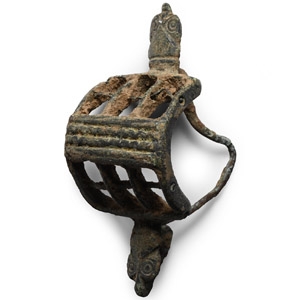
Roman Bronze Openwork Equal-Arm Brooch with Pin
3rd-4th century A.D.Sold for (Inc. bp): £46
With a wide openwork bow, short foot to each end with a stylised face; pin lugs and pin to the reverse. 16 grams, 55 mm
Acquired in the mid 1980s-1990s. Private collection, Switzerland, thence by descent. Private collection, since the late 1990s. This lot is accompanied by an illustrated lot declaration signed by the Head of the Antiquities Department, Dr Raffaele D'Amato. -
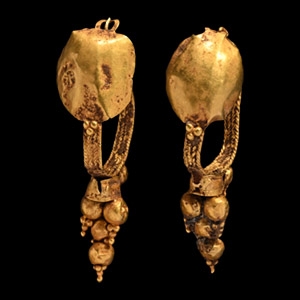
Roman Gold Earrings with Shield
3rd-4th century A.D.Estimate: £700 - 900 (‡+bp*)
Opening Bid: £315
A matched pair, each a braided hoop with an applied shield-shaped disc, collar with a cluster of hollow spherical grapes with granule clusters below. 6.57 grams total, 42-44 mm
Acquired in 1992. Private collection, Switzerland, thence by descent. Private collection, since the late 1990s. This lot is accompanied by an illustrated lot declaration signed by the Head of the Antiquities Department, Dr Raffaele D'Amato. -
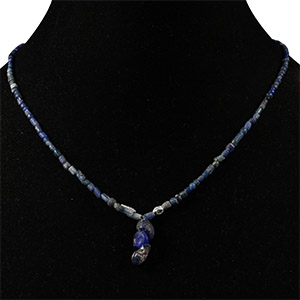
Roman Blue Glass Bead Necklace String
1st-4th century A.D. and laterSold for (Inc. bp): £60
Restrung group of graduated oblate and other beads, central feature composed of larger irregular fragments and a bulbous pendant. 5.73 grams, 38.5 cm
Ex London, UK, collection, 1990s. This lot is accompanied by an illustrated lot declaration signed by the Head of the Antiquities Department, Dr Raffaele D'Amato.
