
Loading, please wait...
LOT 0893
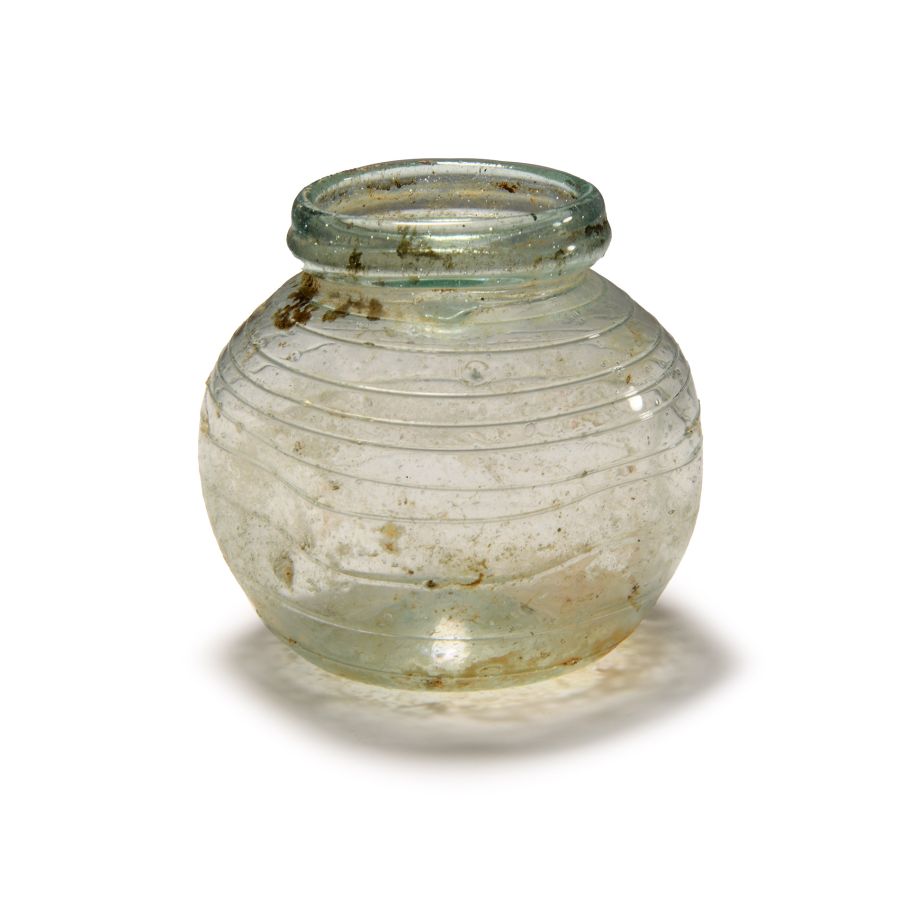
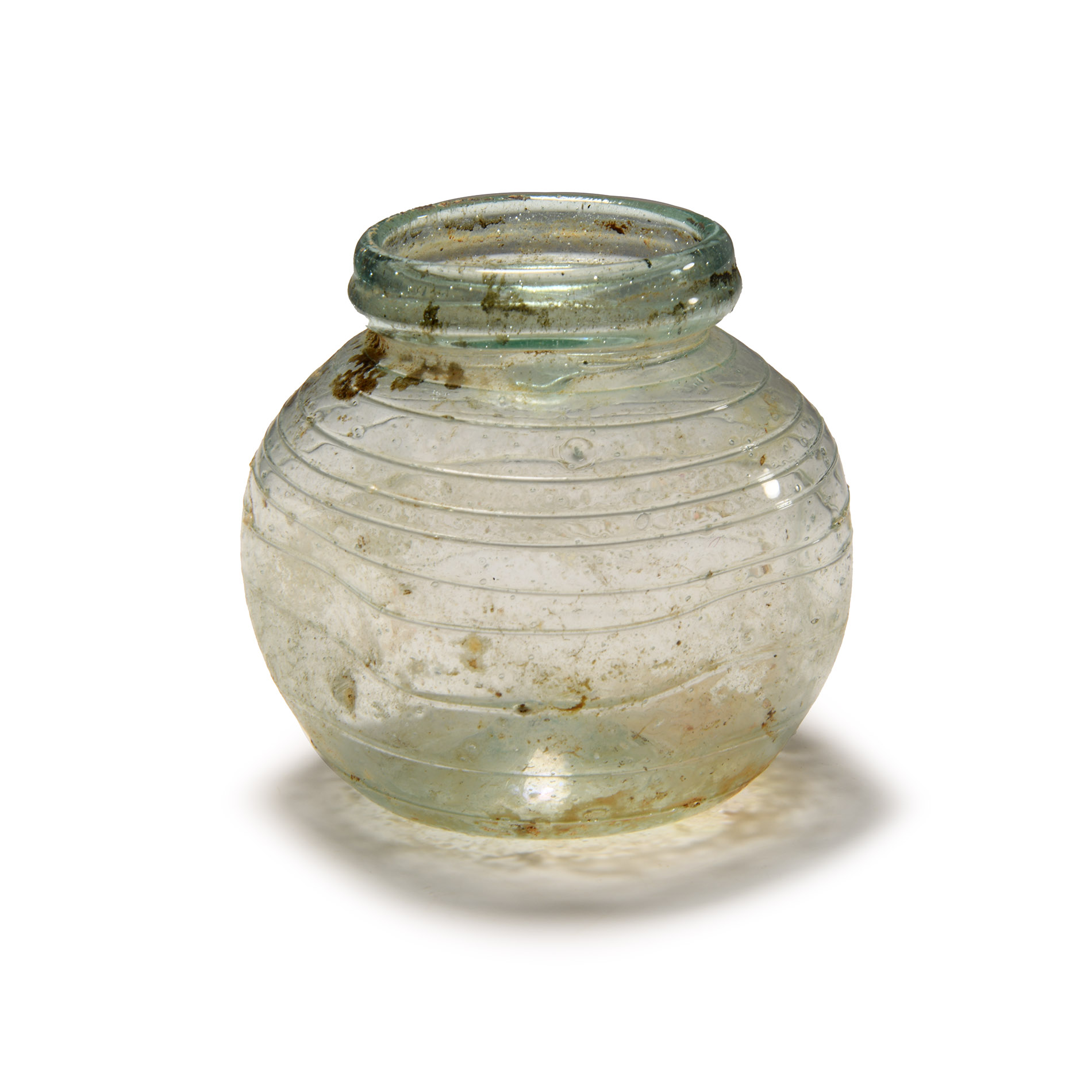
Roman Dimpled Glass Jar with Trails
3RDT-4TH CENTURY A.D.
3 in. (46.5 grams, 78 mm wide).
With dimpled base, bulbous body with opposed dimples to the sidewall, flange to the neck, applied trails to the body.
ProvenanceEx property of a late Japanese collector, 1970-2000s.
LiteratureCf. Whitehouse, D., Roman Glass in the Corning Museum of Glass, vol.2, New York, 2001, item 705, for type.
CONDITIONTimeLine Auctions follows a vetting process to ensure the authenticity and legality of all items, reinforcing our commitment to integrity and responsible trading. Each antiquity, antique, and coin lot undergoes thorough examination by a vetting committee of at least ten external specialists, professional trade association members, scientists, and archaeologists: Our Vetting Process
AUCTIONS:
TimeLine is a leading auction house specialising in antiquities, ancient art, collectables, natural history, coins, medals, and books. Our auctions offer museums, collectors, historians, and enthusiasts the opportunity to acquire unique and historically significant pieces.
-
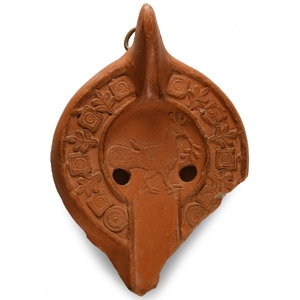
Roman Redware Lamp Sherd with Bird
4th-5th century A.D.Sold for (Inc. bp): £65
With flange handle to the rear, band of fronds and squares to the shoulder, dove with olive branch in its beak to the discus. 83 grams, 12.1 cm
Acquired 1960s-1990s. From the late Alison Barker collection, a retired London barrister. -
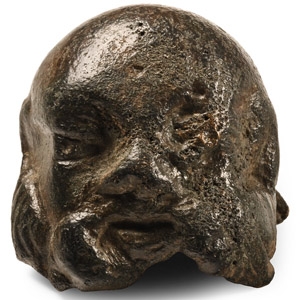
Roman Bronze Silenus Head Mount
1st-3rd century A.D.Sold for (Inc. bp): £13
Hollow-formed head with flaccid features, rim to reverse and mounting bar. 17.14 grams, 23 mm
From a Suffolk, UK, collection, 1990s-2000s. -
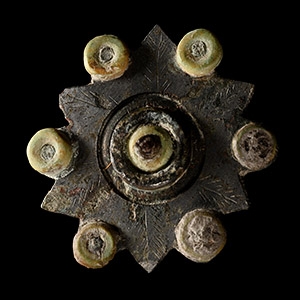
Roman Tinned Bronze Plate Brooch Complete with Appliques
Circa 2nd century A.D.Sold for (Inc. bp): £182
Formed as six radiating triangles with incised leaf detailing, interstitial applied bone discs, central raised collar with bone disc insert; complete with pin and catchplate to verso. 9.1 grams, 40 mm
Acquired on the UK art market in the 1990s. Property of a Stowmarket, UK, gentleman.
