
Loading, please wait...
LOT 0121
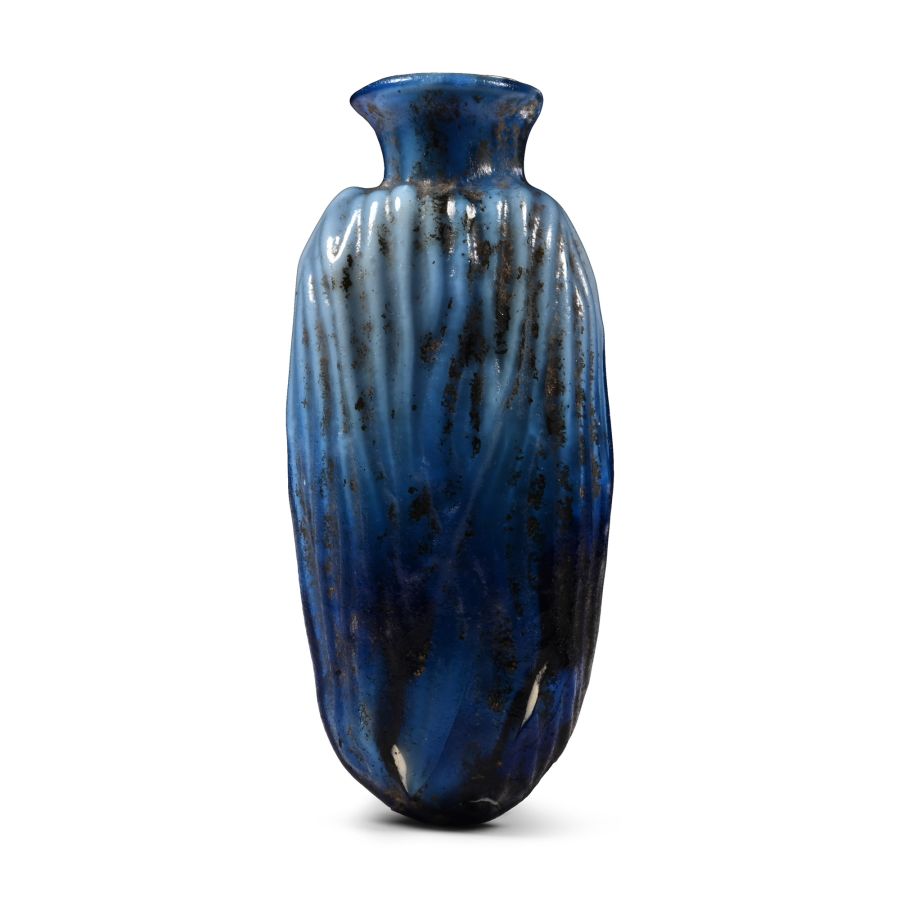
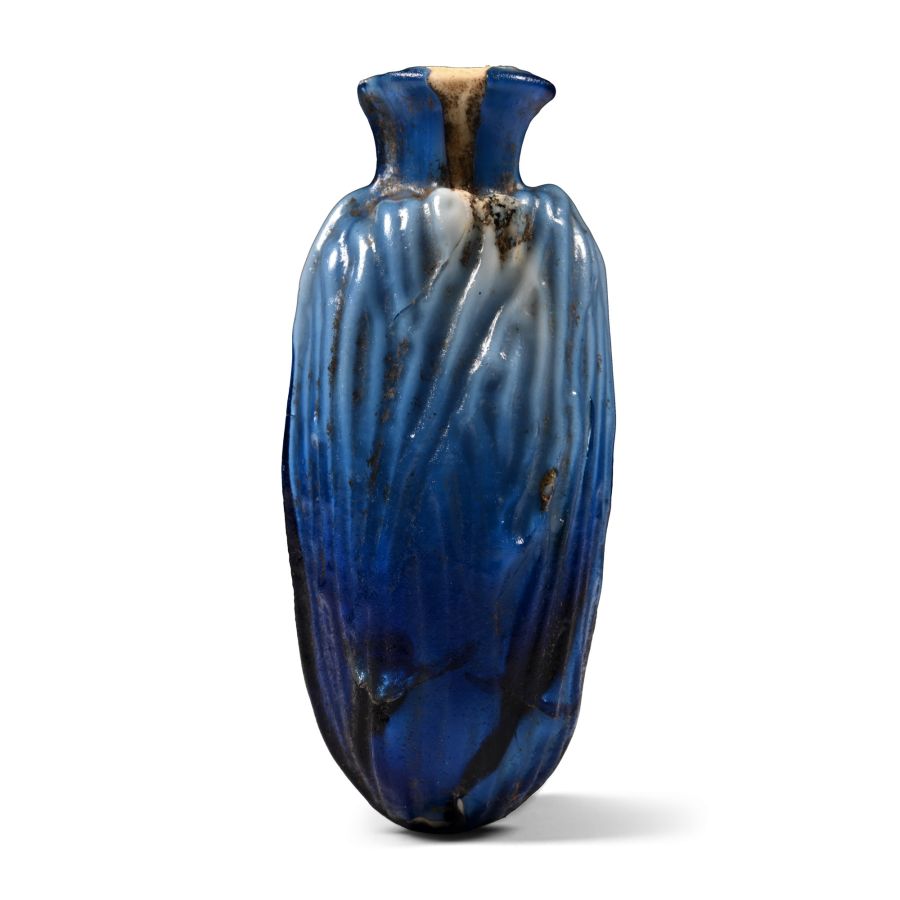
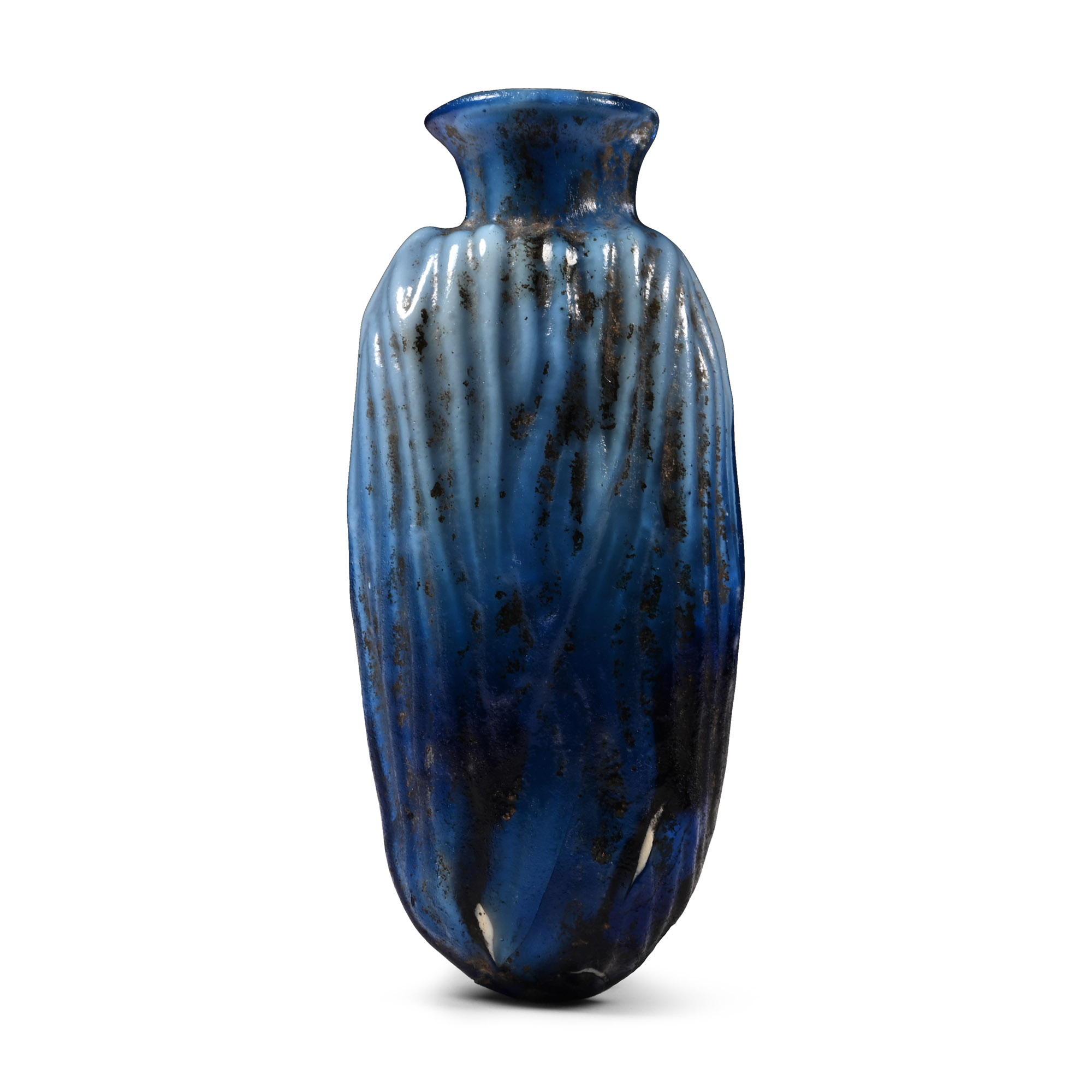
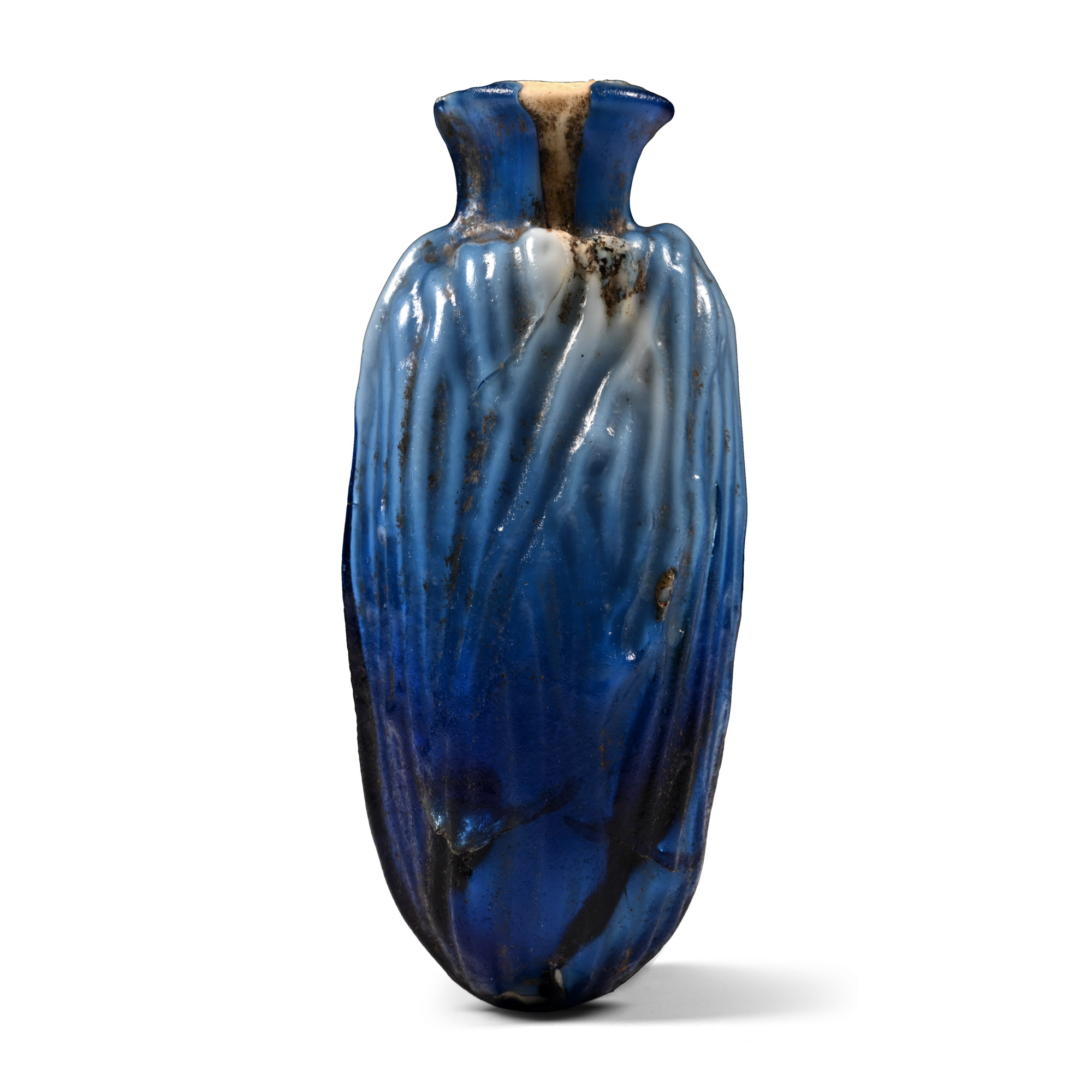
Roman Deep Blue Glass Date Flask
1ST CENTURY A.D.
3 1/8 in. (41.7 grams, 80 mm).
Mould-blown with elliptical body, short neck and thick everted rim, with modelled wrinkles imitating the texture of a dried date.
ProvenanceDr Gonik & Me Wirth, Geneva, 1970s.
Private collection, Europe.
Accompanied by an academic report by Dr Raffaele D'Amato.
This lot has been checked against the Interpol Database of stolen works of art and is accompanied by a search certificate number no.12394-226935.
Cf. an identical flask in the Art Institute of Chicago, inventory no.1891.32, in Alexander, K.B., ‘From Plaster to Stone: Ancient Art at the Art Institute of Chicago’ in Manchester, K., Recasting the Past: Collecting and Presenting Antiquities at the Art Institute of Chicago, New Haven, Yale University Press, 2012, p.37; see also Whitehouse, D., Roman Glass in the Corning Museum of Glass, vol.2, New York, 2001, items 519-520-521, for type; see also Stern, E.M., Ancient Glass at the foundation Custodia (Collection Frits Lug) Paris, Archaeologica Traiectina, Groningen, 1977, pp.44-46, for the diffusion of this typology inside the Mediterranean regions.
FootnotesDates were not only a staple of the Mediterranean diet, used to sweeten food and wine, but also a symbol for the New Year and a fruit often given as a gift on the occasion.
CONDITIONTimeLine Auctions follows a vetting process to ensure the authenticity and legality of all items, reinforcing our commitment to integrity and responsible trading. Each antiquity, antique, and coin lot undergoes thorough examination by a vetting committee of at least ten external specialists, professional trade association members, scientists, and archaeologists: Our Vetting Process
AUCTIONS:
TimeLine is a leading auction house specialising in antiquities, ancient art, collectables, natural history, coins, medals, and books. Our auctions offer museums, collectors, historians, and enthusiasts the opportunity to acquire unique and historically significant pieces.
LOT 0121
Roman Deep Blue Glass Date Flask
Estimate £2,500 - 3,500€2,900 - 4,060 (for guidance only)$3,380 - 4,730 (for guidance only)
-
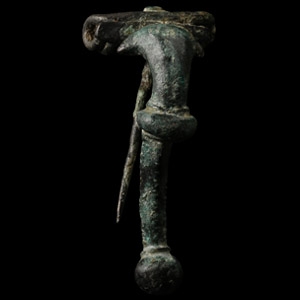
Roman Bronze Bow Brooch
2nd century A.D.Estimate: £100 - 140 (+bp*)
Opening Bid: £40
With chord and pin (now detached) at the head, D-section bow with lateral spurs, collar and swept foot with notched detailing, bulb finial, catch to the reverse. 26.6 grams, 54 mm
Ex important German collection, 1990s. This lot is accompanied by an illustrated lot declaration signed by the Head of the Antiquities Department, Dr Raffaele D’Amato.
This type of fibula, common in Pannonia, was typically worn in men's clothing. It closed the paenula on the chest, arranged horizontally. Naturally, it could also be worn with military attire. -
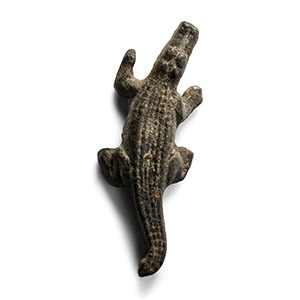
Roman Bronze Crocodile Statuette
1st-4th century A.D.Sold for (Inc. bp): £351
Modelled in the round with its head raised, scale detailing on the body. 28.2 grams, 61 mm
From the collection of a gentleman, acquired on the London art market in the 1990s. -
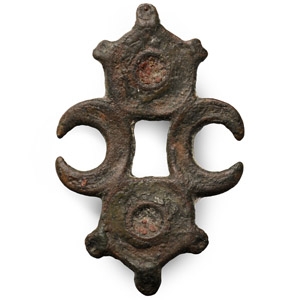
Romano-British Composite Lunar Type Plate Brooch
2nd century A.D.Sold for (Inc. bp): £39
An openwork plate brooch with two lobed discs connected by a pair of crescents, traces of red enamel; remains of catchplate and pin-lugs on the reverse. 10.3 grams, 47 mm
Found East Anglia, UK. From a Kent collection formed in the 1990s.
