
Loading, please wait...
LOT 0975
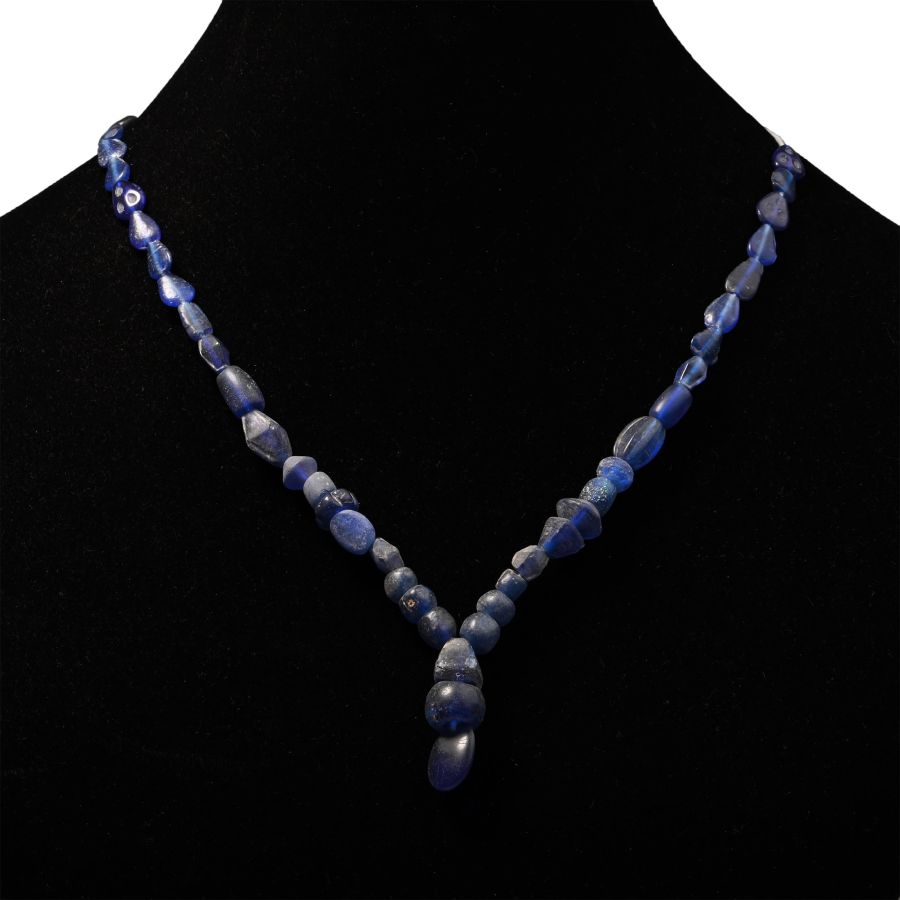
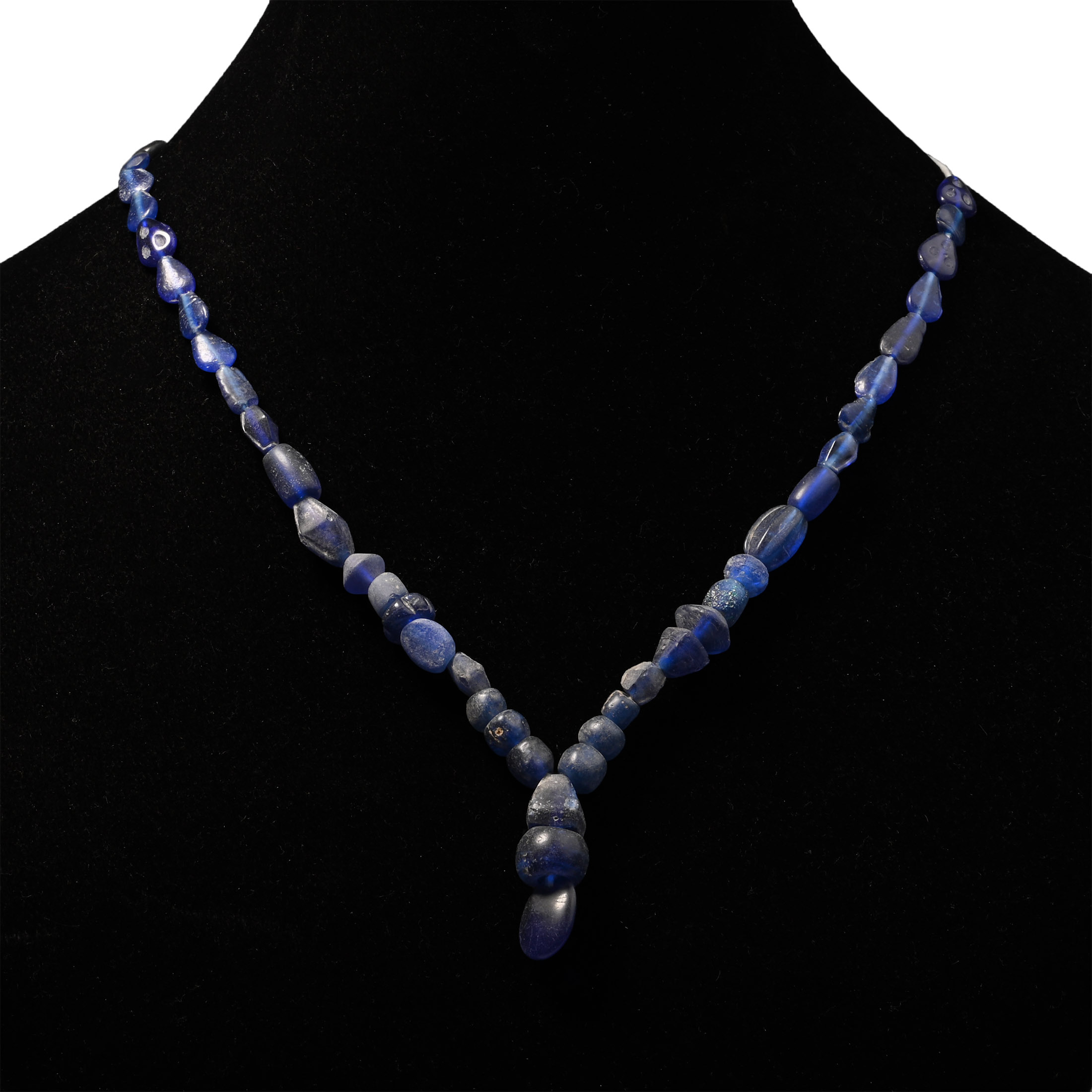
Roman Deep Blue Glass Bead Necklace String
1ST-4TH CENTURY A.D. AND LATER
13 3/4 in. (21.77 grams, 35 cm).
Restrung designer necklace string of tubular, polyhedral and other types with pendant centrepiece. [No Reserve]
ProvenanceLondon, UK, collection, 2000s.
CONDITIONTimeLine Auctions follows a vetting process to ensure the authenticity and legality of all items, reinforcing our commitment to integrity and responsible trading. Each antiquity, antique, and coin lot undergoes thorough examination by a vetting committee of at least ten external specialists, professional trade association members, scientists, and archaeologists: Our Vetting Process
AUCTIONS:
TimeLine is a leading auction house specialising in antiquities, ancient art, collectables, natural history, coins, medals, and books. Our auctions offer museums, collectors, historians, and enthusiasts the opportunity to acquire unique and historically significant pieces.
-
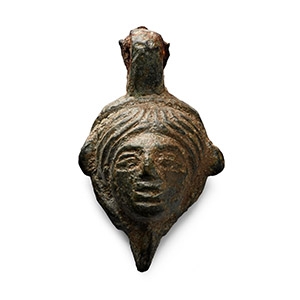
Roman Bronze Oil Lamp Lid with Face
1st-4th century A.D.Sold for (Inc. bp): £59
Domed lid with remains of ferrous pin on the hinge, modelled as a female face with neatly arranged hair framing the face. 69 grams, 63 mm
Ex German art market, 2000s. Acquired from an EU collector living in London. From the collection of a Surrey, UK, gentleman. This lot is accompanied by an illustrated lot declaration signed by the Head of the Antiquities Department, Dr Raffaele D'Amato. -
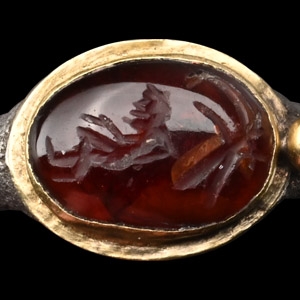
Roman Silver Ring with Crouching Figure Gemstone
3rd-4th century A.D.Sold for (Inc. bp): £156
With disc bezel, gold cell with orienting knop to one shoulder, inset cabochon garnet with intaglio crouching figure with symbol above; accompanied by a museum-quality impression. 4.79 grams, 20.32 mm overall, 14.11 mm internal diameter (approximate size British F 1/2, USA 3, Europe 4.3, Japan 4)
Property of a gentleman; acquired in the late 1960s-early 1970s. -
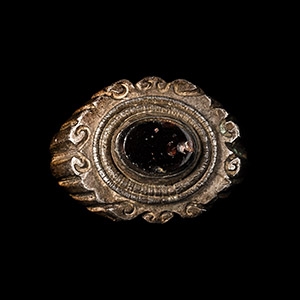
Roman Silver Ring with Garnet
Circa 3rd century A.D.Sold for (Inc. bp): £364
A D-section silver hoop expanding to ribbed shoulders forming the scrolled borders of the plaque, tiered beaded wire collars surrounding an elliptical cell with inset garnet cloison. 40.50 grams, 33.15 mm overall, 22.58 mm internal diameter (approximate size British Z+1 1/2, USA 13, Europe 30.69, Japan 29)
Ex property of a gentleman; acquired in the late 1960s-early 1970s.
