
Loading, please wait...
LOT 0725
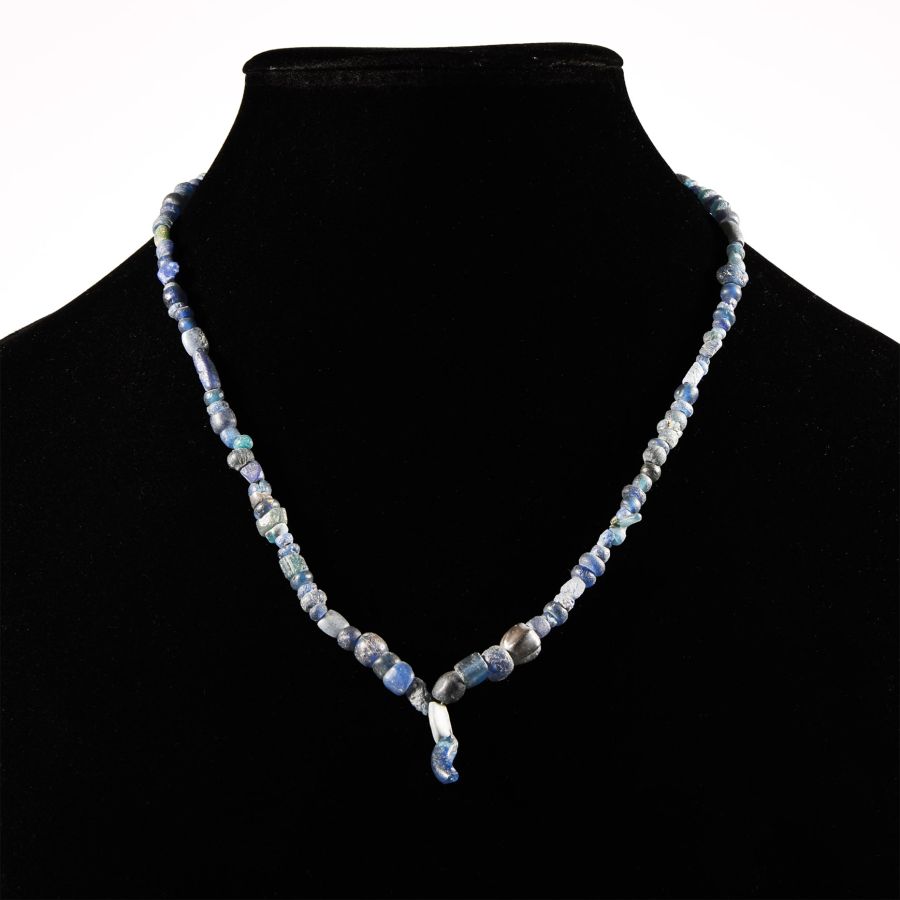
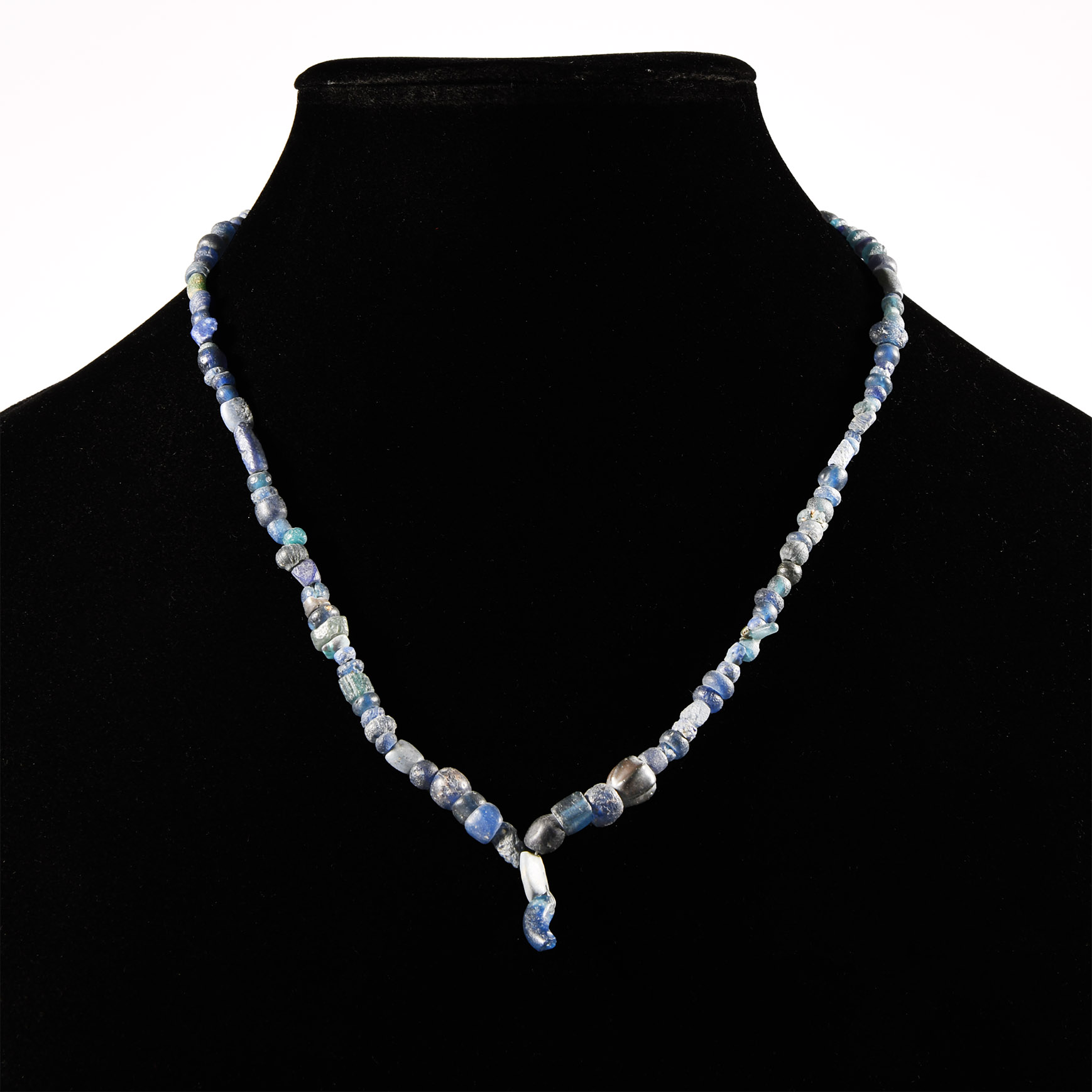
Roman Deep Blue Glass and Other Bead Necklace String
1ST CENTURY A.D. AND LATER
19 3/ in. (16.1 grams, 50 cm long).
Assorted old blue glass beads restrung to a Y-shape with a crescentic-shaped pendant. [No Reserve]
ProvenanceUK gallery, early 2000s.
LiteratureCf. Boschetti, C., Gratuze, B., Cavalieri, M., Schibile, N., ‘Production or Consumption? Glass Beads from the Roman Villa of Aiano, Tuscany,’ in European Journal of Archaeology, 25 (2)fig.4, nos.6,7,13,10,17,11-12 for similar beads.
FootnotesThe mass production of glass in Ancient Rome prompted the development of glass jewellery of unique qualities. The ancient Romans considered jewellery to be an essential accessory, being a public display of the wealth of high social classes. Roman jewellery at first followed trends set by the Etruscans, using gold and glass beads, but as the power and spread of the Roman Empire increased, jewellery designs became increasingly elaborate, incorporating elements from different cultural styles.
CONDITIONTimeLine Auctions follows a vetting process to ensure the authenticity and legality of all items, reinforcing our commitment to integrity and responsible trading. Each antiquity, antique, and coin lot undergoes thorough examination by a vetting committee of at least ten external specialists, professional trade association members, scientists, and archaeologists: Our Vetting Process
AUCTIONS:
TimeLine is a leading auction house specialising in antiquities, ancient art, collectables, natural history, coins, medals, and books. Our auctions offer museums, collectors, historians, and enthusiasts the opportunity to acquire unique and historically significant pieces.
-
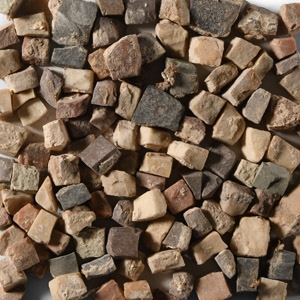
Roman Mosaic Stone Tesserae Group
1st-4th century A.D.Estimate: £120 - 170 (+bp*)
Opening Bid: £65
A mixed group of over hundred single tesserae of various colours and sizes. 76 grams total, 6-14 mm
Acquired 1980-2015. Ex Abelita family collection. -
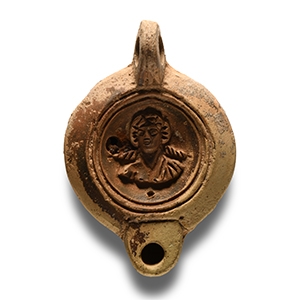
Roman Terracotta Oil Lamp with Frontal Bust
2nd century A.D.Sold for (Inc. bp): £286
With brown slip, loop handle to the rear, the discus with a facing bust of a young woman within a concentric circle border; maker's mark 'LCΛPΓ' within tabula ansata-shaped stamp. 63 grams, 10.2 cm
Acquired on the European art market, 1980s. English private collection.
The discus decorations of these lamps are various: Diana, Dioscuri, Sol and Luna, Africa, Lares, and griffin; portraits of Domitian, Hadrian, male head, bust of a young man, bust of a young woman (our specimen), bust of a bearded old man, fisherman, and an aulete; scorpion, boar, and lion with crocodile; etc. They were an African production and not less than seven worskshops have been individuated: M N O V I V, M N O V I V S T (our case) , M N O V I V S T I , I V N I A L E X I, C C O R V R S , E X F N A / LV C C E I O R V M . Here we can add LCAPIT (Lucius Capito). -
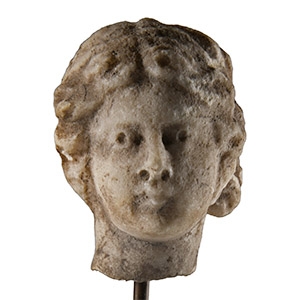
Roman Marble Female Head
Circa 3rd century A.D.Sold for (Inc. bp): £936
From a relief with hair centre-parted and drawn back from the face, gathered at the nape in a chignon; rounded face with soft features, drilled eyes and nostrils; mounted on a custom-made stand. 523 grams total, 78 mm high (12.7 cm high including stand)
London art market, 2000s. Property of a London gentleman.
