
Loading, please wait...
LOT 0718
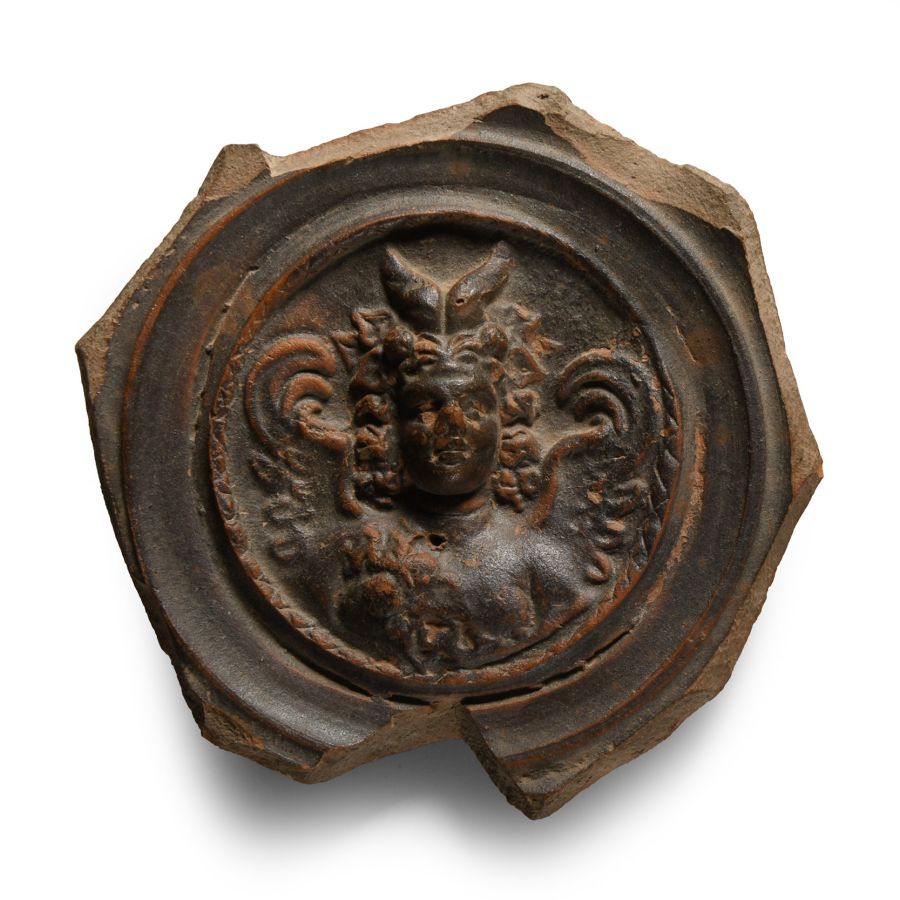
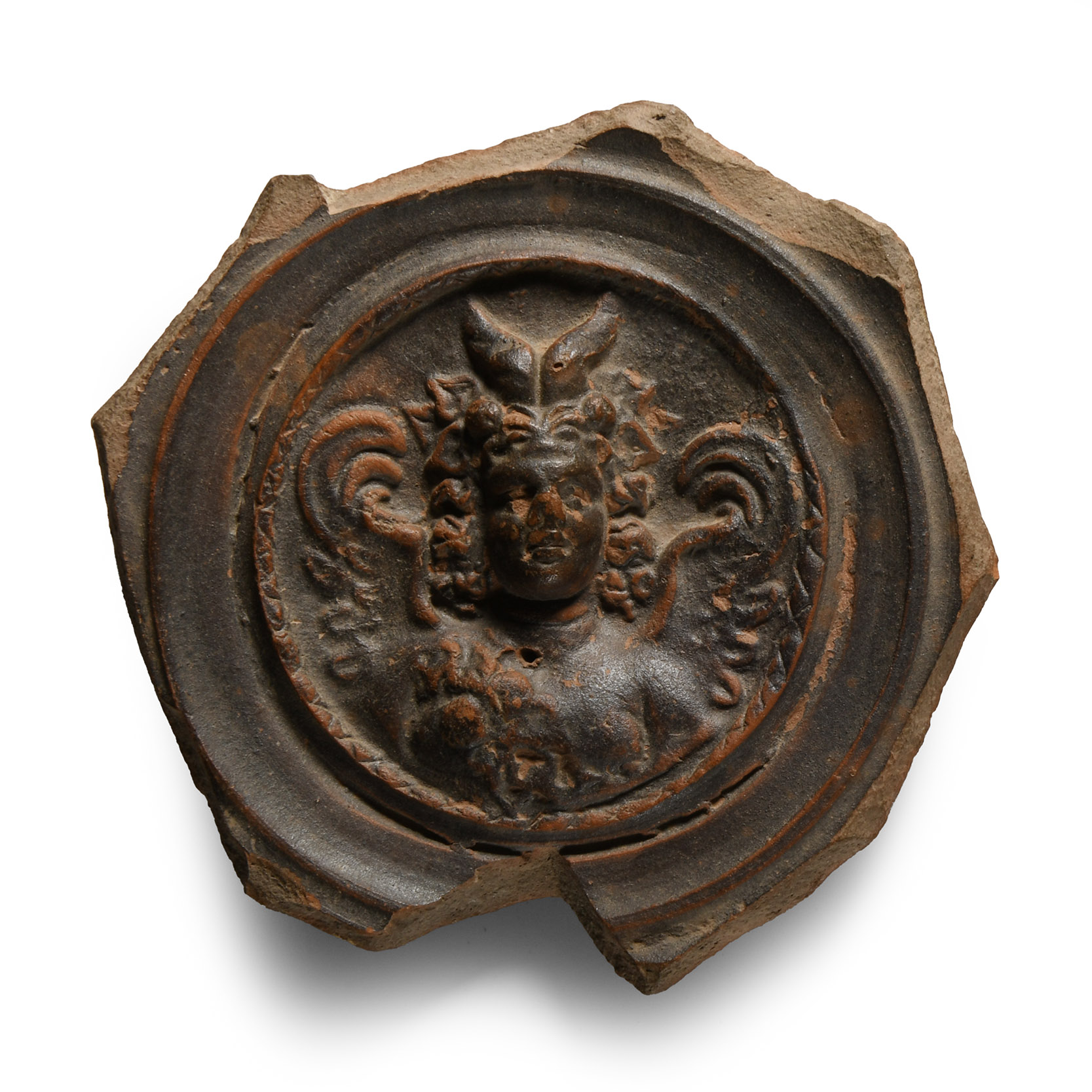
Roman Decorated Terracotta Fragment
1ST-4TH CENTURY A.D.
3 in. (54 grams, 76 mm).
Base from a cup or bowl with winged bust of Dionysus modelled in the half-round with goat-horns above the head, scrolled lateral wings, vine tendrils to the chest and hair. [No Reserve]
ProvenanceFrom a Cambridgeshire, UK, collection, 1990s.
CONDITIONTimeLine Auctions follows a vetting process to ensure the authenticity and legality of all items, reinforcing our commitment to integrity and responsible trading. Each antiquity, antique, and coin lot undergoes thorough examination by a vetting committee of at least ten external specialists, professional trade association members, scientists, and archaeologists: Our Vetting Process
AUCTIONS:
TimeLine is a leading auction house specialising in antiquities, ancient art, collectables, natural history, coins, medals, and books. Our auctions offer museums, collectors, historians, and enthusiasts the opportunity to acquire unique and historically significant pieces.
-
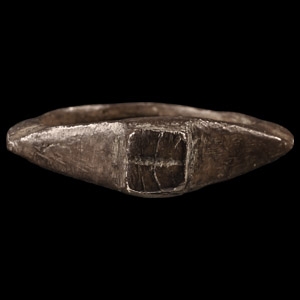
Late Roman Silver Ring with Cross
4th-6th century A.D.Estimate: £100 - 140 (+bp*)
Opening Bid: £50
With angular shoulders expanding towards the rectangular bezel, the bezel with an incised cross motif. 2.98 grams, 23.35 mm overall, 17.22 mm internal diameter (approximate size British L, USA 5 3/4, Europe 11.24, Japan 10)
From the property of late Mr SM, London, UK, 1969-1999. Accompanied by an old collection ticket. -
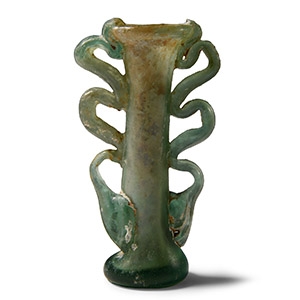
Roman Glass Unguentarium with Waves
1st-3rd century A.D.Estimate: £300 - 400 (+bp*)
Opening Bid: £150
With bulbous flat-bottomed base, tall neck and rolled everted rim applied trail zigzag handles to each side. 62.4 grams, 10.2 cm
Ex property of a late Japanese collector, 1970-2000s. -
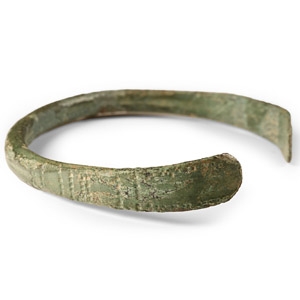
Roman Decorated Bronze Bracelet
1st-4th century A.D.Sold for (Inc. bp): £78
Penannular type with leaf-shaped flattened ends, lines of pointillé detailing. 17.6 grams, 64 mm
Ex German art market, 2000s. Acquired from an EU collector living in London. From the collection of Surrey, UK, gentleman.
