
Loading, please wait...
LOT 0889
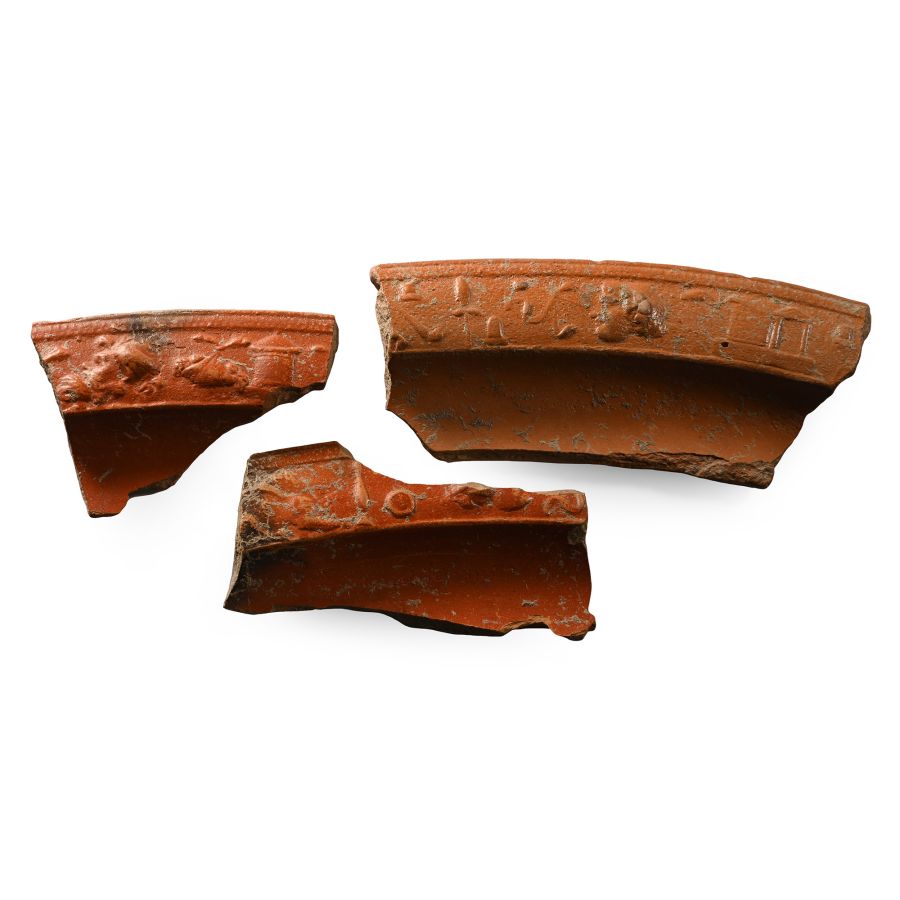
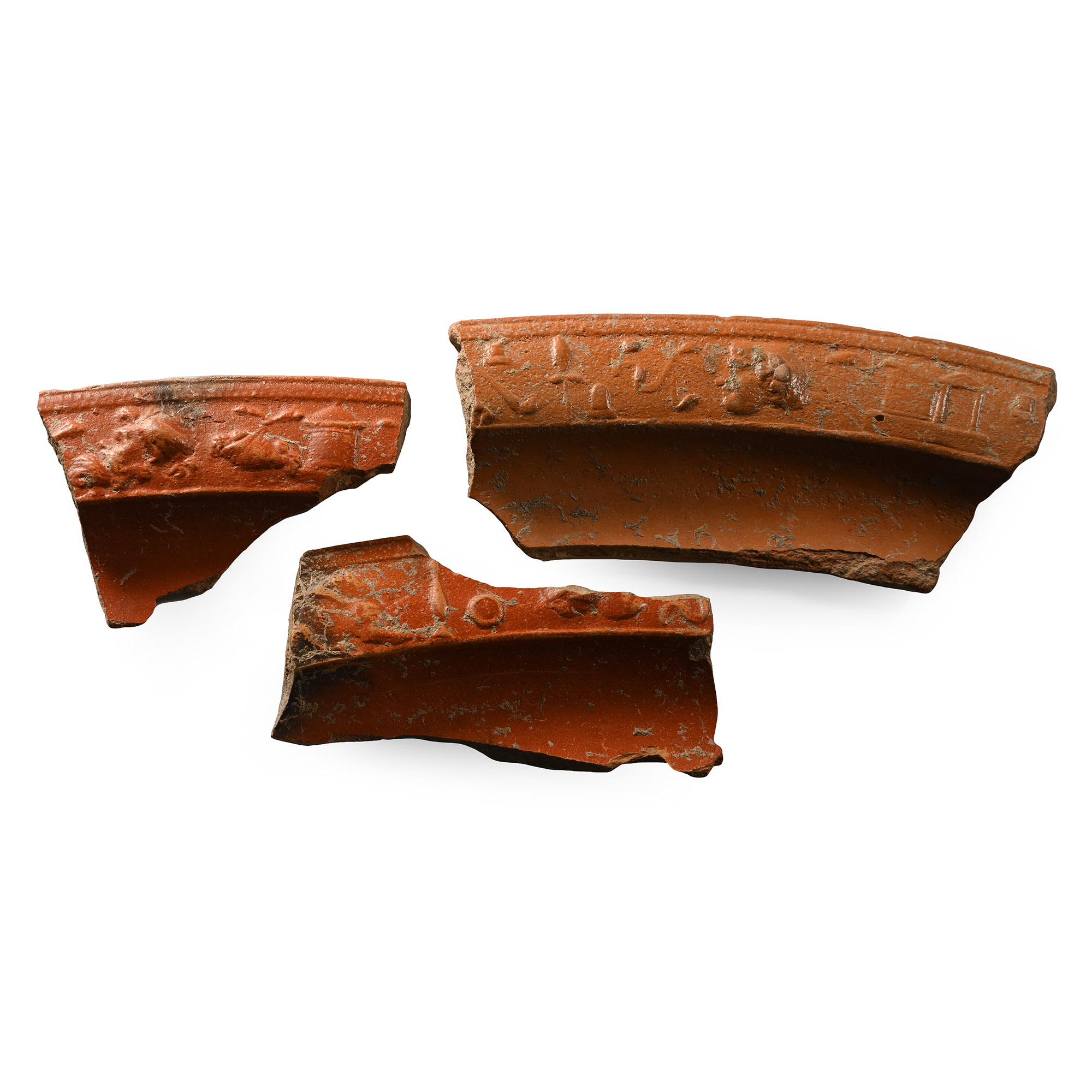
Roman Decorated Redware Fragment Group
3RD-4TH CENTURY A.D.
2 1/2 - 4 3/8 in. (78 grams total, 6.6-11 cm).
Comprising three terra sigillata rim fragments, each showing figural scenes comprising animals, buildings and flowers. [3, No Reserve]
ProvenanceEx German art market, 2000s.
Acquired from an EU collector living in London.
From the collection of a Surrey, UK, gentleman.
This lot is accompanied by an illustrated lot declaration signed by the Head of the Antiquities Department, Dr Raffaele D'Amato.
TimeLine Auctions follows a vetting process to ensure the authenticity and legality of all items, reinforcing our commitment to integrity and responsible trading. Each antiquity, antique, and coin lot undergoes thorough examination by a vetting committee of at least ten external specialists, professional trade association members, scientists, and archaeologists: Our Vetting Process
AUCTIONS:
TimeLine is a leading auction house specialising in antiquities, ancient art, collectables, natural history, coins, medals, and books. Our auctions offer museums, collectors, historians, and enthusiasts the opportunity to acquire unique and historically significant pieces.
-
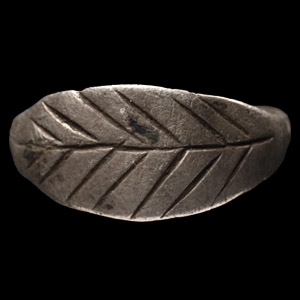
Roman Ring with Palm Branch
3rd-4th century A.D.Sold for (Inc. bp): £104
Rectangular hoop with a lentoid bezel bearing an incised palm branch motif. 2.47 grams, 19.30 mm overall, 16.66 x 14.81 mm internal diameter (approximate size British H 1/2, USA 4, Europe 6.81, Japan 6)
Ex German art market, 2000s. Acquired from an EU collector living in London. From the collection of a Surrey, UK, gentleman. This lot is accompanied by an illustrated lot declaration signed by the Head of the Antiquities Department, Dr Raffaele D'Amato. -
.jpg)
Hellenistic Male Head of a Ruler
3rd-1st century B.C.Estimate: £800 - 1,000 (+bp*)
Opening Bid: £400
Carved in the round with fresh features and short textured hair; ears drilled; mounted on a custom-made stand. 287 grams, 10 cm including stand
From a private Scottish collection pre 1980, by descent. This lot is accompanied by an illustrated lot declaration signed by the Head of the Antiquities Department, Dr Raffaele D'Amato. -
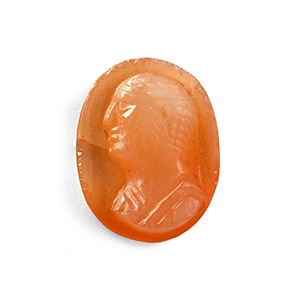
Roman Carnelian Gemstone of Apollo
1st-2nd century A.D.Estimate: £200 - 300 (+bp*)
Opening Bid: £100
Intaglio cameo of a profile bust with hatched hair, possibly unfinished. 0.43 grams, 11 mm
Acquired on the German art market, 1989-1995. with The Museum Gallery, 19 Bury Place, London, WC1, UK, 1998-2003. Property of a London based academic, 2003 to present. This lot is accompanied by an illustrated lot declaration signed by the Head of the Antiquities Department, Dr Raffaele D'Amato.
