
Loading, please wait...
LOT 0820
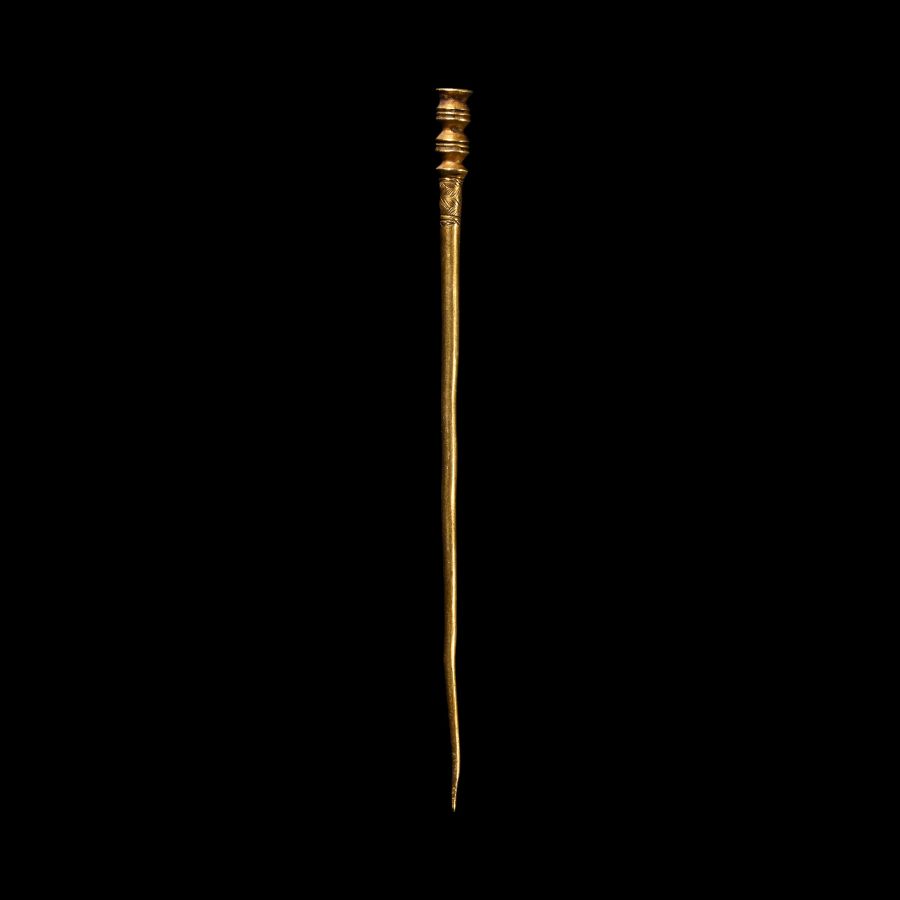
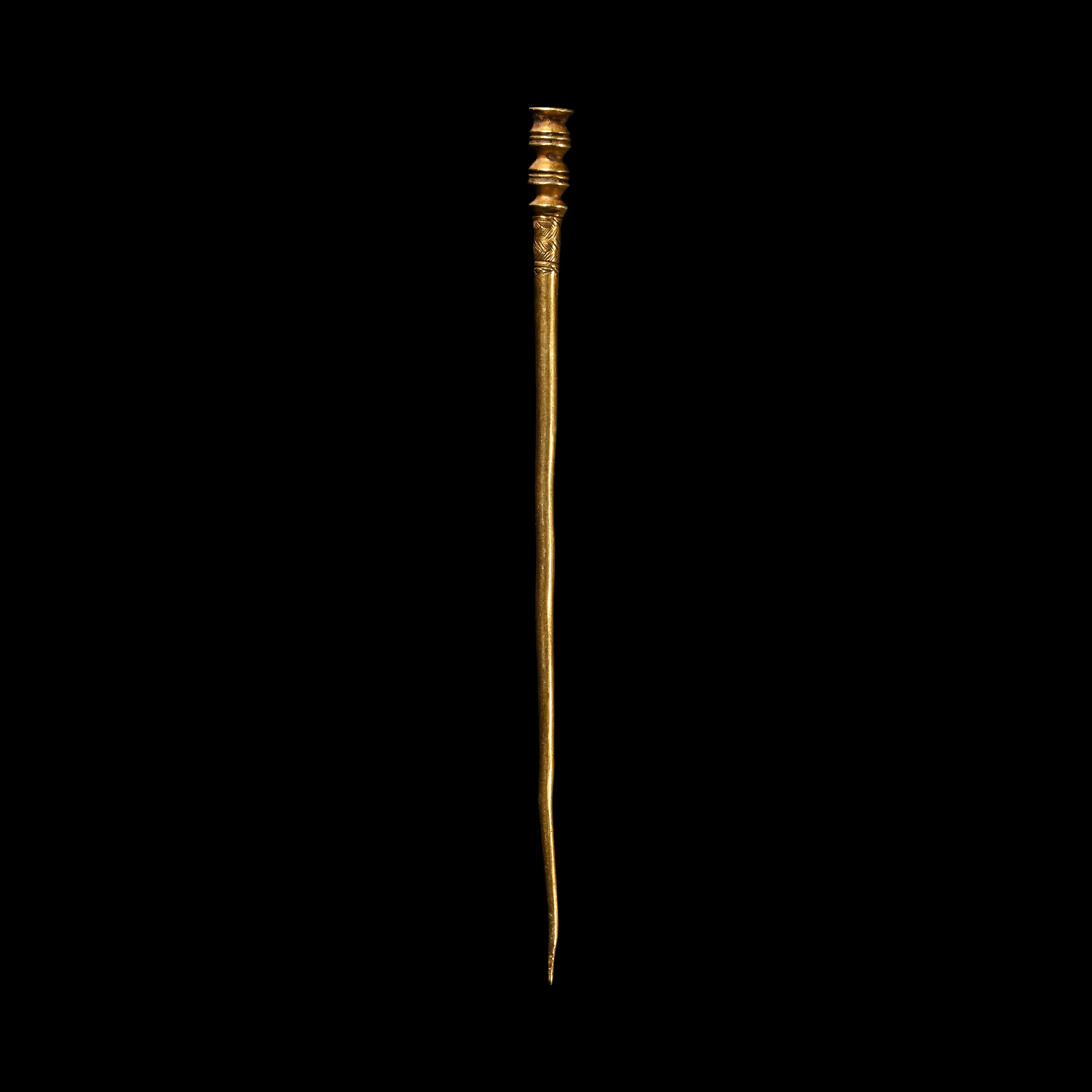
Roman Decorated Gold Dress Pin
1ST-4TH CENTURY A.D.
2 7/8 in. (2.74 grams, 72 mm).
Slender body with balustered finial, a band of hatched herringbone decoration beneath the finial.
ProvenanceEx 'Neuburg' Collection, Germany, 1970.
with Gorny & Mosch, Munich, Germany.
with Galerie Rhéa, Zurich, Switzerland.
TimeLine Auctions follows a vetting process to ensure the authenticity and legality of all items, reinforcing our commitment to integrity and responsible trading. Each antiquity, antique, and coin lot undergoes thorough examination by a vetting committee of at least ten external specialists, professional trade association members, scientists, and archaeologists: Our Vetting Process
AUCTIONS:
TimeLine is a leading auction house specialising in antiquities, ancient art, collectables, natural history, coins, medals, and books. Our auctions offer museums, collectors, historians, and enthusiasts the opportunity to acquire unique and historically significant pieces.
LOT 0820
Roman Decorated Gold Dress Pin
Estimate £700 - 900€810 - 1,040 (for guidance only)$950 - 1,220 (for guidance only)
-
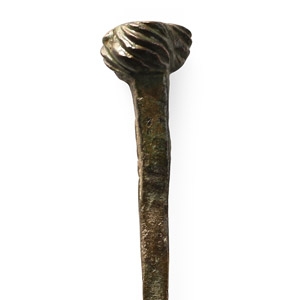
Late Roman Bronze Dress Pin
4th-5th century A.D.Sold for (Inc. bp): £46
With square-section tapering shaft, head formed as three radiating lobes with twisted ornament. 11.9 grams, 93 mm
From a private Tyneside collection, formed since the early 2000s. -
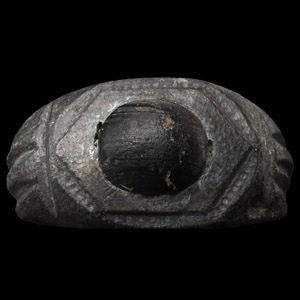
Roman Bronze Ring with Cabochon
2nd-3rd century A.D.Sold for (Inc. bp): £65
D-section hoop with fluted shoulders, bezel set with black glass cabochon. 4.53 grams, 21.62 mm overall, 17.72 mm internal diameter (approximate size British J 1/2, USA 5, Europe 9.32, Japan 9)
Ex German art market, 2000s. Acquired from an EU collector living in London. From the collection of a Surrey, UK, gentleman. -
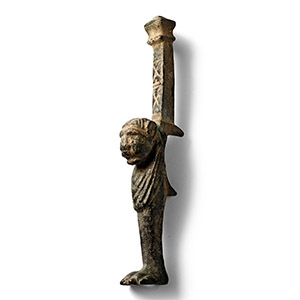
Roman Bronze Tray Leg with Lion
1st-4th century A.D.Sold for (Inc. bp): £91
Comprising: square-section shank with tapering finial and lug, incised geometric ornament; C-shaped socket with lion-mask to the outer face, lion's leg and claw at the base. 54 grams, 97 mm
Found Gloucestershire, UK.
