
Loading, please wait...
LOT 0939
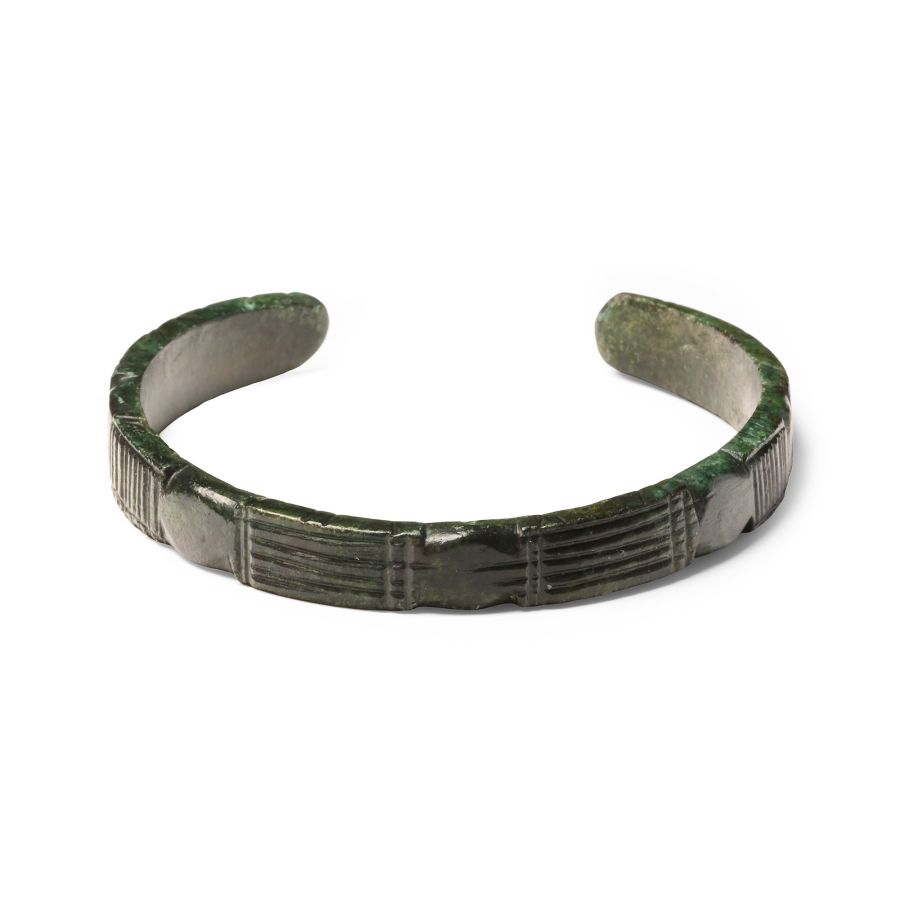
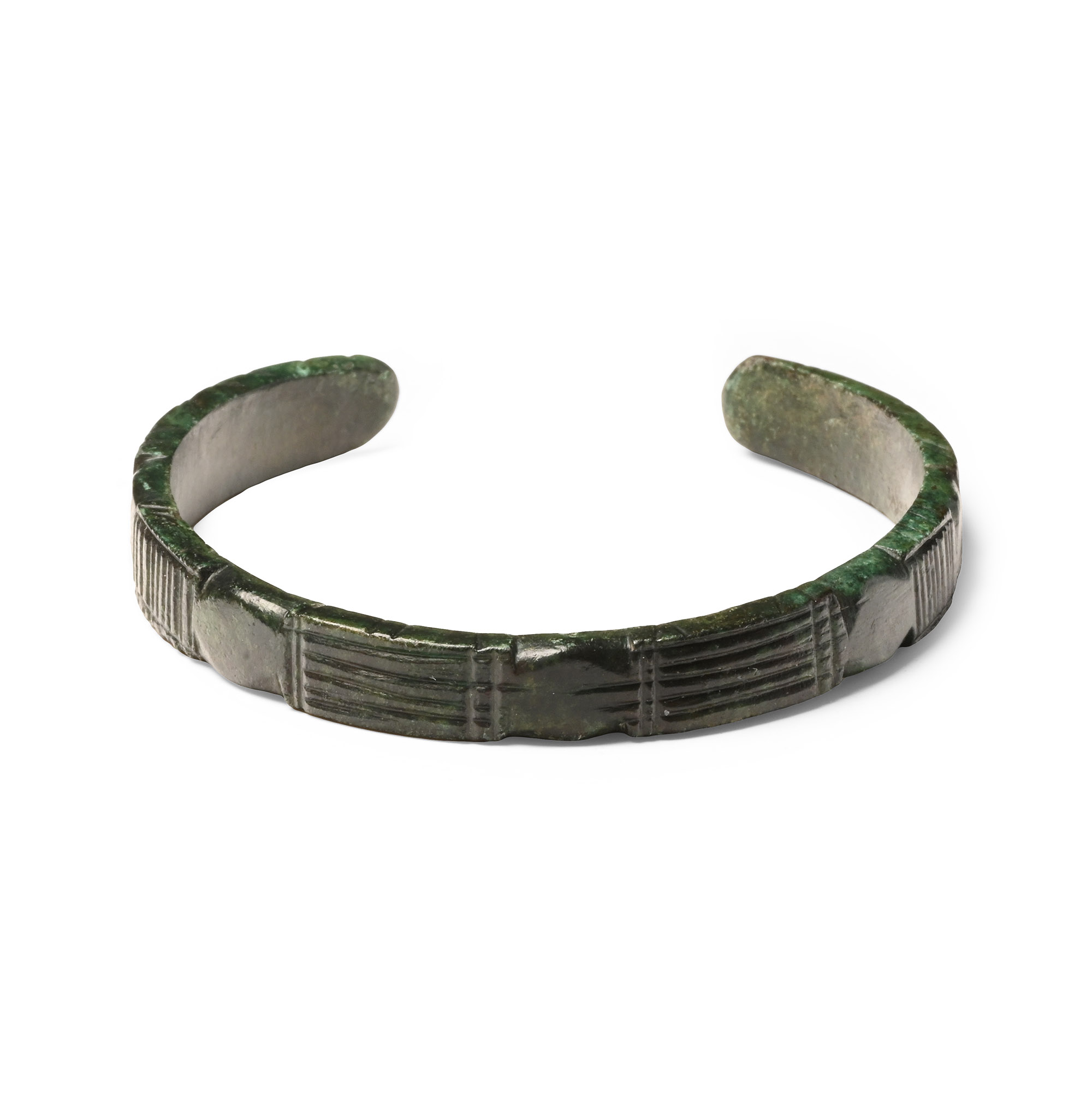
Roman Decorated Bronze Bracelet
2ND-4TH CENTURY A.D.
2 3/8 in. (30.48 grams, 62 mm).
Penannular body with rounded finials, segmented linear decoration on the upper face. [No Reserve]
ProvenanceFrom a private Tyneside collection, formed since the early 2000s.
CONDITIONTimeLine Auctions follows a vetting process to ensure the authenticity and legality of all items, reinforcing our commitment to integrity and responsible trading. Each antiquity, antique, and coin lot undergoes thorough examination by a vetting committee of at least ten external specialists, professional trade association members, scientists, and archaeologists: Our Vetting Process
AUCTIONS:
TimeLine is a leading auction house specialising in antiquities, ancient art, collectables, natural history, coins, medals, and books. Our auctions offer museums, collectors, historians, and enthusiasts the opportunity to acquire unique and historically significant pieces.
-
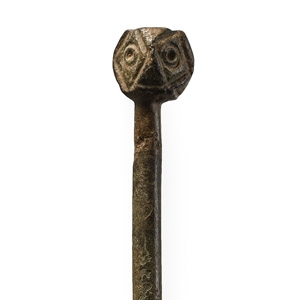
Late Roman Bronze Dress Pin
4th-5th century A.D.Sold for (Inc. bp): £65
With polyhedral head bearing impressed lozenge ornament, hipped shank. 11.37 grams, 10.1 cm
From a private Tyneside collection, formed since the early 2000s. -
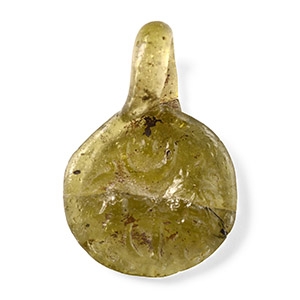
Late Roman Glass Pendant
5th-7th century A.D.Sold for (Inc. bp): £117
Discoid with impressed motif of a lion surmounted by a crescent and pellet. 1.23 grams, 24 mm
From the private collection of the late Mr S.M., 1969-1999. -
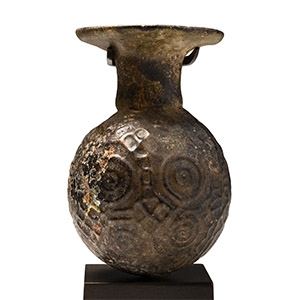
Roman Glass Mould Blown Jar
3rd-4th century A.D.Sold for (Inc. bp): £572
With bulbous body featuring a low-relief interlocking octagonal cells and trumpet-style neck and rim; iridescent surfaces; mounted on a custom-made stand. 87 grams total, 95 mm including stand
From an important collection of glass, London, UK, 1990s.
