
Loading, please wait...
LOT 0744
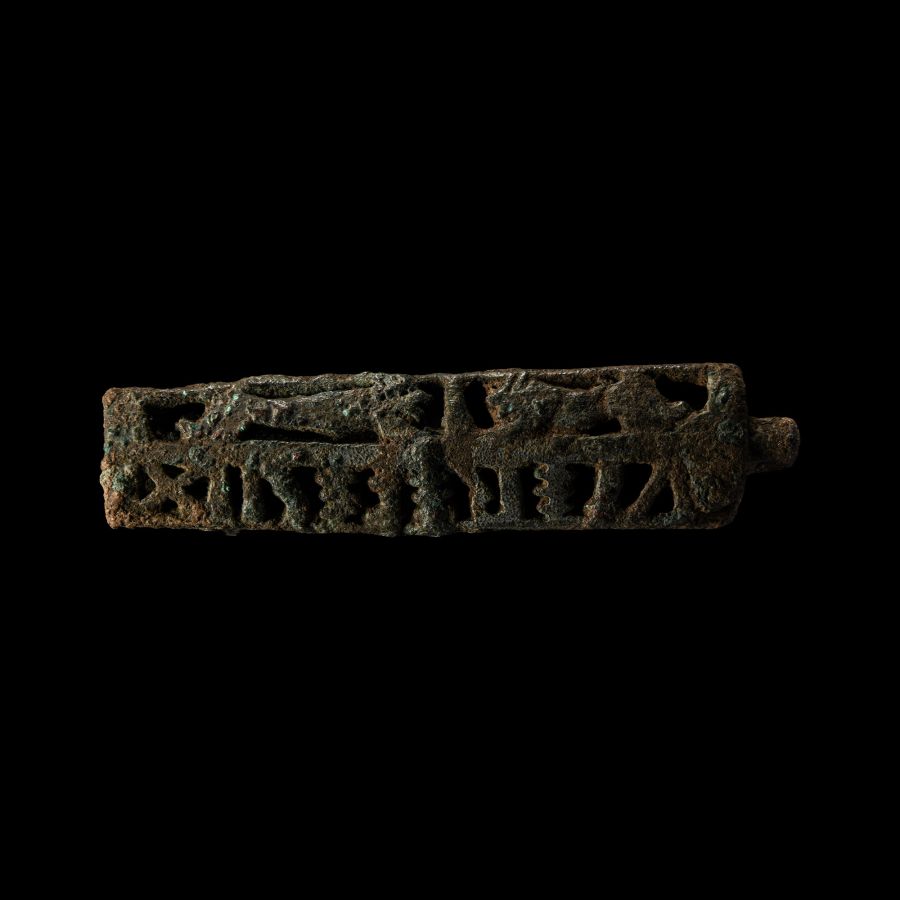
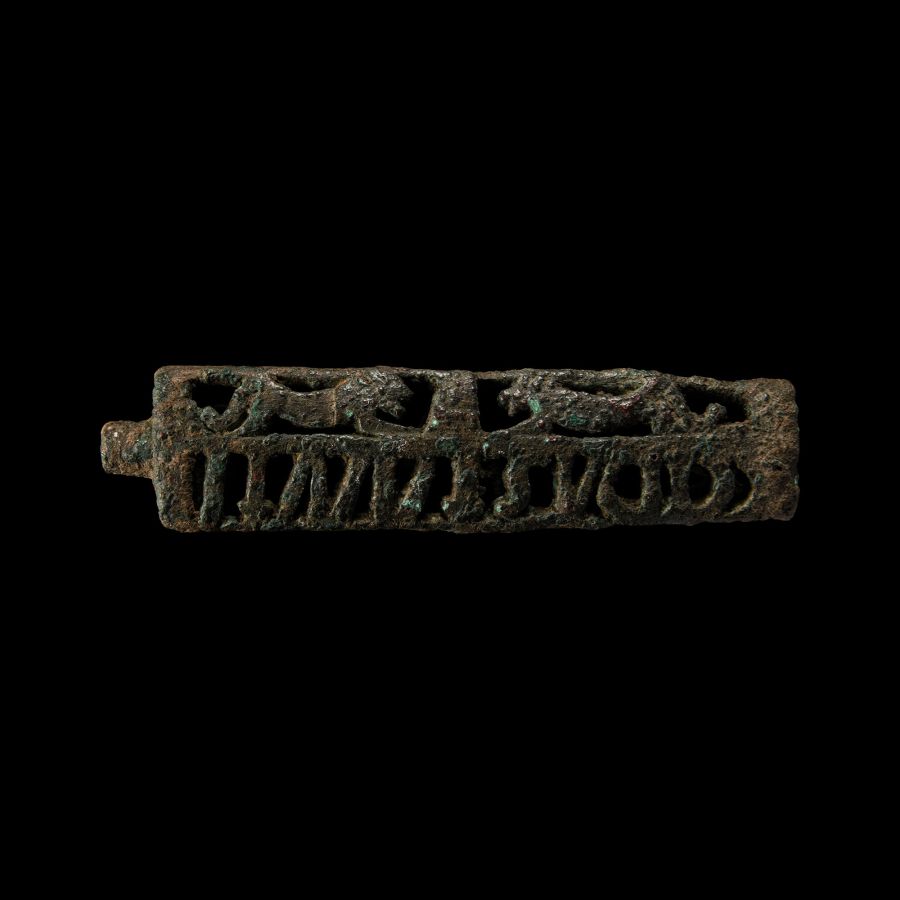
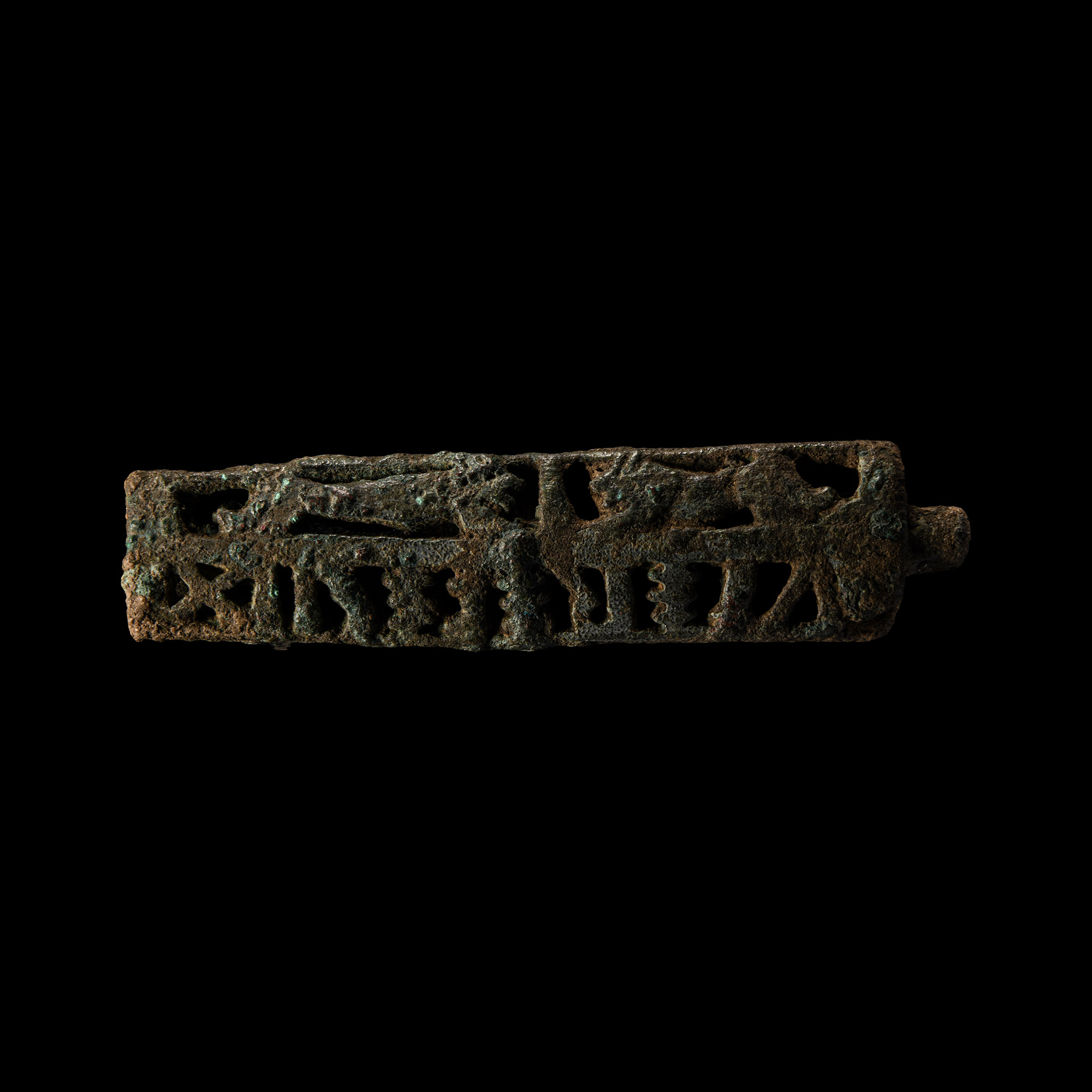
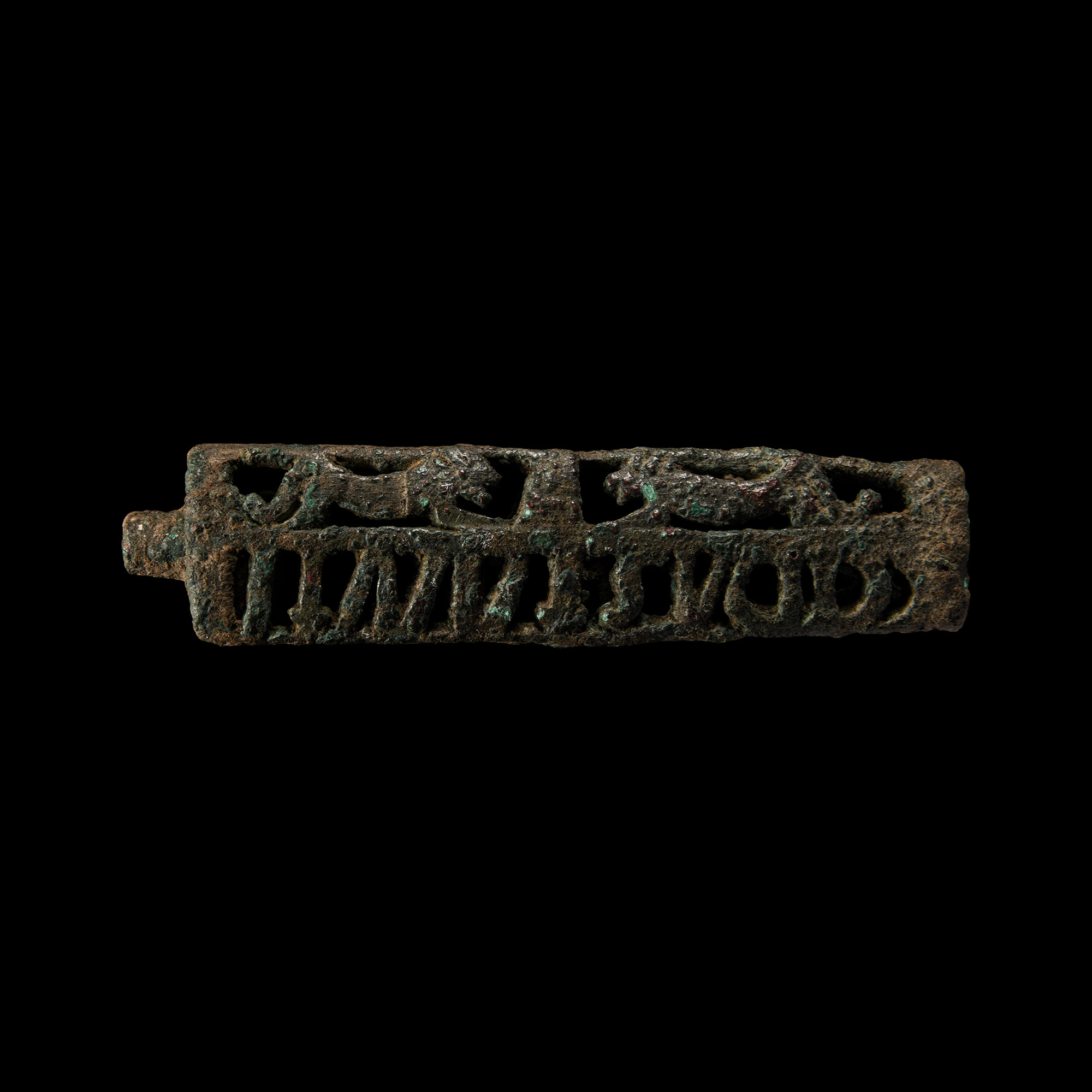
Roman Decorated and Inscribed Animal Hilt
3RD-4TH CENTURY A.D.
4 3/8 in. (87 grams, 11 cm).
Openwork rectangular bifacial dagger- or knife-hilt with lobe pommel and blade-socket; Side A: two rectangular openwork panels, above an inverted openwork inscription 'VTERE FELIX' and below two opposed running hounds; Side B: two opposed running hounds above inverted inscription: 'CONSTANTI' (use [this] with good fortune for Constantine).
ProvenancePrivate collection 1990s.
Ex London, UK, gallery.
See Bishop, M.C. & Coulston, J.C.N., Roman Military Equipment From the Punic Wars to the Fall of Rome, London, 1993, p.219, for discussion.
CONDITIONTimeLine Auctions follows a vetting process to ensure the authenticity and legality of all items, reinforcing our commitment to integrity and responsible trading. Each antiquity, antique, and coin lot undergoes thorough examination by a vetting committee of at least ten external specialists, professional trade association members, scientists, and archaeologists: Our Vetting Process
AUCTIONS:
TimeLine is a leading auction house specialising in antiquities, ancient art, collectables, natural history, coins, medals, and books. Our auctions offer museums, collectors, historians, and enthusiasts the opportunity to acquire unique and historically significant pieces.
-
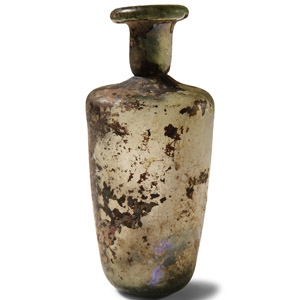
Roman Glass Unguentarium
1st-3rd century A.D.Sold for (Inc. bp): £208
With tapering body, flat shoulder, short neck and rolled rim. 47 grams, 10.7 cm
Acquired 1980-2015. Ex Abelita family collection. -
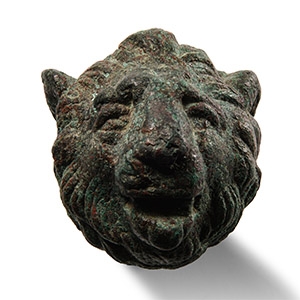
Roman Bronze Lion Head Finial
1st-2nd century A.D.Sold for (Inc. bp): £234
Hollow-formed on a tubular shank with raised rim, modelled with dense curls to the mane, mouth open and tongue protruding. 159 grams, 67 mm
Acquired in Europe in 1994. European private collection. -
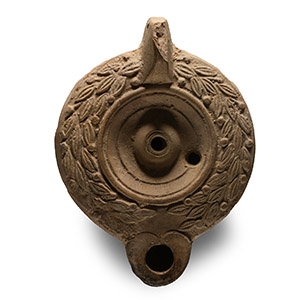
Roman Terracotta Oil Lamp with Wreath
2nd-3rd century A.D.Sold for (Inc. bp): £260
Lug handle to rear, deep discus with a dome filling hole, another filling hole to the side; wide shoulder with low-relief laurel wreath; low basal ring and incised maker's mark in Greek letters (ΗΙϹΧΛ). 138 grams, 11.8 cm
Acquired on the European art market, 1980s. English private collection.
This form of lamps is characterised by their shoulder decoration - a laurel wreath. This decoration may be treated realistically or be stylised. Both groups appear on lamps found in Italy. The hypothesis that they might only be African imports is contradicted by the signature on many lamps of L.C A E S A E, a prolific Italic lamp maker (late Antonine and early Severan); his products are scarce in North Africa.
