
Loading, please wait...
LOT 0721
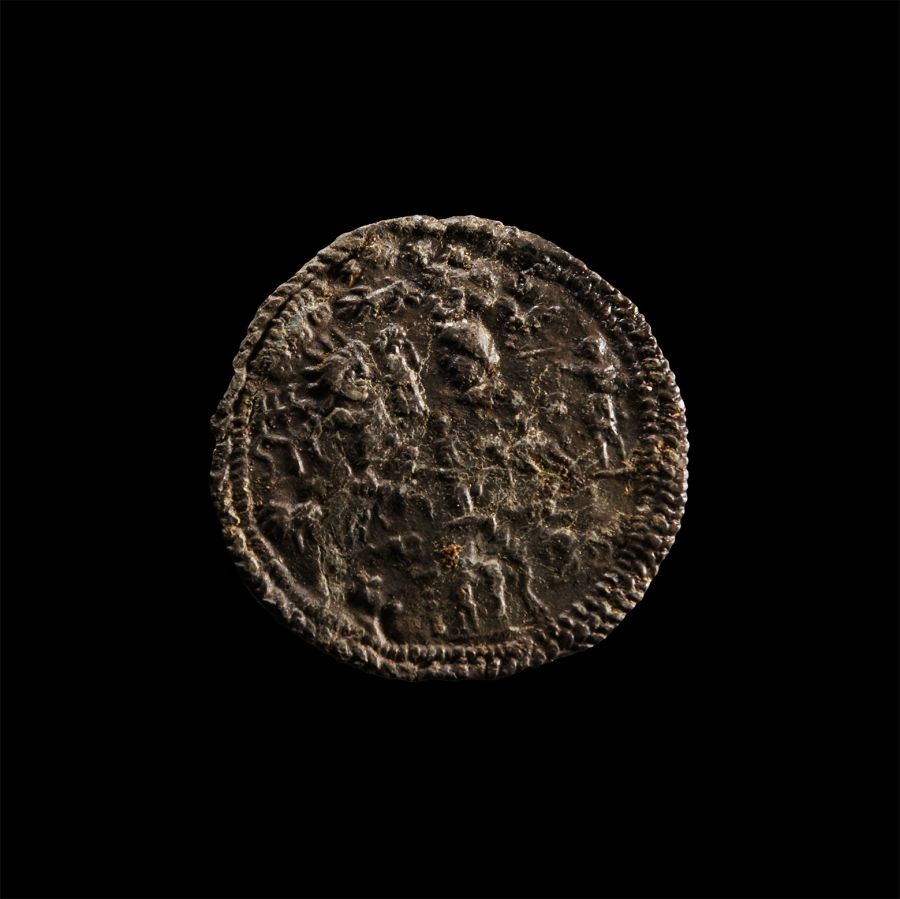
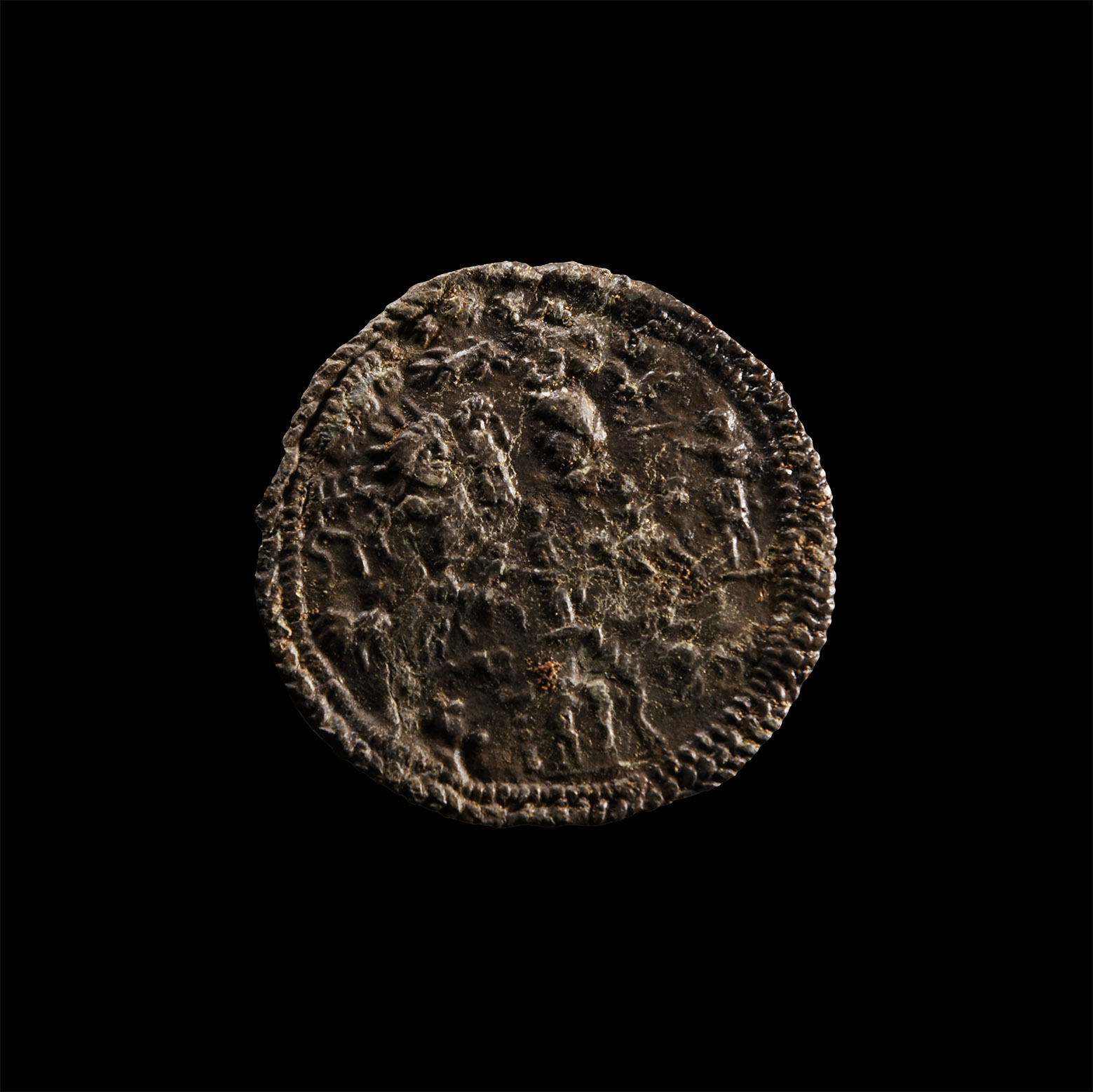
Roman Danubian Lead Plaque with Sol Invictus
2ND-3RD CENTURY A.D.
2 3/4 in. (61 grams, 70 mm).
Displaying a figural scene in relief showing the Dioscuri, wearing a crested helmet and raising the right arm in salutation; the bust of Sol wearing a radiate crown and the horned bust of moon surmounted by a crescent, border to the perimeter representing two snakes; the inner border with seven six-pointed stars, a large dolphin-like creature swimming to the right, to the left a group of round objects; to the right of the left hand rider, a three-legged offering table with three candle-sticks; between the sun and the moon a standing female deity dressed in peplos and chiton, facing right with her right arm raised in front of her; behind the moon a bird waddling to left; to the right of the left hand rider, a cockerel; beneath the horse’s hooves two prostrate figures lying face down, head to the right and left, the right figure with the left knee bent in supplication; at the centre, between the two horsemen, a standing female deity in long chiton (Helen of Troy); behind the right horse, a standing male figure facing left with his right hand raised in salutation, wearing a knee length tunica, short boots and a heavy cloak; on the lower margin a small prostrate figure with head to the right, limbs extended, a twin-handled wine cup, a standard surmounted by a lamp, a figure hanging head down from a stunted tree and a lion stalking left. [No Reserve]
ProvenanceFrom the collection of a North American gentleman, formed in the 1990s.
LiteratureSee Tudor, D., Corpus Monumentorum Religionis Equitum Danuviorum, 2 vols, Leiden, 1969-1976; Rinaldi Tufi, S., 'I cavalieri danubiani e i loro misteri', in I Daci, Catalogue of the exhibition, Milan, 1997, pp.90-91.
FootnotesThe plaque contains a complex iconography of divine figures and symbols, probably associated with Thracian or Dacian beliefs of the Lower Danube region, but also with the Greek myth of the divine twins Castor and Pollux (the Dioscuri), an important element of Roman religion since its origins, here mixed with the cult of the Danubian rider. Presiding over the whole scene is usually the Sol Invictus (the unconquered sun-god) and his sister the Moon (Selene).
CONDITIONTimeLine Auctions follows a vetting process to ensure the authenticity and legality of all items, reinforcing our commitment to integrity and responsible trading. Each antiquity, antique, and coin lot undergoes thorough examination by a vetting committee of at least ten external specialists, professional trade association members, scientists, and archaeologists: Our Vetting Process
AUCTIONS:
TimeLine is a leading auction house specialising in antiquities, ancient art, collectables, natural history, coins, medals, and books. Our auctions offer museums, collectors, historians, and enthusiasts the opportunity to acquire unique and historically significant pieces.
-
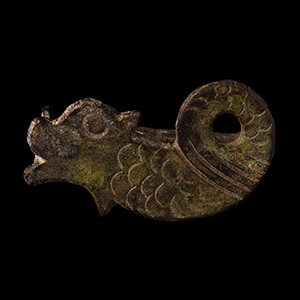
Roman Bronze Hippocamp Brooch
2nd century A.D.Sold for (Inc. bp): £143
Complete with pin-lugs, pin and catchplate to the reverse; stylised scale detailing. 10.7 grams, 40 mm
Acquired before 1980. Ex property of a London, UK, collector. -
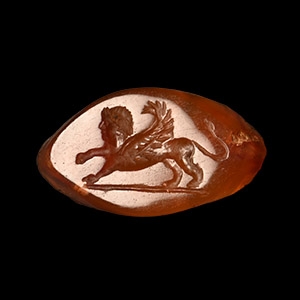
Roman Carnelian Bezel Fragment with Sphinx
2nd-3rd century A.D.Sold for (Inc. bp): £845
Once forming a part of a ring carved from a single piece of carnelian, polished and displaying the mythical creature advancing left on a groundline; accompanied by a museum-quality impression. 0.99 grams, 15 mm
UK private collection before 2000. UK art market. Property of a London gentleman. -
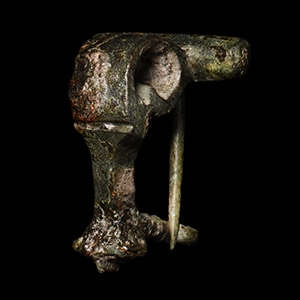
Roman Silvered Bronze Bow Brooch
Circa 1st-2nd century A.D.Sold for (Inc. bp): £33
Composed of a comma-shaped piercing to bow; complete with pin and catchplate. 15.2 grams, 30 mm
Acquired before 2000. Ex property of a Hampshire, UK, gentleman.
