
Loading, please wait...
LOT 0771
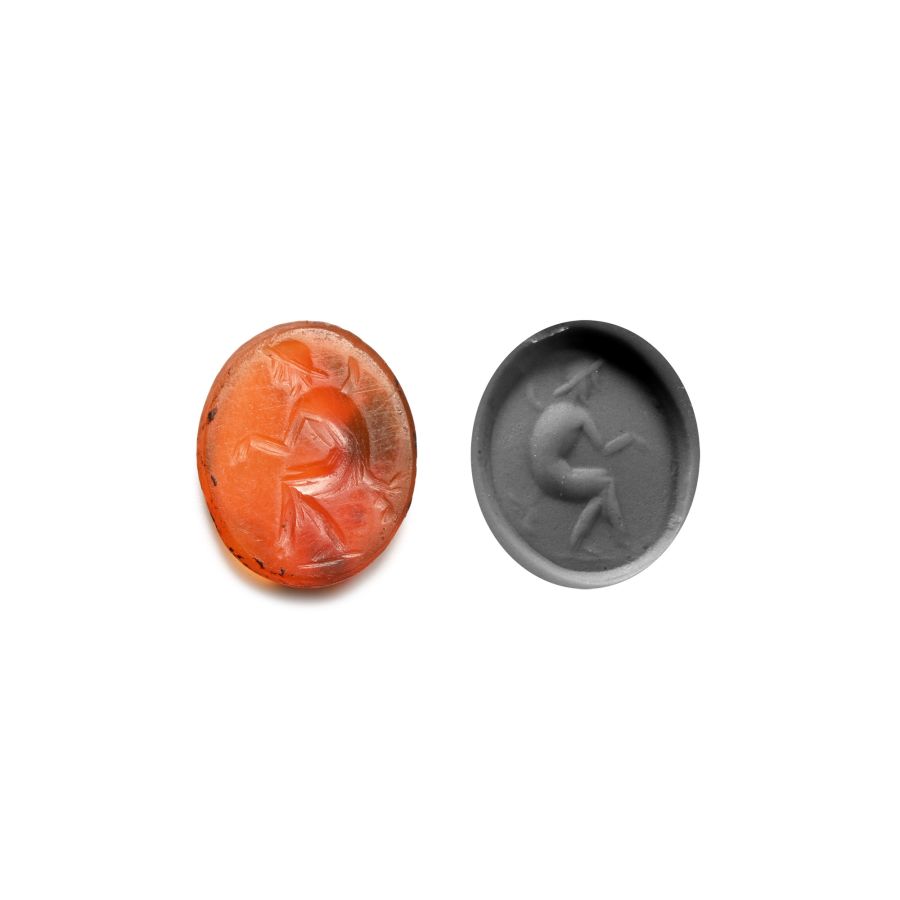
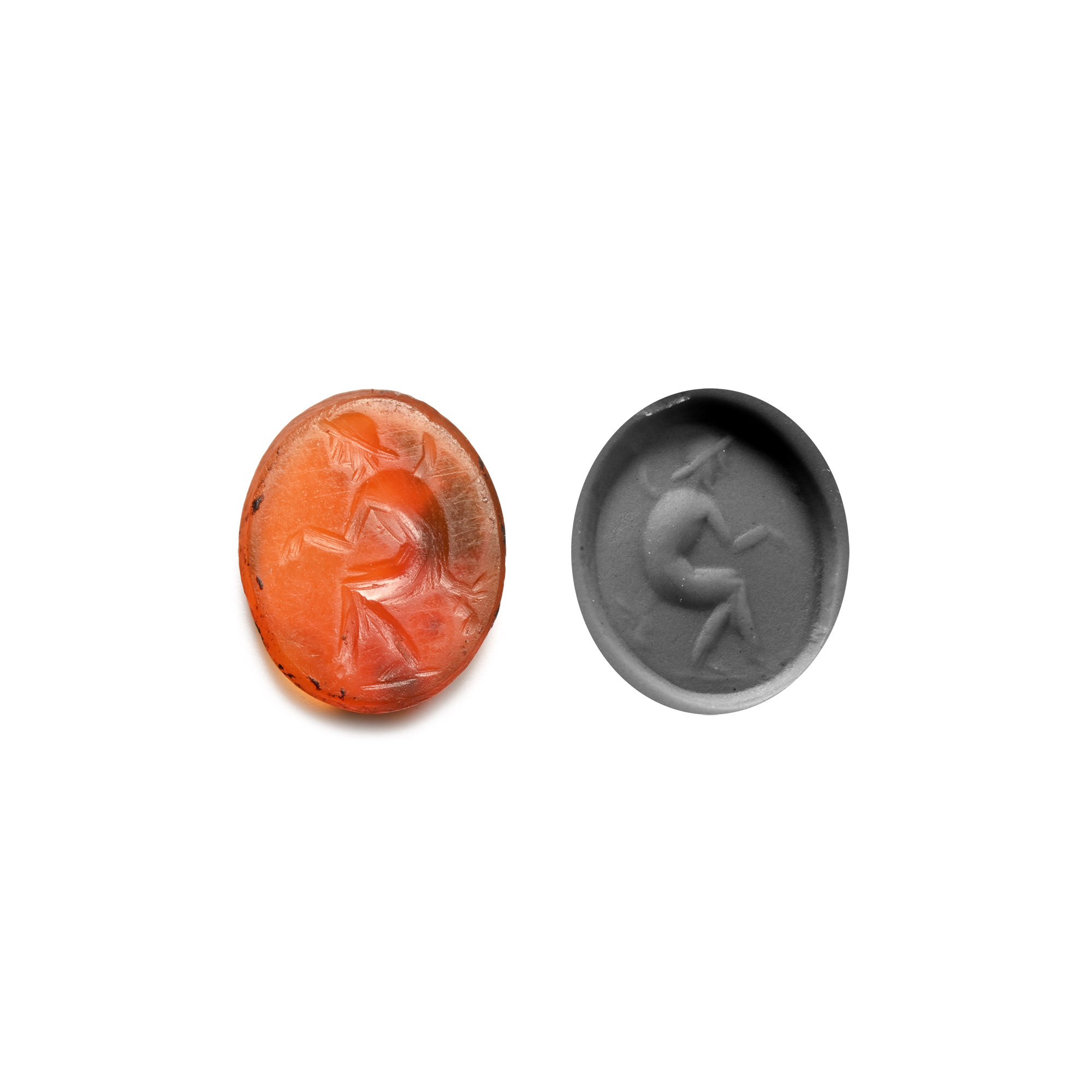
Roman Dancing Satyr Gemstone
1ST-2ND CENTURY A.D.
3/8 in. (0.35 grams, 10 mm).
Ellipsoid carnelian cloison with intaglio satyr in profile with shepherd's crook (pedum) over his shoulder.
ProvenanceAcquired on the German art market, 1989-1995.
with The Museum Gallery, 19 Bury Place, London, WC1, UK, 1998-2003.
Property of a London based academic, 2003 to present.
This lot is accompanied by an illustrated lot declaration signed by the Head of the Antiquities Department, Dr Raffaele D'Amato.
TimeLine Auctions follows a vetting process to ensure the authenticity and legality of all items, reinforcing our commitment to integrity and responsible trading. Each antiquity, antique, and coin lot undergoes thorough examination by a vetting committee of at least ten external specialists, professional trade association members, scientists, and archaeologists: Our Vetting Process
AUCTIONS:
TimeLine is a leading auction house specialising in antiquities, ancient art, collectables, natural history, coins, medals, and books. Our auctions offer museums, collectors, historians, and enthusiasts the opportunity to acquire unique and historically significant pieces.
LOT 0771
Roman Dancing Satyr Gemstone
Estimate £300 - 400€350 - 460 (for guidance only)$410 - 540 (for guidance only)
-
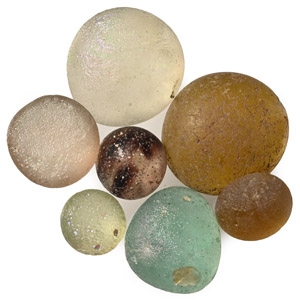
Roman Glass Gaming Counter Collection
1st-4th century A.D.Sold for (Inc. bp): £72
Comprising seven translucent domed counters in blue, amber, and light green colours. 6.51 grams total, 7-14 mm
From a gentleman's collection, 1990s. This lot is accompanied by an illustrated lot declaration signed by the Head of the Antiquities Department, Dr Raffaele D'Amato. -
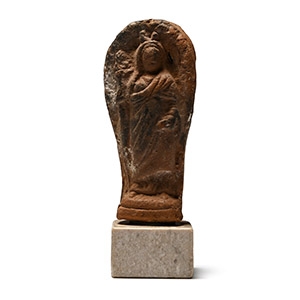
Roman Terracotta Figure of Isis
1st-2nd century A.D.Sold for (Inc. bp): £169
Hollow-formed piriform moulded figurine with standing female modelled in the half-round wearing a draped stola covering her head and gathered in her left hand, tiered base and decorative arched frame; mounted on a custom-made stand. 56.6 grams total, 82 mm including stand
From the collection of a gentleman, acquired on the London art market in the 1990s. This lot is accompanied by an illustrated lot declaration signed by the Head of the Antiquities Department, Dr Raffaele D'Amato. -
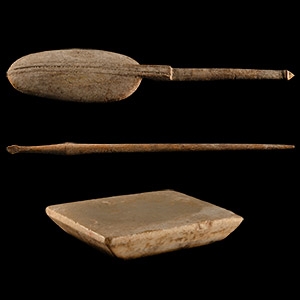
Roman Stone Palette and Bone Implement Group
1st-4th century A.D.Sold for (Inc. bp): £156
The rectangular palette with bevelled edges, accompanied by a bone spoon and probe implement. 152 grams total, 7.5-15.5 cm
Acquired early 1990s. Ex private American collection; thence by descent. Private collection since 1998. This lot is accompanied by an illustrated lot declaration signed by the Head of the Antiquities Department, Dr Raffaele D'Amato.
