
Loading, please wait...
LOT 0720
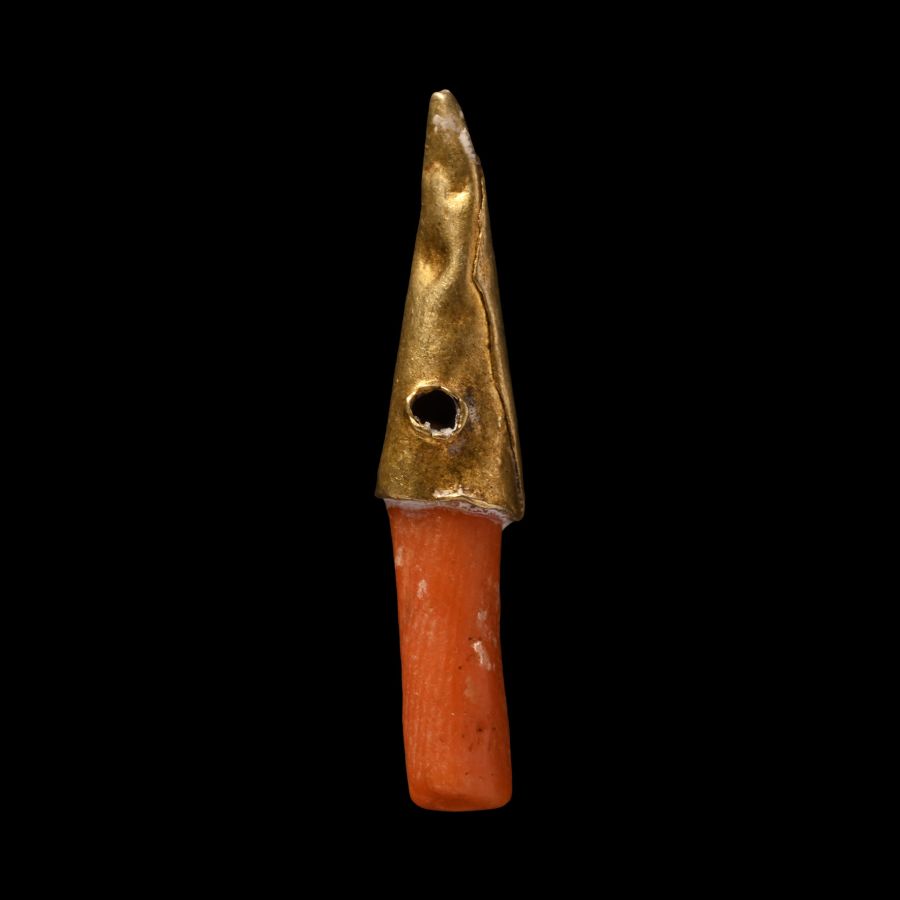
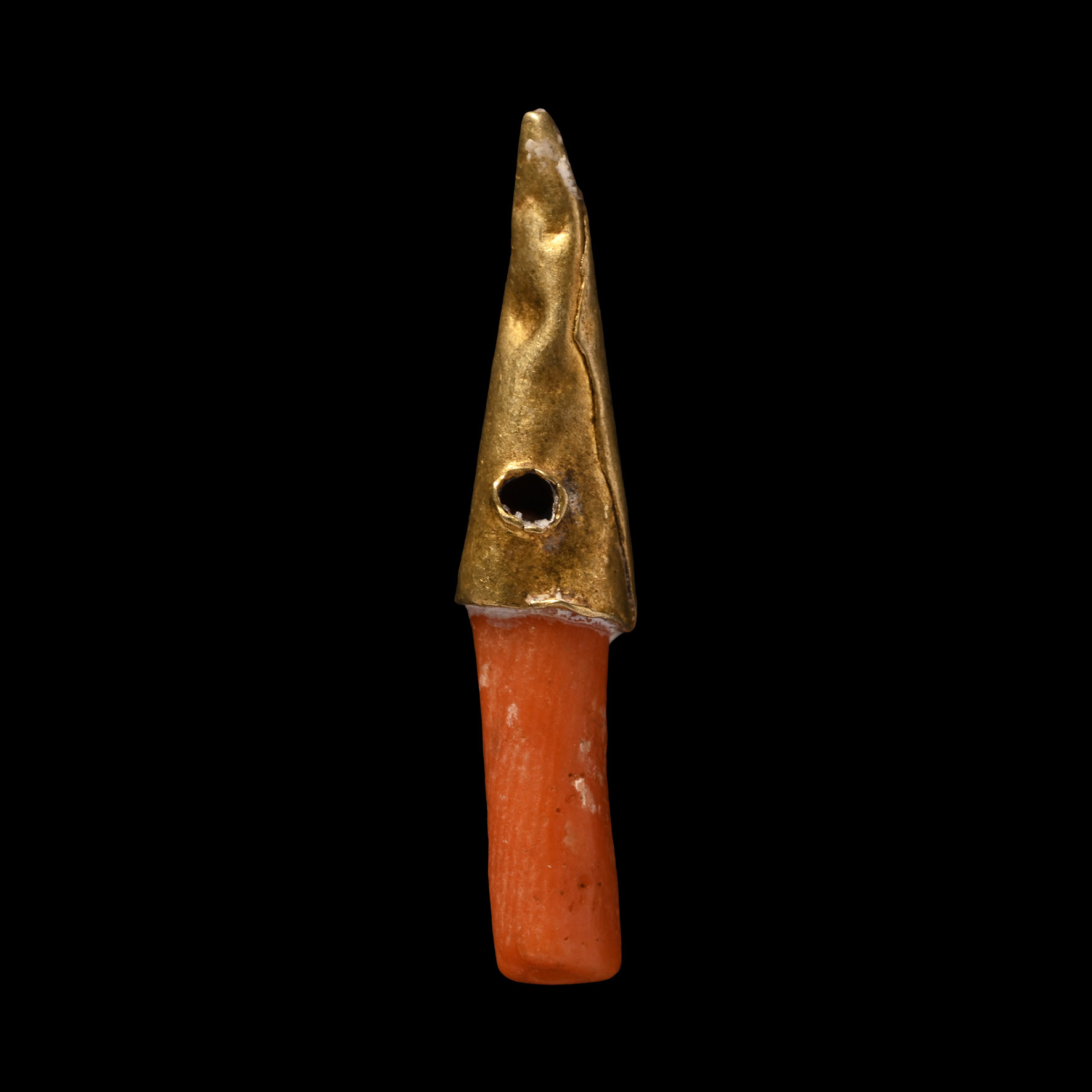
Roman Coral Set Gold Pendant
1ST-4TH CENTURY A.D.
7/8 in. (0.61 grams, 22 mm).
Conical sheet-gold cap with inset coral rod. [No Reserve]
ProvenanceFrom a late Japanese specialist collector, 1970-2000s.
CONDITIONTimeLine Auctions follows a vetting process to ensure the authenticity and legality of all items, reinforcing our commitment to integrity and responsible trading. Each antiquity, antique, and coin lot undergoes thorough examination by a vetting committee of at least ten external specialists, professional trade association members, scientists, and archaeologists: Our Vetting Process
AUCTIONS:
TimeLine is a leading auction house specialising in antiquities, ancient art, collectables, natural history, coins, medals, and books. Our auctions offer museums, collectors, historians, and enthusiasts the opportunity to acquire unique and historically significant pieces.
-
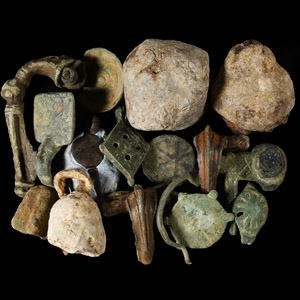
Roman and Anglo-Saxon Artefact Group
2nd-6th century A.D.Sold for (Inc. bp): £143
Including trumpet brooches, small-long bow brooch, votive axe, lead weights and other items. 540 grams total, 20-58 mm
Found Hertfordshire, UK. -
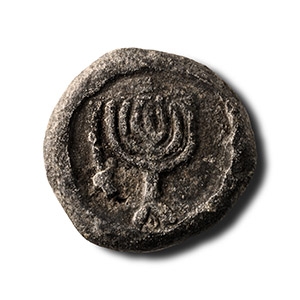
Judaean Lead Weight
1st-4th century A.D.Sold for (Inc. bp): £624
Discoid bifacial weight with reserved menorah to obverse, legend '[..]DOM' to reverse. 4.99 grams, 17 mm
Acquired in 1996. European private collection. -
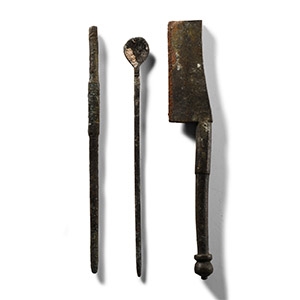
Roman Bronze Medical Instrument Group
Circa 1st-4th century A.D.Sold for (Inc. bp): £156
Comprising: cosmetic spoon with spike handle; probe with baluster and rounded tip; surgical knife with inset ferrous blade. 109 grams total, 13-14 cm
From a collection acquired on the UK art market from various auction houses and collections mostly before 2000. From an important Cambridgeshire estate; thence by descent.
