
Loading, please wait...
LOT 0844
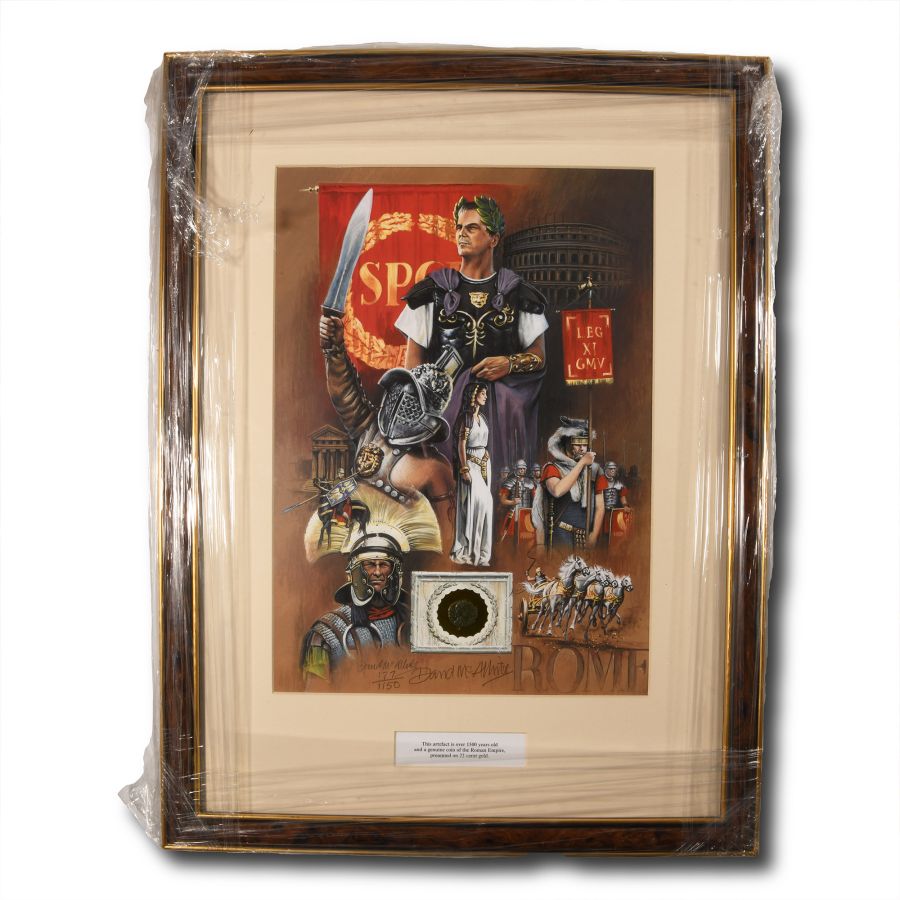
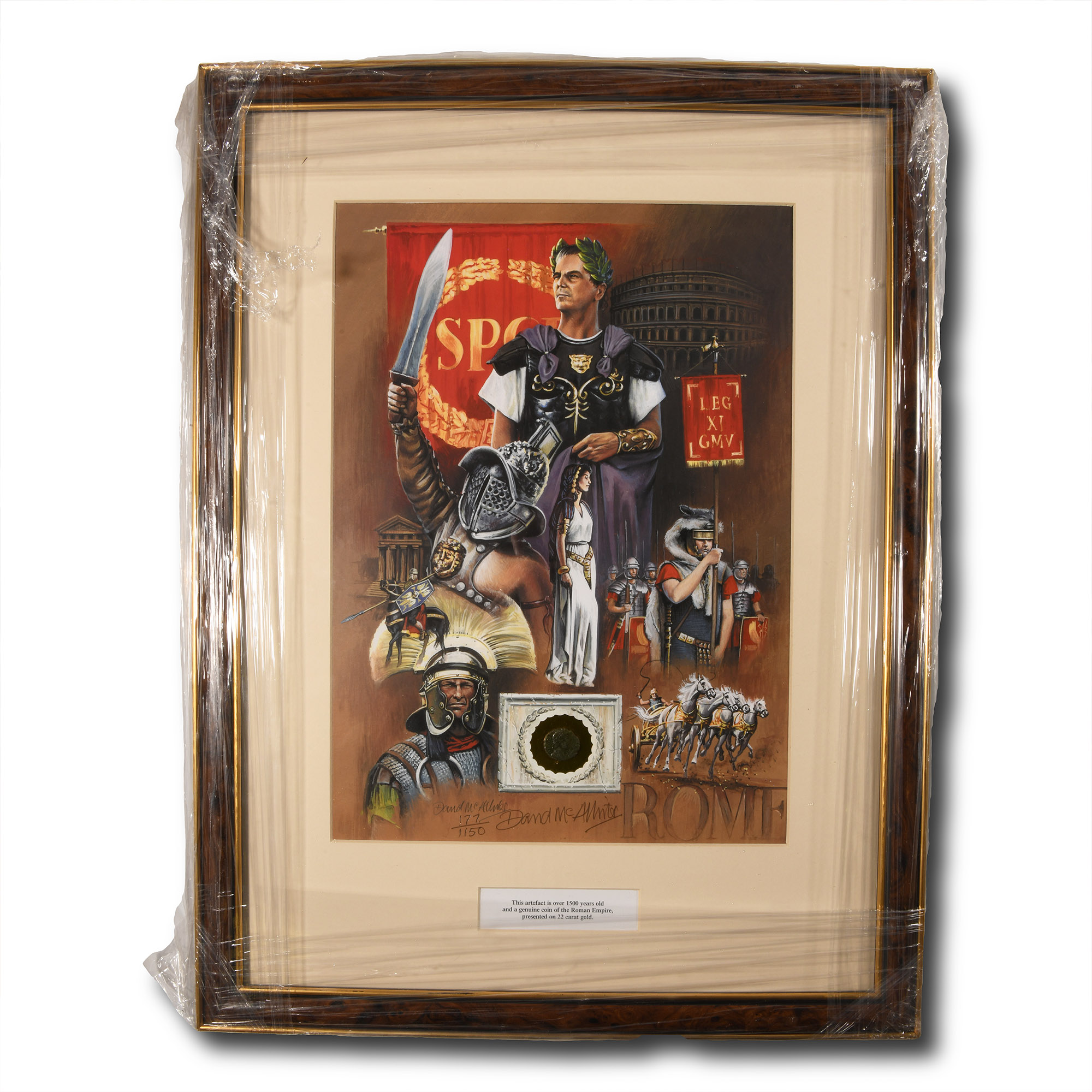
Roman Coin and Limited Edition Framed Print
3RD CENTURY A.D. AND LATER
14 1/2 x 19 12/ in. (1.27 kg, 37 x 49.5 cm).
The coin mounted on 22 carat gold foil, framed with an art print signed by the artist David McAllister, depicting scenes of Roman military activity; limited edition number 177/1150. [No Reserve]
ProvenanceUK gallery, early 2000s.
Accompanied by an old certificate of authenticity.
David McAllister's exciting design is a 'one of a kind' work that portrays the might and riches of the Roman civilisation. This limited edition print is a celebration of the award winning artist's lifetime dedication to historical paintings of the ancient world. To enhance appreciation of this rare and historic work, each individual print is signed and numbered by the artist.
CONDITIONTimeLine Auctions follows a vetting process to ensure the authenticity and legality of all items, reinforcing our commitment to integrity and responsible trading. Each antiquity, antique, and coin lot undergoes thorough examination by a vetting committee of at least ten external specialists, professional trade association members, scientists, and archaeologists: Our Vetting Process
AUCTIONS:
TimeLine is a leading auction house specialising in antiquities, ancient art, collectables, natural history, coins, medals, and books. Our auctions offer museums, collectors, historians, and enthusiasts the opportunity to acquire unique and historically significant pieces.
-
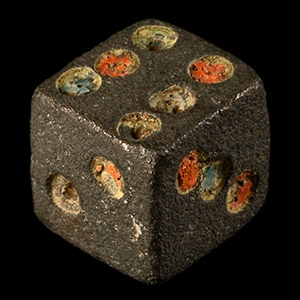
Romano-British Enamelled 'Gloucester' Bronze Gaming Dice
Circa 2nd century A.D.Sold for (Inc. bp): £598
Cuboid with enamel-filled spots disposed 1:6, 2:5, 3:4. 9 grams, 10.7 mm
Found at Gloucester, UK. Ex N. Du Quesne Bird collection. From the important private collection of dice and gaming pieces of Colin Narbeth, London, UK, collection no.23. Accompanied by a Colin Narbeth catalogue identification card. -
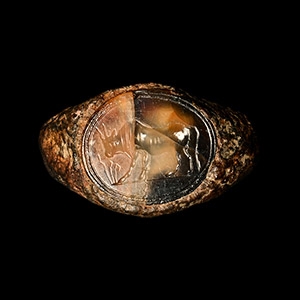
Roman Iron Ring with Sardonyx Gemstone with Bull
1st-2nd century A.D.Sold for (Inc. bp): £2,470
Slender hoop expanding to a broad bezel, inset sardonyx cloison intaglio depicting a grazing bull on a baseline. 7.58 grams, 25.56 mm overall, 17.84 mm internal diameter (approximate size British J 1/2, USA 5, Europe 9.32, Japan 9)
Acquired in London in 1994. European private collection. This lot has been checked against the Interpol Database of stolen works of art and is accompanied by search certificate no.12067-211915. -
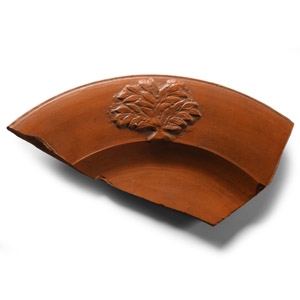
Roman Redware Pottery Sherd with Olive Tree
Circa 4th-5th century A.D.Sold for (Inc. bp): £117
Comprising a large edge section with impressed olive tree, with details of branches, fruit and foliage. 87 grams, 17 cm
Acquired 1960s-1990s. From the late Alison Barker collection, a retired London barrister.
The representation of an olive tree on this sigillata is not casual. In the early Imperial period the export of the Adriatic olive oil, following the amber road, moved from Aquileia to the provinces of Roman Pannonia. During the 3rd century, the production of the Spanish olive oil reached the Northern Roman provinces. Olives were transported in particular amphorae and served with specific vessels, distinguishing the black olives (olivae nerae) from the white olives (olivae albae).
