
Loading, please wait...
LOT 0574
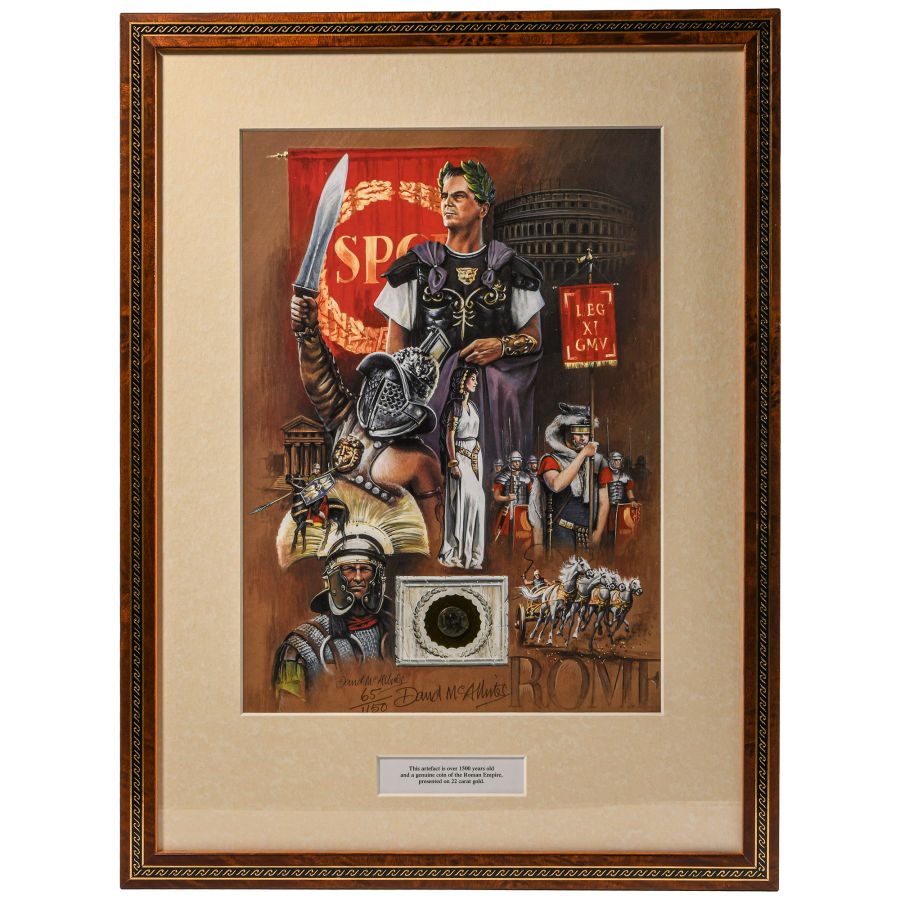
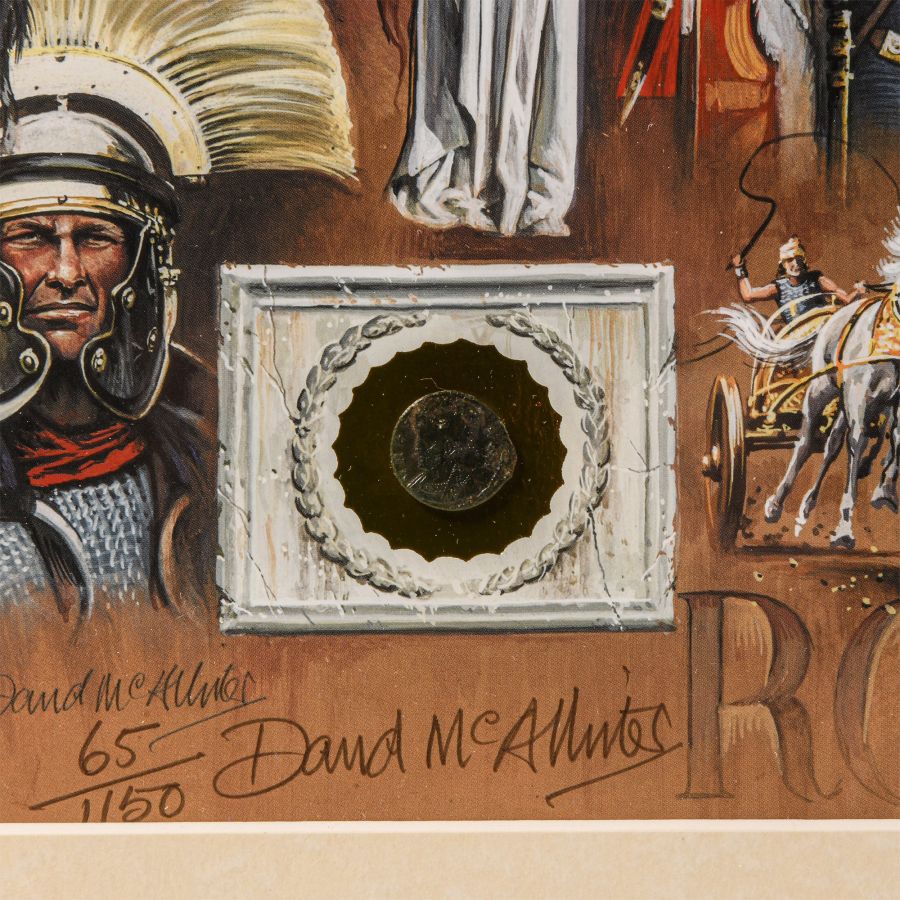
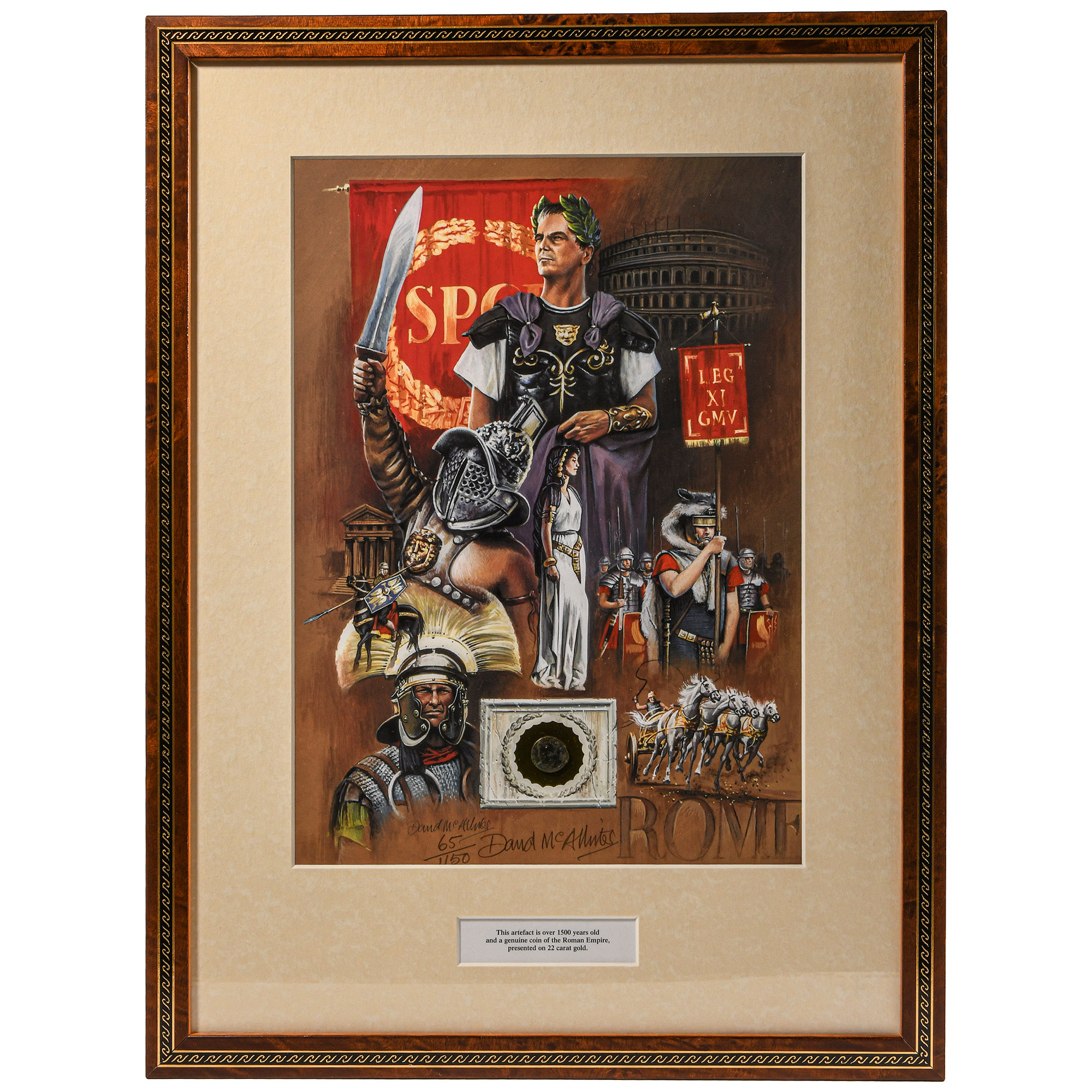
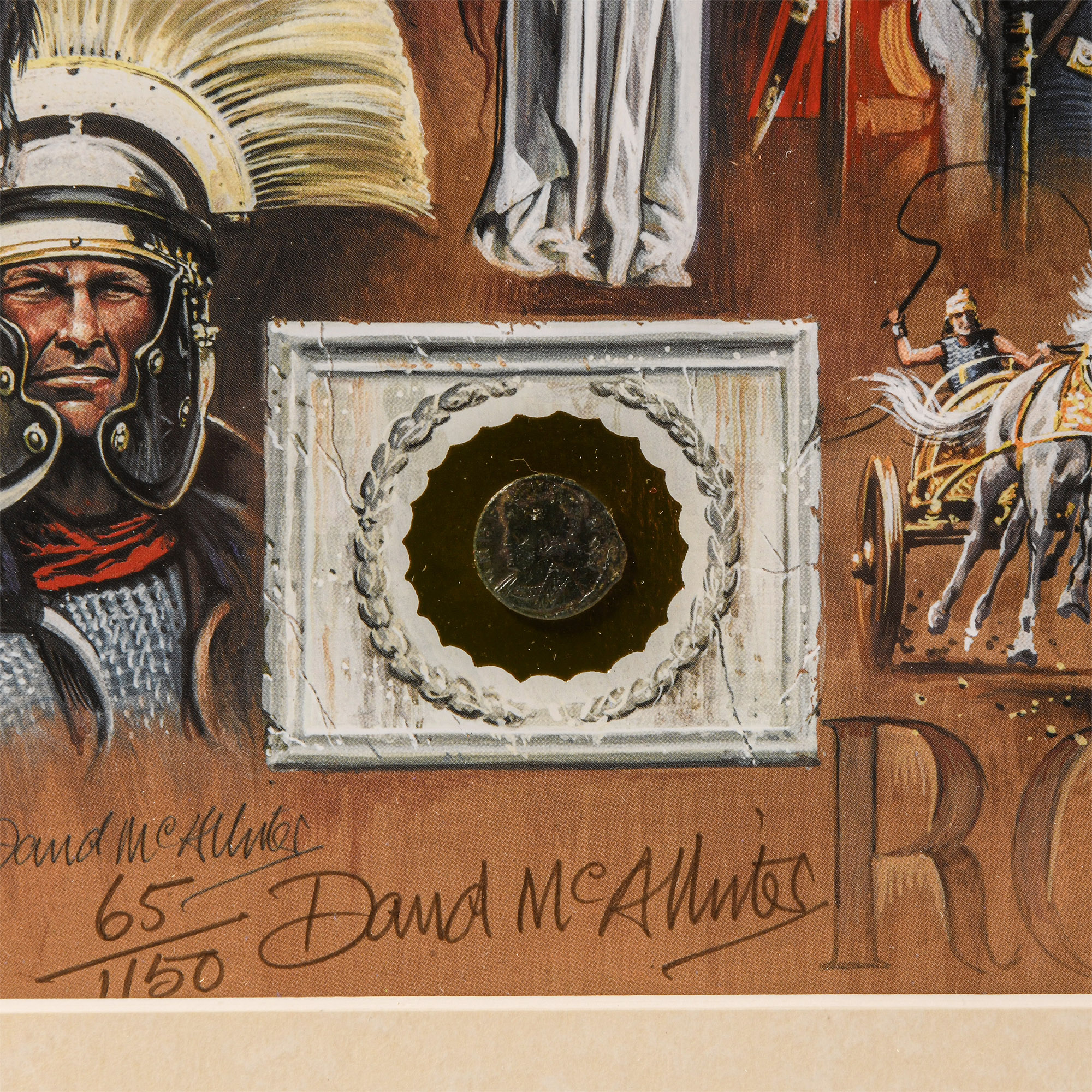
Roman Coin and Limited Edition Framed Print
3RD CENTURY A.D. AND LATER
14 3/8 in x 19 1/4 in. (1.3 kg, 36.5 x 49 cm).
The coin mounted on 22 carat gold foil, framed with an art print signed by the artist David McAllister, depicting scenes of Roman military activity; limited edition number 65/1150. [No Reserve]
ProvenanceEssex gallery, early 2000s.
FootnotesDavid McAllister's exciting design is a 'one of a kind' work that portrays the might and riches of the Roman civilisation. This limited edition print is a celebration of the award winning artist's lifetime dedication to historical paintings of the ancient world. To enhance appreciation of this rare and historic work, each individual print is signed and numbered by the artist.
CONDITIONTimeLine Auctions follows a vetting process to ensure the authenticity and legality of all items, reinforcing our commitment to integrity and responsible trading. Each antiquity, antique, and coin lot undergoes thorough examination by a vetting committee of at least ten external specialists, professional trade association members, scientists, and archaeologists: Our Vetting Process
AUCTIONS:
TimeLine is a leading auction house specialising in antiquities, ancient art, collectables, natural history, coins, medals, and books. Our auctions offer museums, collectors, historians, and enthusiasts the opportunity to acquire unique and historically significant pieces.
-
Roman Silver Cochlear Spoon Inscribed 'May You Live in God'
Circa 4th century A.D.Sold for (Inc. bp): £715
Composed of a decoratively twisted slender stem with onion knop finial and roughly D-shaped neck formed as the arched neck of a horse, the restored oval bowl bearing a Latin inscription '[V]IVASINDEO' to the interior, the underside gently carinated. 13.5 grams, 13.4 cm
Ex Garcia collection, France, 1990s-2000s.
According to the British Museum, the inscription corresponds to the phrase 'Vivas in deo', meaning 'May you live in God'. This inscription was common in the Roman Empire and especially in Roman Britain after the advent of Christianity. A small Roman silver disc, thought to have been part of a signet ring, dated to 4th-5th century and found near Swaffham, is inscribed 'Antonius, may you live in God (Antoni, vivas in Deo)'. It is highly possible that our spoon, if a liturgical object, was used to administer Holy Communion. -
Roman to Post Medieval Bronze Ring Collection
1st-19th century A.D.Sold for (Inc. bp): £143
Including trumpet-bezel, banded-hoop, vesica-bezel and other types. 56 grams total, 16-26 mm
Acquired on the German art market around 2000. From the collection of a Surrey, UK, gentleman. -
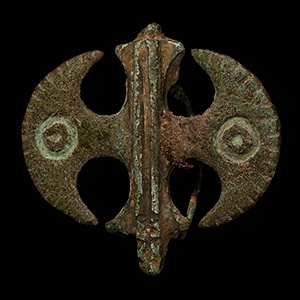
Roman Bronze Axe Brooch
3rd century A.D.Sold for (Inc. bp): £117
Plate brooch with raised vertical shaft and lateral crescent blades each with notched outer edge and incised ring-and-dot motif; catch and pin to the reverse. 9.2 grams, 37 mm
Ex Cambridgeshire, UK, collection, 1980s.
