
Loading, please wait...
LOT 0747
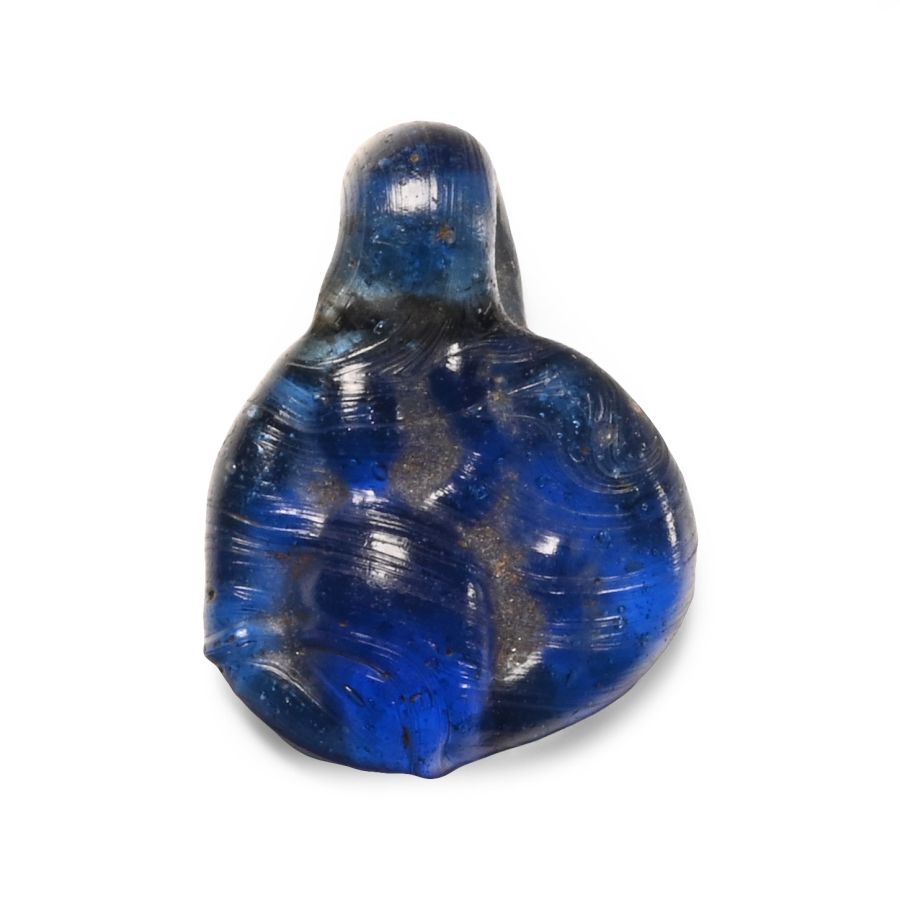
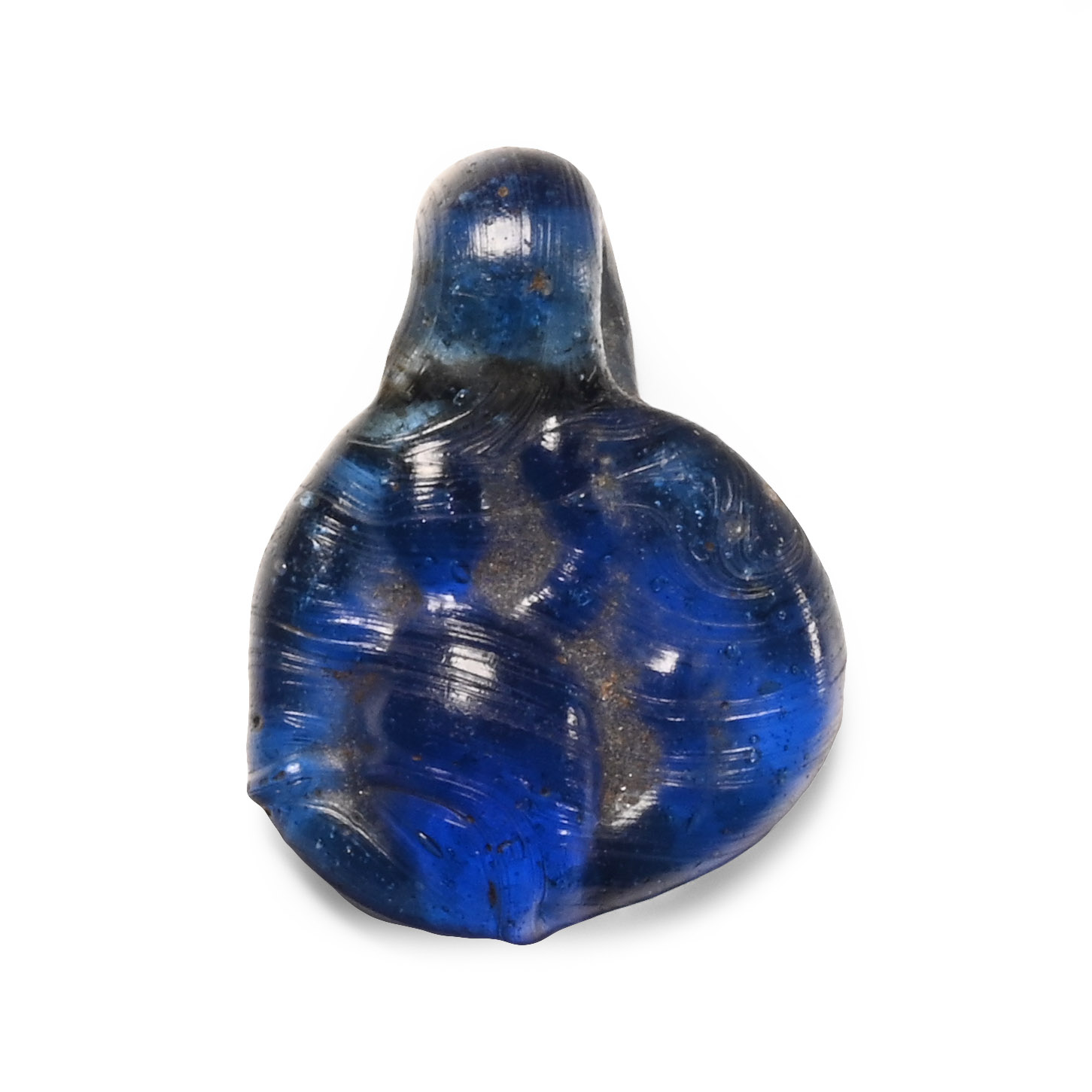
Roman Cobalt Blue Glass Turtle Pendant
1ST-4TH CENTURY A.D.
3/4 in. (1.37 grams, 18 mm).
Discoid pendant with integral loop, moulded turtle modelled in the half-round; rare type.
ProvenanceFrom the property of late Mr SM, London, UK, 1969-1999.
CONDITIONTimeLine Auctions follows a vetting process to ensure the authenticity and legality of all items, reinforcing our commitment to integrity and responsible trading. Each antiquity, antique, and coin lot undergoes thorough examination by a vetting committee of at least ten external specialists, professional trade association members, scientists, and archaeologists: Our Vetting Process
AUCTIONS:
TimeLine is a leading auction house specialising in antiquities, ancient art, collectables, natural history, coins, medals, and books. Our auctions offer museums, collectors, historians, and enthusiasts the opportunity to acquire unique and historically significant pieces.
-
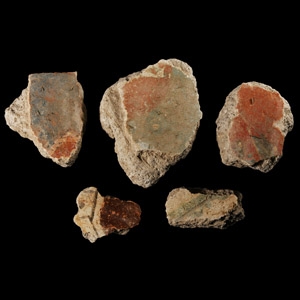
Roman Fresco Wall Plaster Collection
1st century B.C.Sold for (Inc. bp): £33
Second style, painted in red, blue and cream, one with leaf motifs. 622 grams total, 5.7-11.6 cm
Acquired in the 19th century. Ex Jeger collection, Switzerland.
These small fragments, showing similarities with fragments of Pompeii, seem to belong to the second style of Roman painting, red panels profiled with black lines representing highlight and shadow. The panels were probably framed by a green fillet. A couple of fragments show two fields in alternated red and blue. -
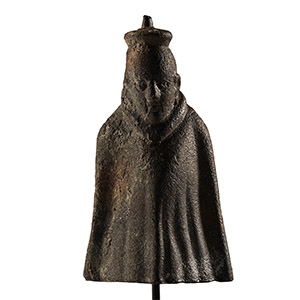
Roman Bronze Grotesque Figure with Paenula
2nd century A.D.Sold for (Inc. bp): £468
Hollow-formed with short hair and a beret, wearing a paenula military cloak extending to the hips; mounted on a custom-made display stand. 110 grams total, 90 mm including stand
From a collection acquired on the UK art market from various auction houses and collections mostly before 2000. From an important Cambridgeshire estate; thence by descent.
Telesphorus, dressed in the Gallo-Roman manner with the long hooded military cloak (folded on his back), was the subject of many votive statuettes in Roman Gaul. Son of Aesculapius, god of medicine, he certainly had a connection with the world of healing and medical care, and was associated with his sister Hygeia. He belonged to the Celtic pantheon and was spread to the East by the Galatians of Asia Minor. His cult then spread to the West, particularly in the Hadrianic period, as attested by his images found on the Wall at Birdoswald. -

Roman Sheet Gold Phalera Covers with Pelta Shields
4th-6th century A.D.Sold for (Inc. bp): £338
Comprising a pair of discoid appliqués with beaded rim and high-relief pelta (military shield) motif, one with the pelta surmounted by a kantharos with a laurel wreath above, the other with vegetal volutes. 6.60 grams total, 61-62 mm
Acquired in the early 1990s. From the collection of a London antiquarian. Accompanied by an academic report by Dr Raffaele D'Amato.
The subject represented on these two appliqués is a crescentic military shield, the so-called pelta, associated in the late Roman iconography with the Amazon female warriors. Many shields of this typology were also represented on the pedestal of the Column of Arcadius in Constantinople (circa 400 A.D.) and seemed to be associated with the heavy cavalry of the Imperial Guard (D’Amato-Negin, 2017, p.252).
