
Loading, please wait...
LOT 0742
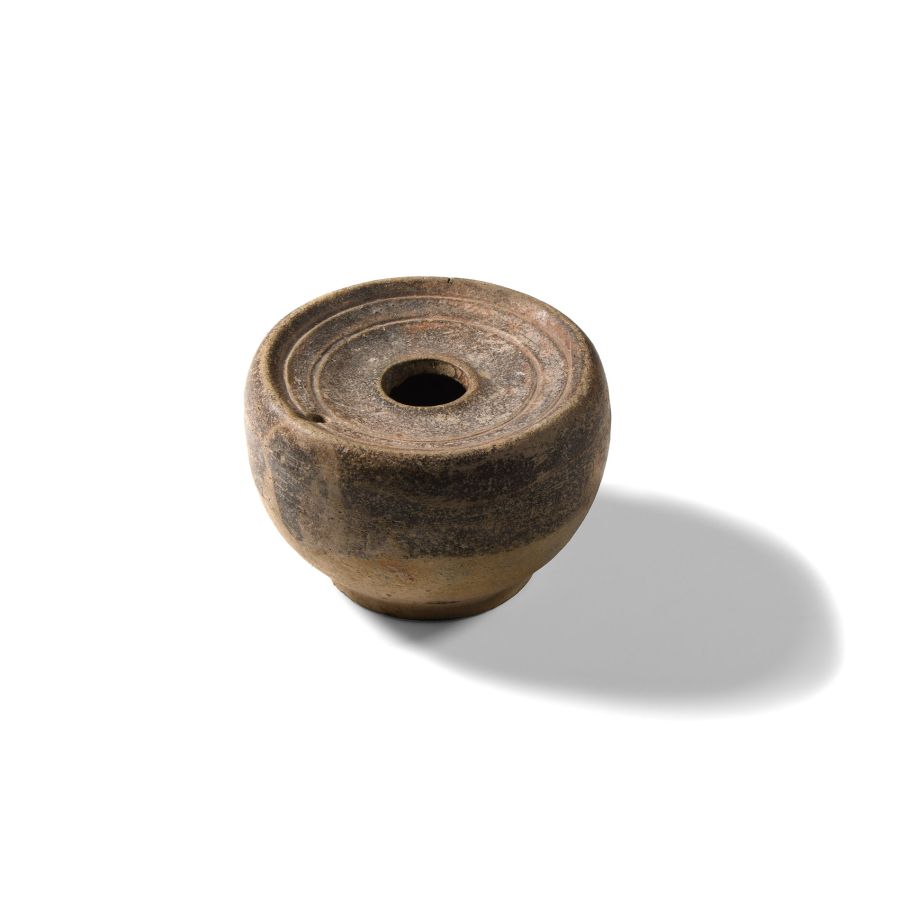
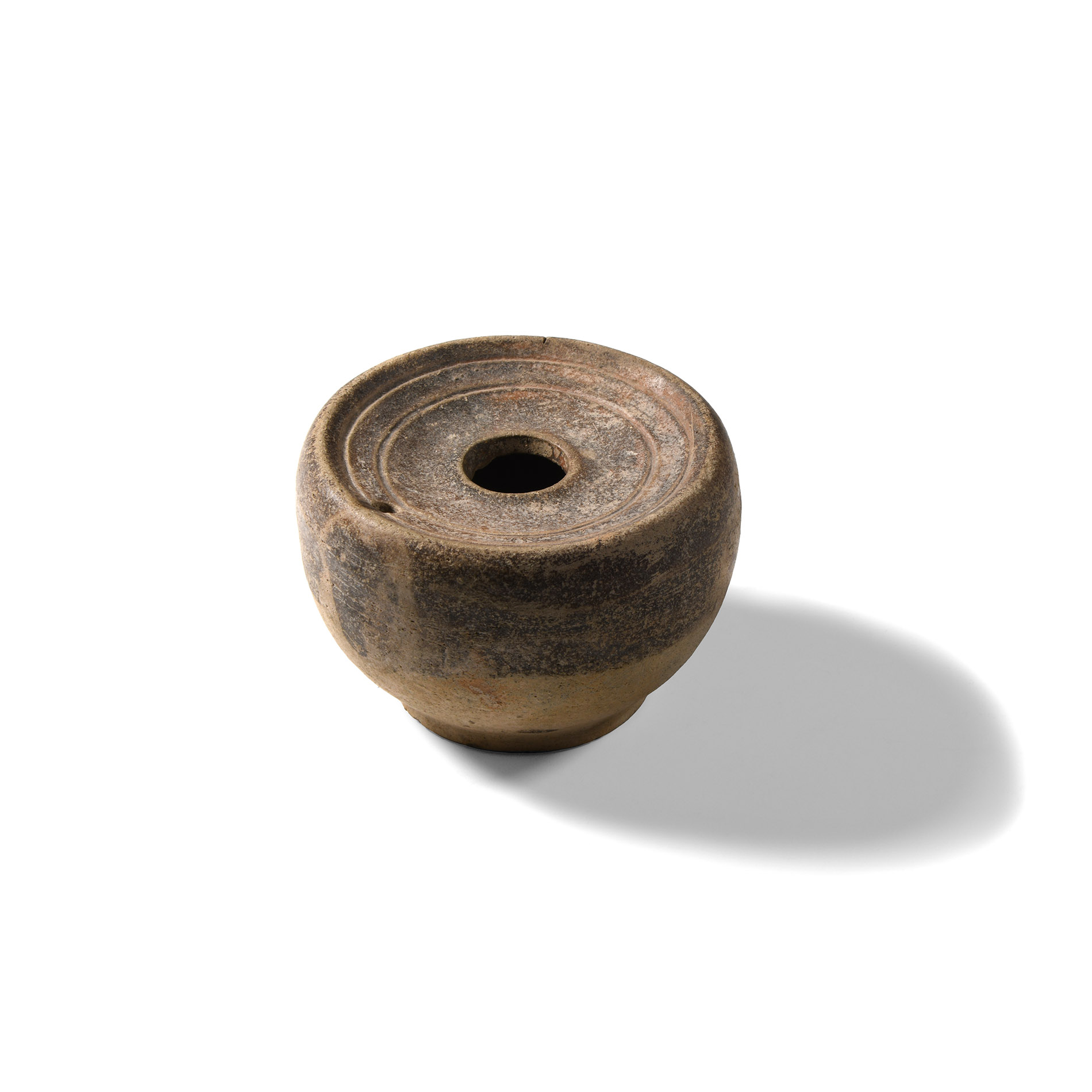
Roman Ceramic Inkwell
CIRCA 2ND CENTURY A.D.
2 3/4 in. (77 grams, 70 mm).
Composed of a foot and dished upper face, with two functional perforations.
ProvenanceAcquired 1990s-early 2000s.
East Anglian private collection.
Cf. The Metropolitan Museum, accession number 26.60.34, for a comparable example.
CONDITIONTimeLine Auctions follows a vetting process to ensure the authenticity and legality of all items, reinforcing our commitment to integrity and responsible trading. Each antiquity, antique, and coin lot undergoes thorough examination by a vetting committee of at least ten external specialists, professional trade association members, scientists, and archaeologists: Our Vetting Process
AUCTIONS:
TimeLine is a leading auction house specialising in antiquities, ancient art, collectables, natural history, coins, medals, and books. Our auctions offer museums, collectors, historians, and enthusiasts the opportunity to acquire unique and historically significant pieces.
-
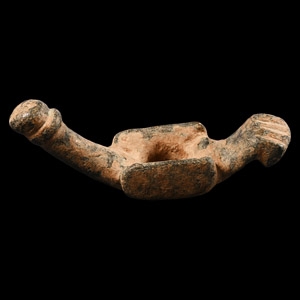
Roman Bronze Phallic Amulet
3rd-4th century A.D. or laterEstimate: £100 - 140 (+bp*)
Opening Bid: £50
Composed of a hollowed truncated conical socket, with a curved arm to each side, one ending in a phallic shape, the other ending with a closed fist. 26.1 grams, 55 mm
Acquire in the 1990s. Ex Cambridgeshire, UK, collection.
Roman phallic amulets are represented by many examples preserved in museums and private collections, with a vast variety of types. This specimen belongs to category of double phallus, even if one of the male attributes is here represented as a fist. These amulets were worn as a wish for fertility and virile power, often hung on horses as harness pendants. -
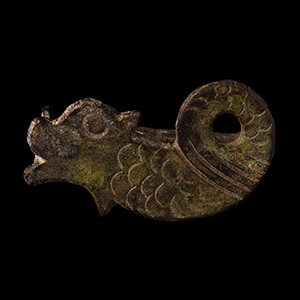
Roman Bronze Hippocamp Brooch
2nd century A.D.Sold for (Inc. bp): £143
Complete with pin-lugs, pin and catchplate to the reverse; stylised scale detailing. 10.7 grams, 40 mm
Acquired before 1980. Ex property of a London, UK, collector. -
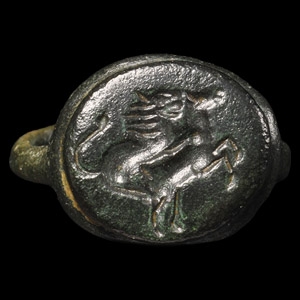
Late Roman Bronze Ring with Lion Attacking a Horse
3rd century A.D.Sold for (Inc. bp): £338
Ellipsoid bezel with gusseted border. 6.66 grams, 22.96 mm overall, 17.63 mm internal diameter (approximate size British M 1/2, USA 6 1/4, Europe 13.09, Japan 12)
Acquired on the EU art market around 2000. From the collection of a North American gentleman.
