
Loading, please wait...
LOT 0708
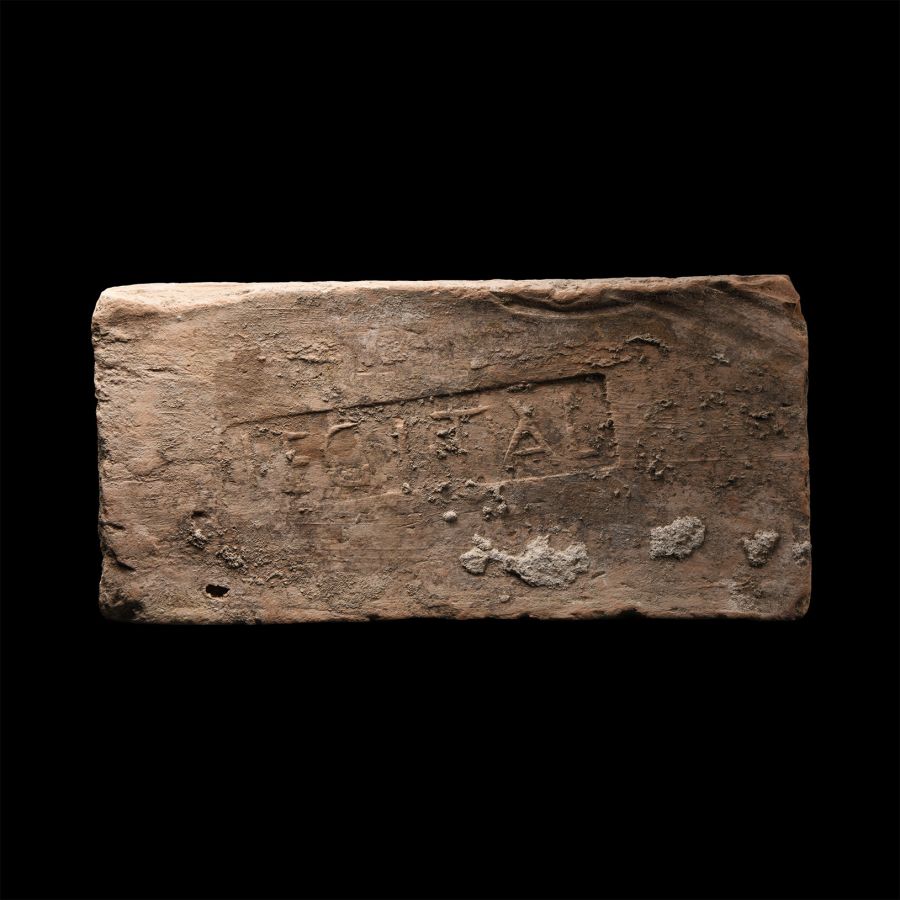
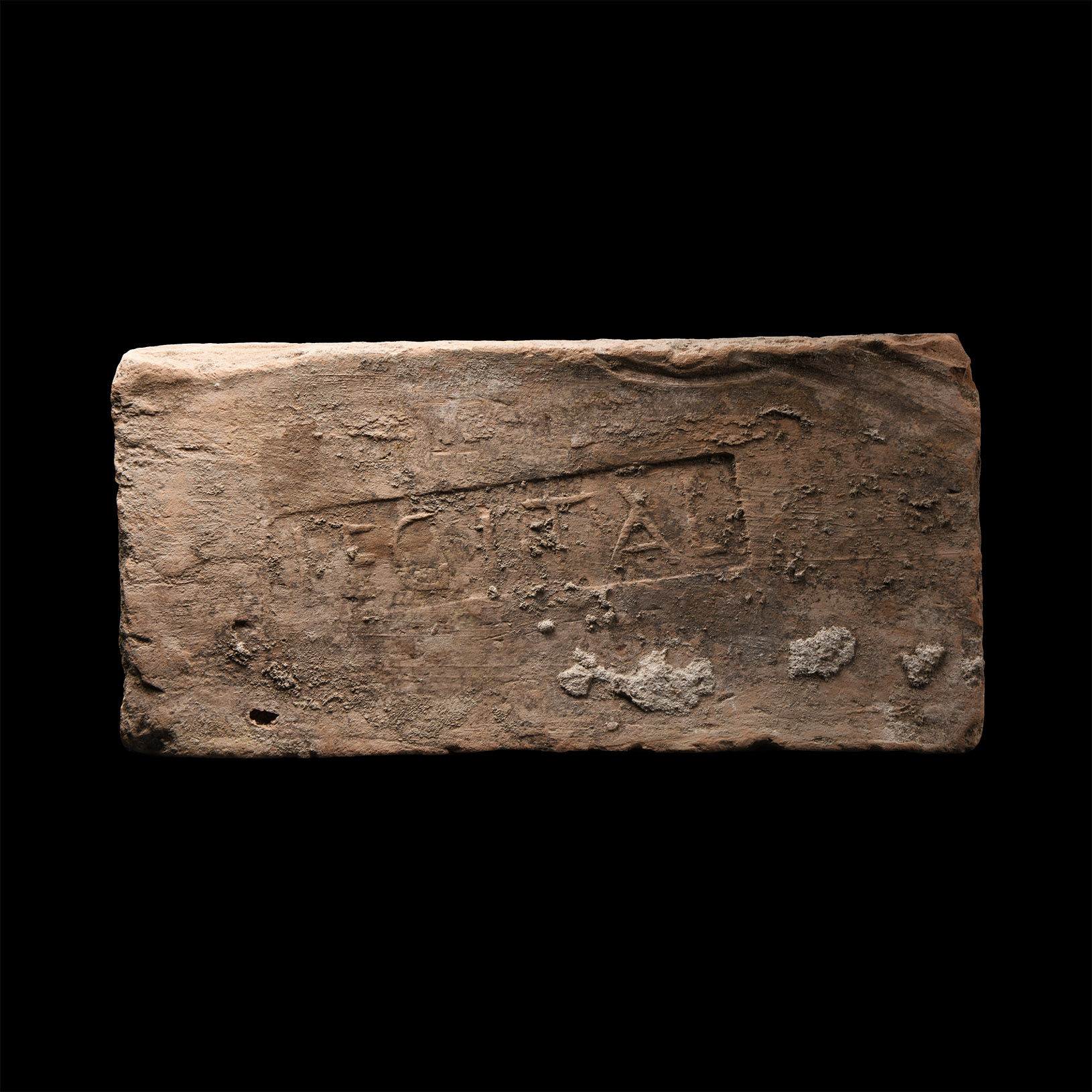
Roman Ceramic Brick with Military Stamp for Legio I Italica
1ST-4TH CENTURY A.D.
10 7/8 x 5 1/8 in. (2.5 kg, 27.5 x 13 cm).
Of rectangular form, a recessed stamp to one face bearing letters in relief 'LEG I ITAL' for First Italic Legion.
ProvenanceAcquired 1960s-1990s.
Late Alison Barker collection, a retired London barrister.
See Sarnowski, T., 'Die Ziegelstempel aus Novae' in Archaeologia, Warszawa, 1983, 43, pp.17-61; Kurzmann, R., 'Soldier, Civilian and Military Brick Production' in Oxford Journal of Archaeology, 24 (4), 2005, pp.405-414.
FootnotesThe Legio I Italica ('of Italy') was a Roman legion formed by Nero on September 20, 66 or 67 A.D. and it was active until the 5th-6th century AD. The emblems of the legion were a running boar and sometimes a bull. Troops of this legion appear on Trajan's Column bridging a river. The main camp of the Legio was Novae, modern Bulgaria, but it operated in most of the imperial provinces, including Britain, where a vexillatio fought in the wars of Septimius Severus between 202 and 204 A.D.
CONDITIONTimeLine Auctions follows a vetting process to ensure the authenticity and legality of all items, reinforcing our commitment to integrity and responsible trading. Each antiquity, antique, and coin lot undergoes thorough examination by a vetting committee of at least ten external specialists, professional trade association members, scientists, and archaeologists: Our Vetting Process
AUCTIONS:
TimeLine is a leading auction house specialising in antiquities, ancient art, collectables, natural history, coins, medals, and books. Our auctions offer museums, collectors, historians, and enthusiasts the opportunity to acquire unique and historically significant pieces.
LOT 0708
Roman Ceramic Brick with Military Stamp for Legio I Italica
Sold for (Inc. bp): £494
-
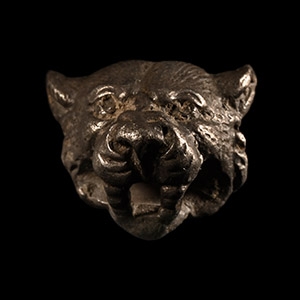
Roman Silver Panther Head
1st-2nd century A.D.Estimate: £300 - 400 (+bp*)
Opening Bid: £167
Modelled in the half-round with naturalistic detailing, forming a socket through the open mouth; right-angled recess to reverse. 5.3 grams, 16 mm
‘The Ancient Menagerie Collection’ formerly the property of a Cambridgeshire lady, collected since the 1990s and acquired from auctions and dealers throughout Europe and the USA, now ex London collection. -
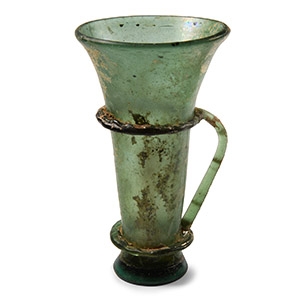
Late Roman Green Glass Vessel with Handle
Circa 4th century A.D.Estimate: £500 - 700 (+bp*)
Opening Bid: £200
Featuring a cylindrical body and flared neck, applied collar and handle; remains of iridescence. 325 grams, 17.7 cm high
with a London, UK gallery 1971-early 2000s. -
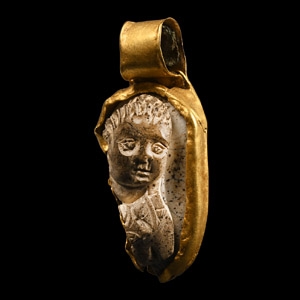
Roman Gold Pendant with Cameo
Circa 1st-2nd century A.D.Estimate: £600 - 800 (+bp*)
Opening Bid: £240
Suspension loop to one edge, the stone cameo fragment portraying a young boy. 3.84 grams, 30 mm
Acquired 1990s-early 2000s. East Anglian private collection.
