
Loading, please wait...


LOT 0685
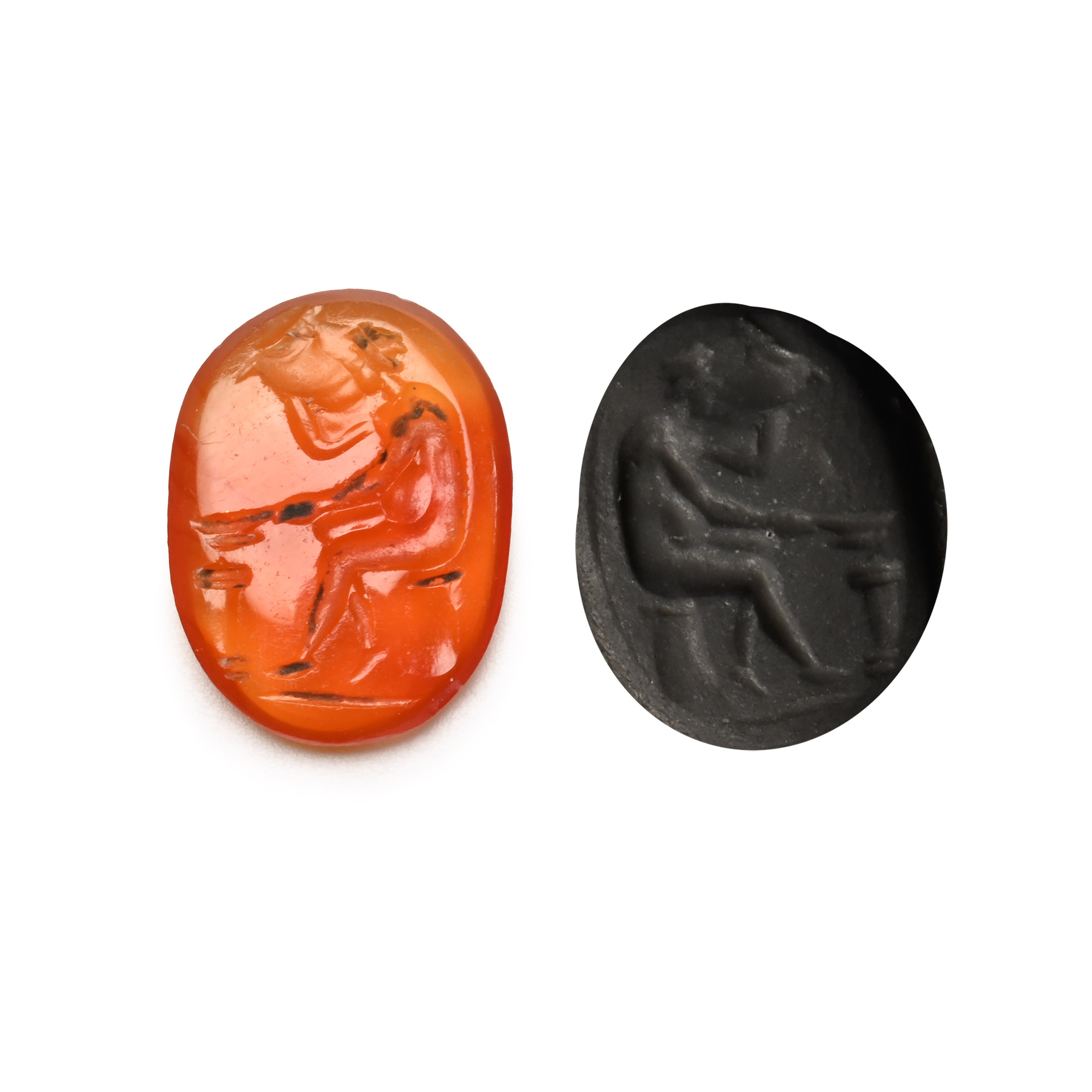
Roman Carnelian Intaglio with Vulcan
1ST-CENTURY B.C.-1ST CENTURY A.D.
3/8 in. (0.25 grams, 10 mm).
Depicting a nude blacksmith seated on a stool before a forge, hammer in his right hand, holding an object he is hammering with the other hand.
ProvenancePrivate collection, North Germany.
with Gorny & Mosch, 14 December 2005, no.238.
Accompanied by a copy of an Art Loss Register certificate no.S00075379.
This lot is accompanied by an illustrated lot declaration signed by the Head of the Antiquities Department, Dr Raffaele D’Amato.
This lot is accompanied by an illustrated lot declaration signed by the Head of the Antiquities Department, Dr Raffaele D'Amato.
Cf. an intaglio with a kneeling Hephaestus (late 4th-1st century B.C.) in brown and white agate at the Walters Art Museum, accession no.42462, for the type.
FootnotesProbably a Roman copy of Hellenistic subject. Some Roman ring intaglios were dedicated to Vulcan (Greek Hephaestus), god of the blacksmiths, artisans, and carpenters. Usually the god is represented standing or working in his forge, wearing a wide brimmed hat and a one-shouldered tunic, identifying him as a craftsman. In his right hand he holds a hammer over an anvil, and in his left a pair of long metalworking tongs. Sometimes he is naked, seated and working.
CONDITIONTimeLine Auctions follows a vetting process to ensure the authenticity and legality of all items, reinforcing our commitment to integrity and responsible trading. Each antiquity, antique, and coin lot undergoes thorough examination by a vetting committee of at least ten external specialists, professional trade association members, scientists, and archaeologists: Our Vetting Process
AUCTIONS:
TimeLine is a leading auction house specialising in antiquities, ancient art, collectables, natural history, coins, medals, and books. Our auctions offer museums, collectors, historians, and enthusiasts the opportunity to acquire unique and historically significant pieces.
LOT 0685
Roman Carnelian Intaglio with Vulcan
Estimate £300 - 400€350 - 460 (for guidance only)$410 - 540 (for guidance only)
-
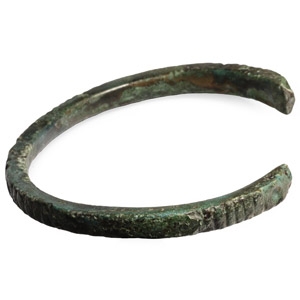
Late Roman Bronze Military Bracelet with Beast-Heads
4th-5th century A.D.Sold for (Inc. bp): £52
Rectangular-section penannular body with bands of ribbing and punched pellets, the finials fashioned as stylised beast heads. 27.9 grams, 67 mm
Ex German art market, 2000s. Acquired from an EU collector living in London. From the collection of a Surrey, UK, gentleman. This lot is accompanied by an illustrated lot declaration signed by the Head of the Antiquities Department, Dr Raffaele D'Amato. -
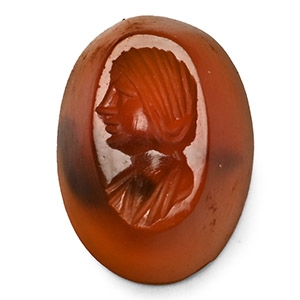
Roman Gemstone with Female Portrait
2nd-3rd century A.D.Estimate: £120 - 170 (+bp*)
Opening Bid: £65
Ellipsoid in plan with intaglio profile female bust. 0.41 grams, 9 mm
From the collection of a London, UK, gentleman, 1970s onwards. This lot is accompanied by an illustrated lot declaration signed by the Head of the Antiquities Department, Dr Raffaele D’Amato. This lot is accompanied by an illustrated lot declaration signed by the Head of the Antiquities Department, Dr Raffaele D'Amato. -
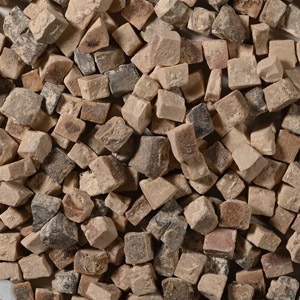
Roman Mosaic Stone Tesserae Group
1st-4th century A.D.Sold for (Inc. bp): £468
A mixed group of two hundred and fifty single tesserae of various colours and sizes, mostly cuboid. 331 grams total, 7-14 mm
From a collection acquired on the UK art market from various auction houses and collections mostly before 2000. From an important Cambridgeshire estate; thence by descent. This lot is accompanied by an illustrated lot declaration signed by the Head of the Antiquities Department, Dr Raffaele D'Amato.
Roman mosaics were made from small cubes of natural stone and terracotta possibly cut from tile or brick. Each of these small cubes was called a tessera (several tesserae) from the Latin word for dice.
