
Loading, please wait...
LOT 0718
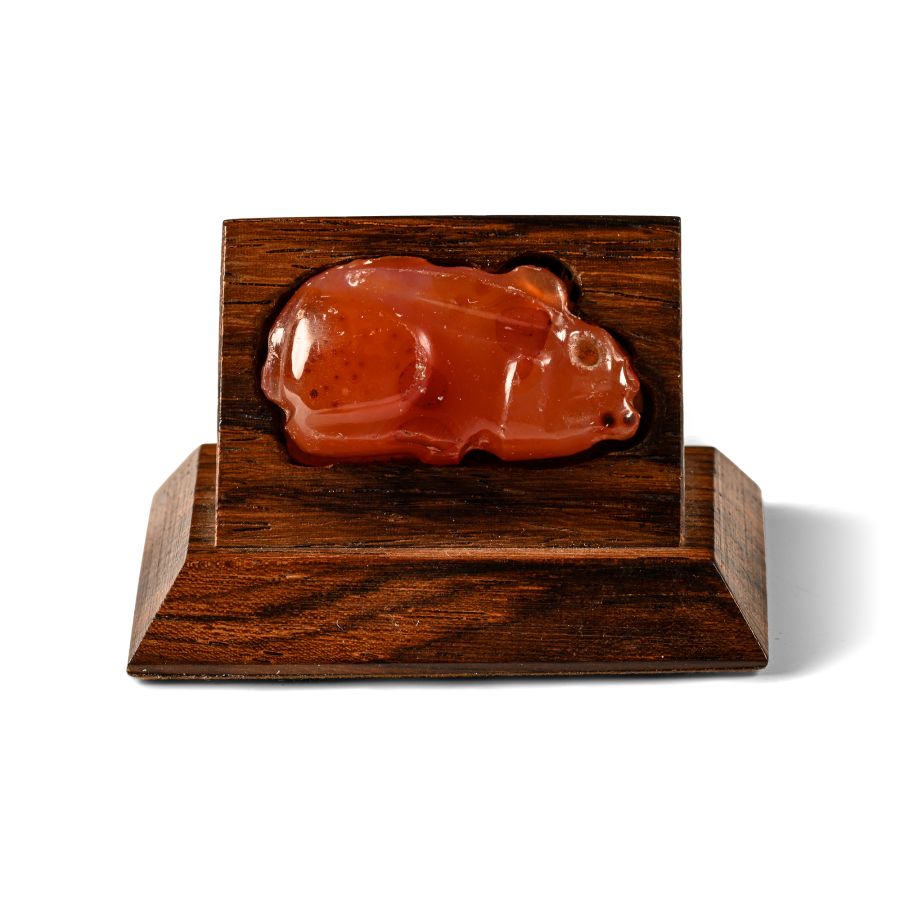
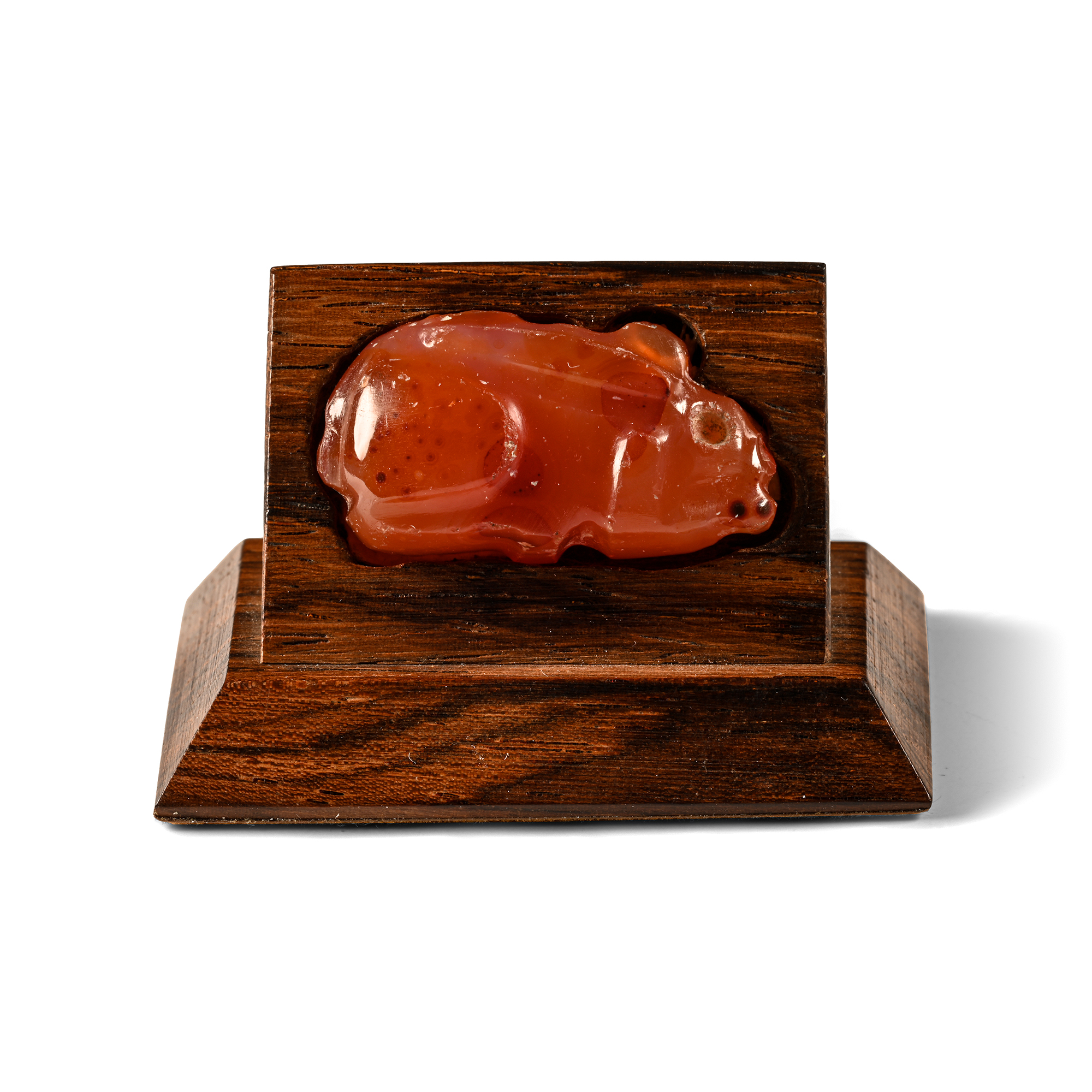
Roman Carnelian Hare Amulet
CIRCA 1ST-2ND CENTURY A.D.
1 in. (19 grams total, 27 mm).
Carved in the round with sockets to the eyes for insertion of a contrasting material; mounted in a wooden stand.
ProvenanceFrench private collection.
UK art market.
Property of a London gentleman.
TimeLine Auctions follows a vetting process to ensure the authenticity and legality of all items, reinforcing our commitment to integrity and responsible trading. Each antiquity, antique, and coin lot undergoes thorough examination by a vetting committee of at least ten external specialists, professional trade association members, scientists, and archaeologists: Our Vetting Process
AUCTIONS:
TimeLine is a leading auction house specialising in antiquities, ancient art, collectables, natural history, coins, medals, and books. Our auctions offer museums, collectors, historians, and enthusiasts the opportunity to acquire unique and historically significant pieces.
LOT 0718
Roman Carnelian Hare Amulet
Estimate £800 - 1,000€930 - 1,160 (for guidance only)$1,080 - 1,350 (for guidance only)
-
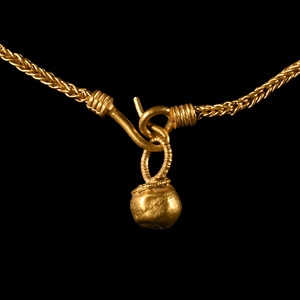
Roman Gold Chain with Ball Pendant
5th century A.D.Sold for (Inc. bp): £2,080
Trichinopoly chain with hook-and-eye closure, ball pendant with beaded wire collar. 15.02 grams, 36.5 cm long
From the collection of a Cambridgeshire lady, UK, 1990s.
The chain is composed of links in the form of pairs of broad, ribbed bands soldered together at a right angle. It is of fine loop-in-loop construction, terminating on one side in a ribbed cap with loops. The chain of ribbed loops placed at right angles is one of several popular varieties introduced in the late Roman period. The ball pendant was very common in Graeco-Roman times, substituted by Christian symbols during the late empire. -
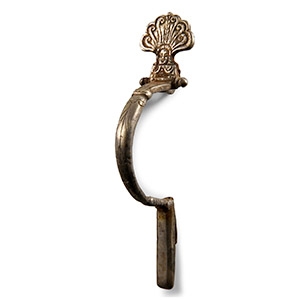
Large Roman Silver Bow Brooch
Circa 2nd-3rd century A.D.Sold for (Inc. bp): £130
With incised foliage detail to the high arched bow and flat head plate with human face and radiating floral pattern engraved on both sides; catchplate and pin-loop to the reverse. 36.5 grams, 10.5 cm
Ex European collection, 1990s. Ex Den of Antiquity, Cambridgeshire, UK. Accompanied by a dealer's catalogue information card.
The fibula seems to be provincial type, of Romano-Germanic inspiration. This particularly characteristic fibula shape of the Romano-Germanic army, worn probably by the Germanic mercenaries of the Roman army, appeared in the later 2nd and partly at the beginning of the 3rd century A.D., under a form of large bow brooches with various types of head plates or spiral sleeves. -
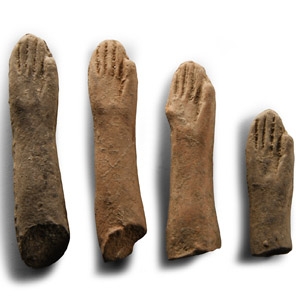
Roman Votive Terracotta Hand Group
Circa 1st century A.D.Sold for (Inc. bp): £124
Each moulded with finger detailing to one face; or from children's dolls. 23 grams total, 34-53 mm
Ex German art market, 2000s. Acquired from an EU collector living in London. From the collection of Surrey, UK, gentleman.
