
Loading, please wait...
LOT 0105
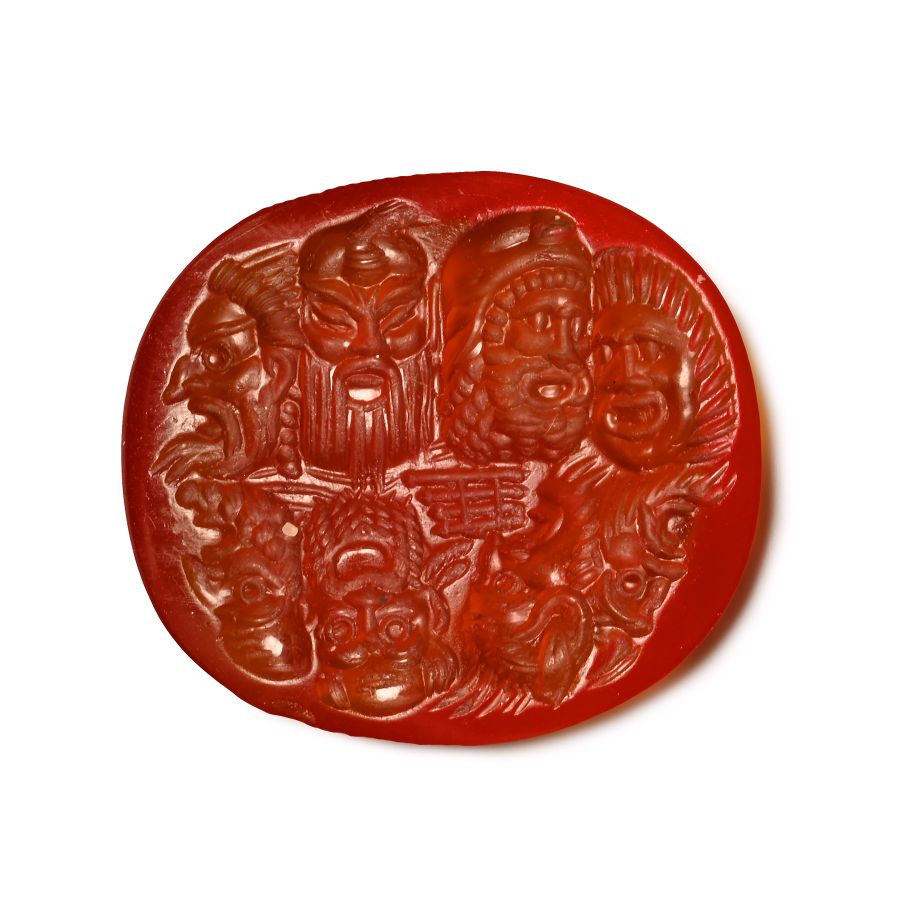
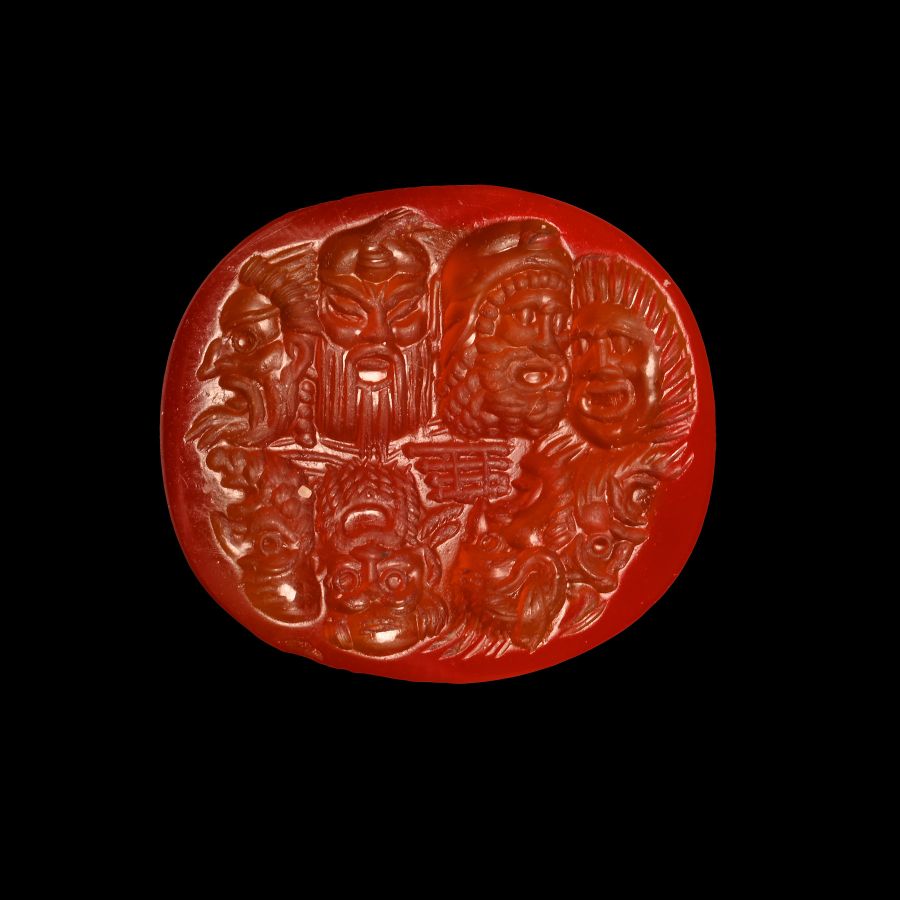
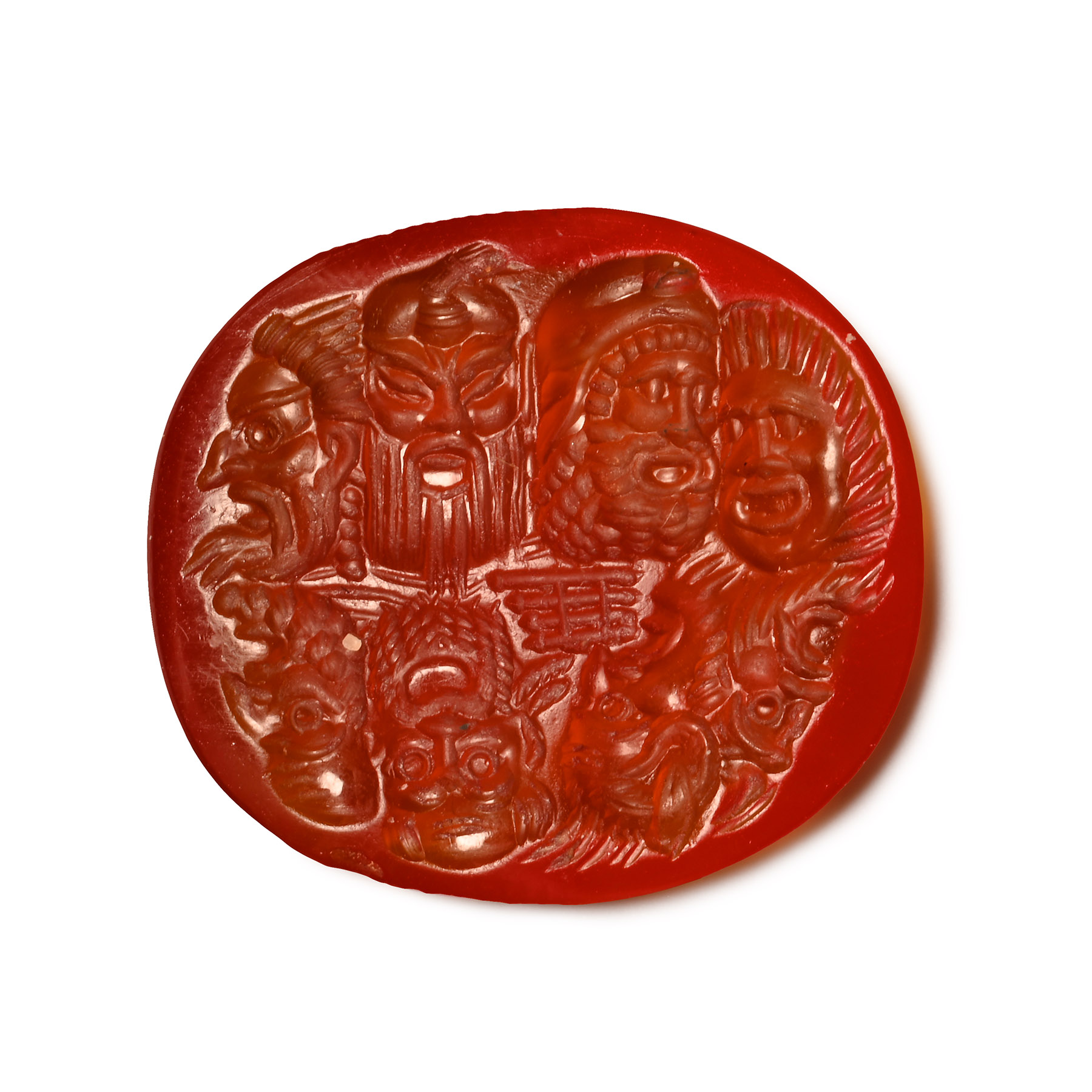
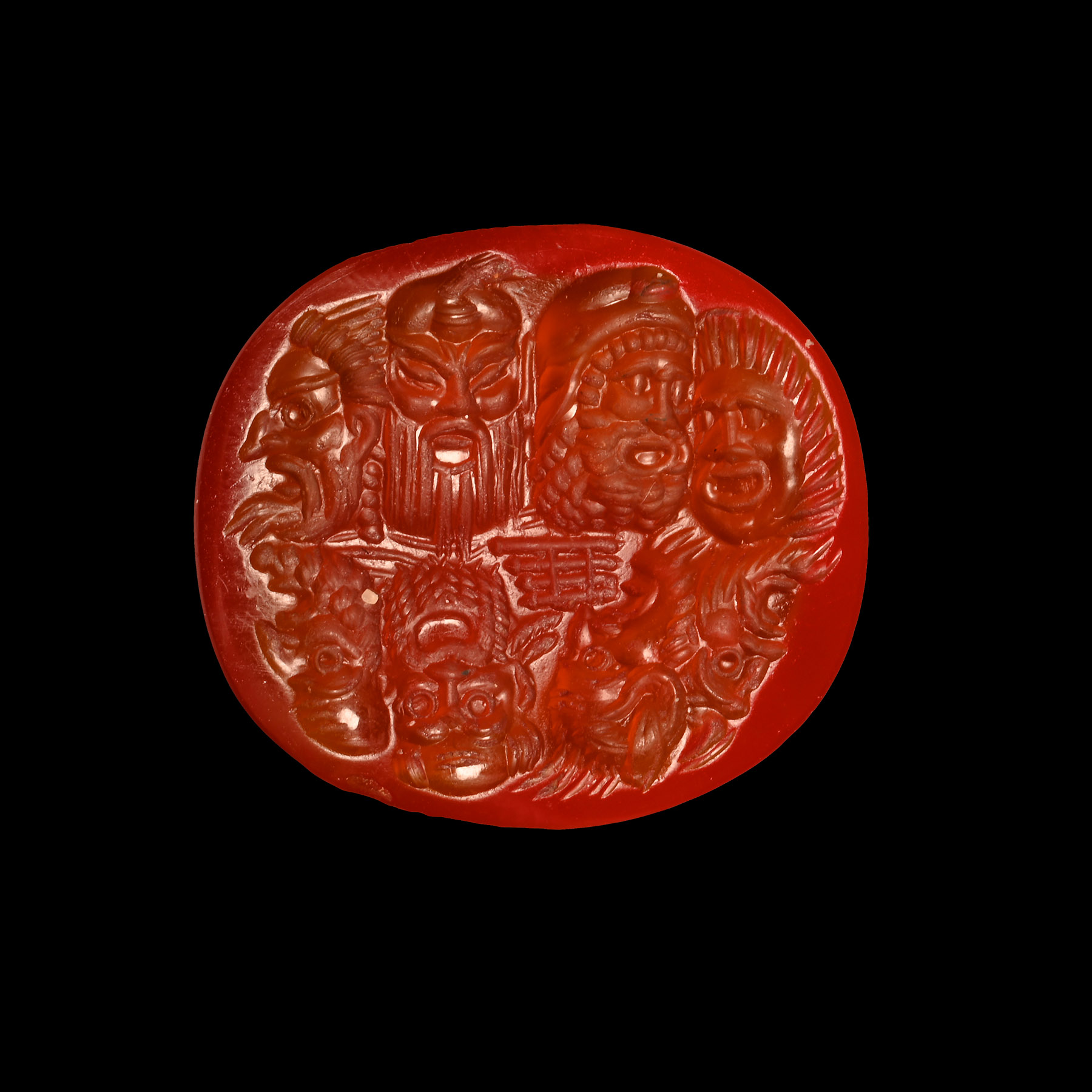
Roman Carnelian Gemstone with Theatre Masks
1ST-3RD CENTURY A.D.
7/8 in. (2.51 grams, 22.02 mm).
Polished to an oval shape, engraved with eight theatre masks in two rows; one row with three tragic masks in profile, one depicting a satyr, and a tragic mask of an old man shown frontally; the opposing row with a tragic mask of an old man in profile, a Bacchus mask, a mask of a bearded man wearing a cap shown in three-quarter view, and a mask of a young hero facing the centre.
ProvenanceFrom the collection of a late London, UK, gentleman, 1980s.
This lot has been checked against the Interpol Database of stolen works of art and is accompanied by search certificate no.12033-214124.
Cf. Pirzio Biroli Stefanelli, L., L'Oro dei Romani, gioielli di eta' Imperiale, Roma, 1992, figs.15,110, for identical masks on cameos of the 1st century A.D.
FootnotesThe masks represented seem to be relevant to the typologies of the 'new comedy', an image that appears on cameos and gems since the Augustan era.
CONDITIONTimeLine Auctions follows a vetting process to ensure the authenticity and legality of all items, reinforcing our commitment to integrity and responsible trading. Each antiquity, antique, and coin lot undergoes thorough examination by a vetting committee of at least ten external specialists, professional trade association members, scientists, and archaeologists: Our Vetting Process
AUCTIONS:
TimeLine is a leading auction house specialising in antiquities, ancient art, collectables, natural history, coins, medals, and books. Our auctions offer museums, collectors, historians, and enthusiasts the opportunity to acquire unique and historically significant pieces.
-
Graeco-Roman Green Jasper Gemstone with Medusa
1st century B.C.-1st century A.D.Estimate: £3,000 - 4,000 (+bp*)
Opening Bid: £1,600
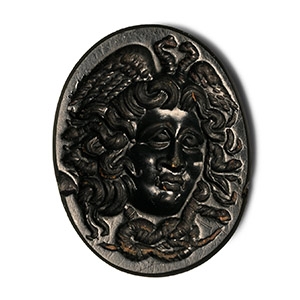
An exceptional intaglio engraved with head of Medusa in three-quarter view, depicted with a sorrowful expression, full lips and large eyes gazing up; voluminous hair composed of entangled snakes framing her face, large wings to the brow flanking a pair of rearing serpents, a knot of serpents below her chin. 1.34 grams, 20.82 mm
Acquired in Switzerland 1970-1980. From a London, UK, collection. This lot has been checked against the Interpol Database of stolen works of art and is accompanied by search certificate no.12034-214098.
In ancient mythology, Medusa was one of three monstrous winged female creatures who had venomous snakes living in her hair. In classical antiquity, representations of the head of Medusa appeared in the apotropaic device known as the Gorgoneion, designed to ward-off evil and bad luck. -
Roman Mosaic Tesserae Group
1st-4th century A.D.Sold for (Inc. bp): £156
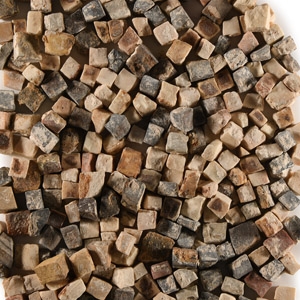
A mixed group of two hundred and fifty single stone tesserae of various colours and sizes. 392 grams total, 8-14 mm
From a collection acquired on the UK art market from various auction houses and collections mostly before 2000. From an important Cambridgeshire estate; thence by descent. -
.jpg)
Roman Lead Coffin Fragment with Sphinx, Medusa and Dolphins
2nd-3rd century A.DSold for (Inc. bp): £3,380
Decorated with a high-relief pattern comprising sphinxes surrounded by dolphins and masks of Medusa surrounded by laurel leaves all between Corinthian columns; ropework and floral border strips with laurel leaves above; lip below the upper edge. 20.1 kg, 101.5 cm
Acquired 1970s-early 1990s. Property of a North American collector. London collection, 2016.
This item belongs to types widespread in the Eastern Mediterranean. The panel is decorated with a columned structure, and within each section are symbols of the outer-world, including gorgons, sphinx and dolphins. The sphinx, having a human head and breasts, legs and paws of a lion, and wings of a bird, was generally associated with protecting imperial tombs and temples. The roundels featuring the head of Medusa, known for her potent gazes that could turn one to stone, was favoured on sarcophagi and architectural ornaments because it was believed that her image would protect those within. The dolphin was considered to ferry the souls of the dead to the afterlife.
