
Loading, please wait...
LOT 0607
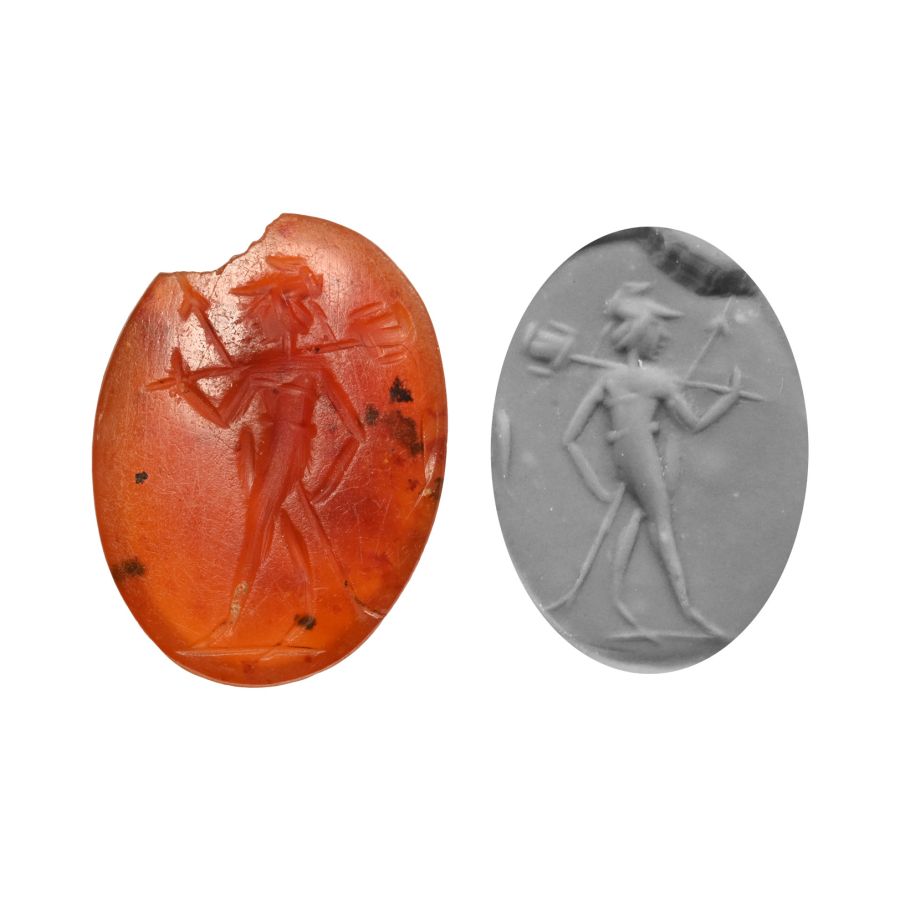
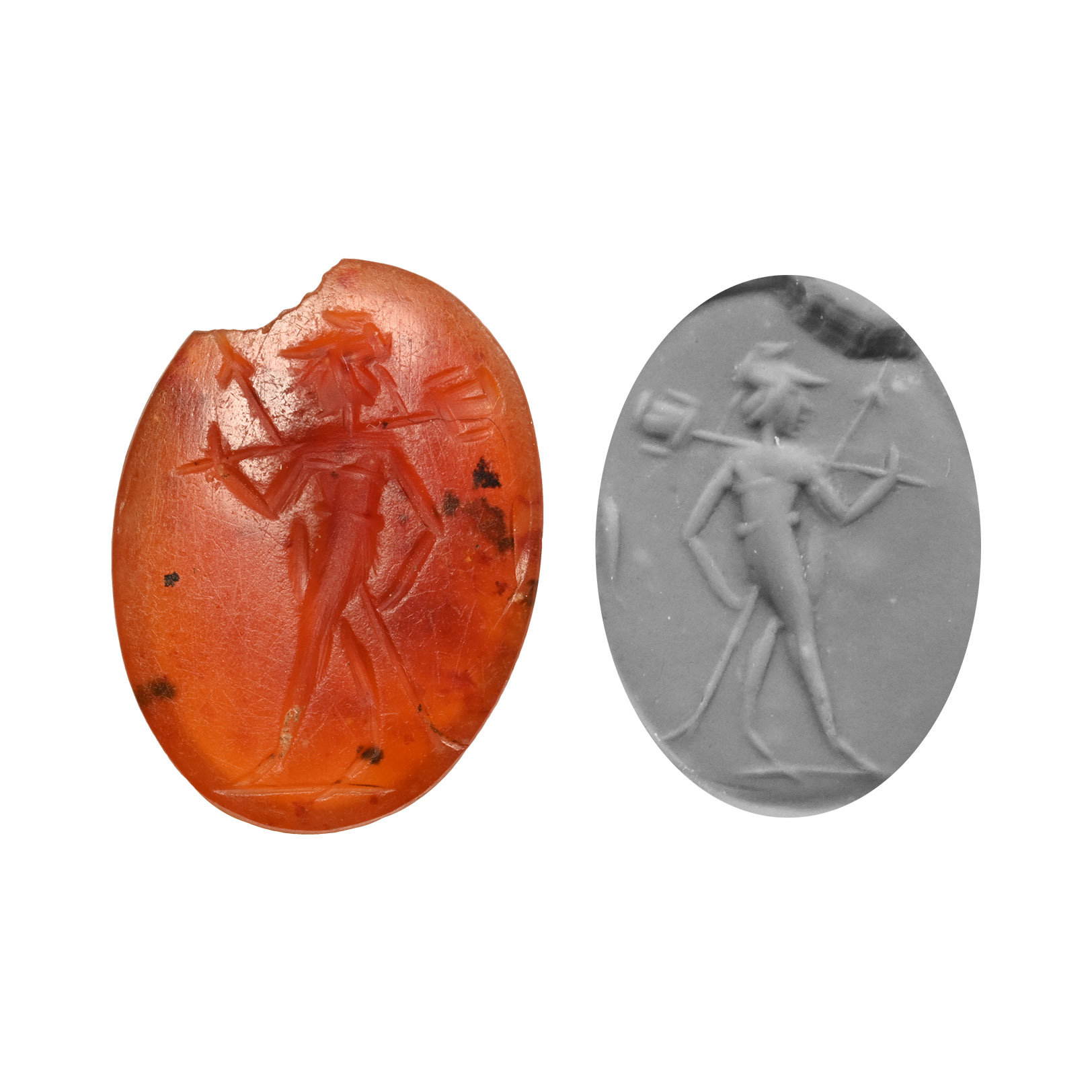
Roman Carnelian Gemstone with Mars Gradivus
2ND-3RD CENTURY A.D.
5/8 in. (0.90 grams, 16 mm).
The helmetted deity walking left on a ground line, carrying a trophy on his shoulder and holding a spear in his hand; accompanied by a museum-quality impression.
ProvenanceEx property of a late Japanese collector, 1970-2000s.
Accompanied by an old collection ticket.
The moniker 'Mars Gradivus' is often translated as 'Marching Mars' from the latin 'gradus' meaning step or march.
CONDITIONTimeLine Auctions follows a vetting process to ensure the authenticity and legality of all items, reinforcing our commitment to integrity and responsible trading. Each antiquity, antique, and coin lot undergoes thorough examination by a vetting committee of at least ten external specialists, professional trade association members, scientists, and archaeologists: Our Vetting Process
AUCTIONS:
TimeLine is a leading auction house specialising in antiquities, ancient art, collectables, natural history, coins, medals, and books. Our auctions offer museums, collectors, historians, and enthusiasts the opportunity to acquire unique and historically significant pieces.
-
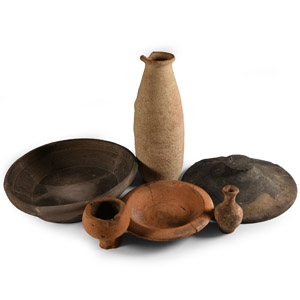
Roman Mixed Ceramic Vessel Group
1st-4th century A.D.Sold for (Inc. bp): £182
Including a dish, a dish lid, terracotta plate and buff ware jar. 1.33 kg total, 5.6-19.5 cm
From the collection of a late East Anglian teacher and antiquarian who retired to the Isle of Wight in Hampshire, UK. He amassed a large collection of objects between the 1960s-1980s. -
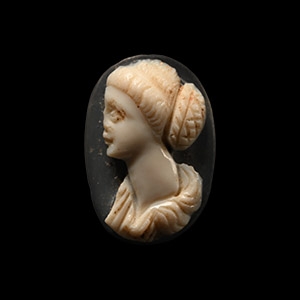
Roman Carved Cameo of a Female
Late 2nd century A.D.Estimate: £300 - 400 (‡+bp*)
Opening Bid: £150
Ellipsoid in plan with reserved female profile portrait bust, the hair dressed in a chignon. 0.64 grams, 13 mm
Acquired in the mid 1980s-1990s. From the family collection of Mr S.A., Switzerland, thence by descent. Private collection since the late 1990s. -
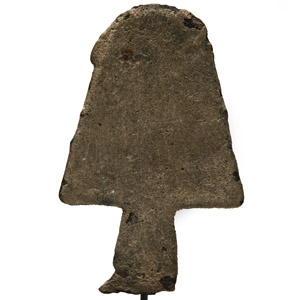
Roman Bronze Spatula
1st-3rd century A.D.Sold for (Inc. bp): £33
Tongue-shaped in plan and flat with wedge-shaped tang; mounted on a custom-made display stand. 63 grams total, 10.3 cm high including stand
From a collection acquired on the UK art market from various auction houses and collections mostly before 2000. From an important Cambridgeshire estate; thence by descent.
