
Loading, please wait...
LOT 0936
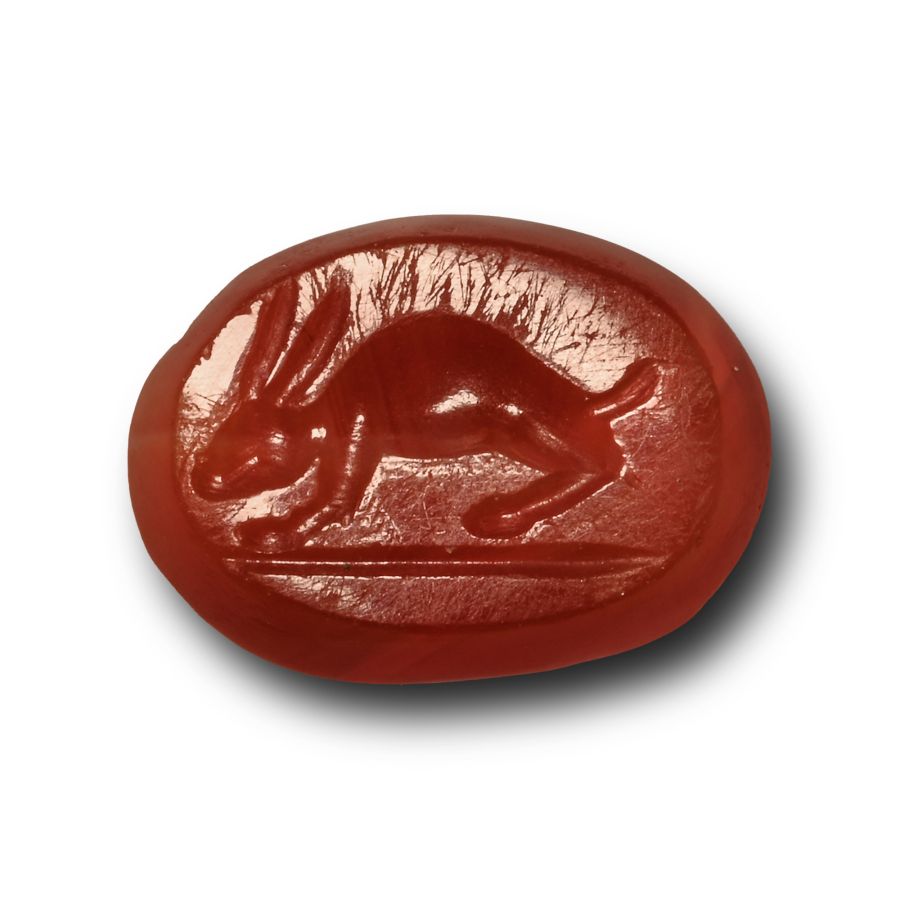
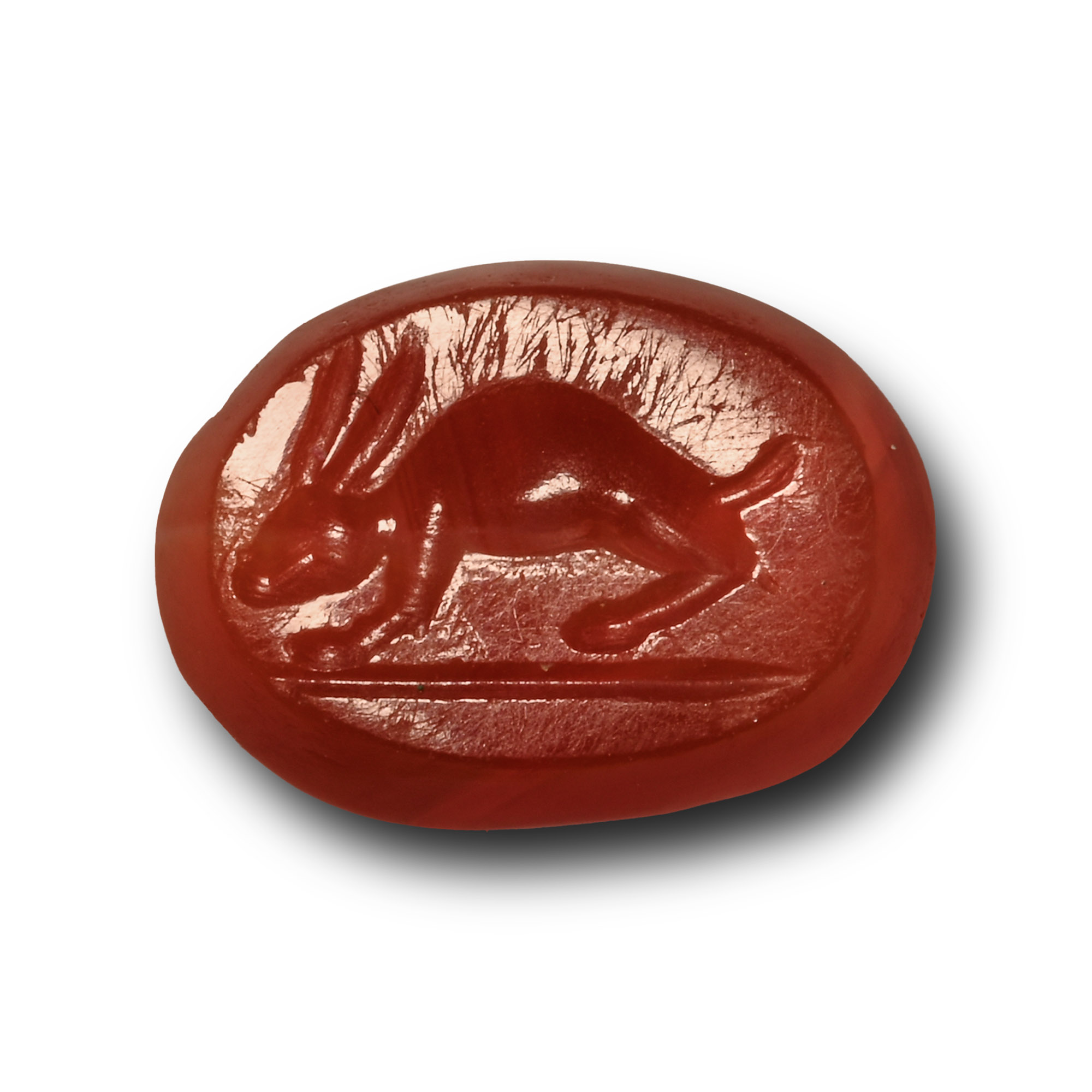
Roman Carnelian Gemstone with Hare
CIRCA 2ND-3RD CENTURY A.D.
3/8 in. (0.28 grams, 9 mm).
Intaglio profile image of a hare running on a baseline. [No Reserve]
ProvenanceAcquired on the London art market in the late 1980s-1990s.
From the family collection of an East London, UK, gentleman.
TimeLine Auctions follows a vetting process to ensure the authenticity and legality of all items, reinforcing our commitment to integrity and responsible trading. Each antiquity, antique, and coin lot undergoes thorough examination by a vetting committee of at least ten external specialists, professional trade association members, scientists, and archaeologists: Our Vetting Process
AUCTIONS:
TimeLine is a leading auction house specialising in antiquities, ancient art, collectables, natural history, coins, medals, and books. Our auctions offer museums, collectors, historians, and enthusiasts the opportunity to acquire unique and historically significant pieces.
-
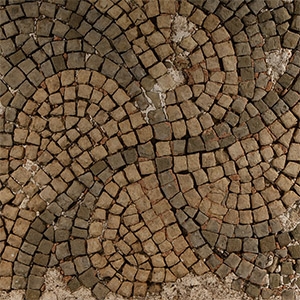
Roman 'Gloucestershire' Mosaic Panel
Circa 2nd-3rd century A.D.Sold for (Inc. bp): £1,105
Irregular mosaic fragment of beige, cream and grey tesserae with radiating trumpet-shaped swirls; mounted in a modern rectangular matrix. 33 kg, 76 cm high
Found Gloucestershire, UK. From a collection acquired on the UK art market from various auction houses and collections mostly before 2000. From an important Cambridgeshire estate; thence by descent.
A mosaic found in Cirenchester (insula IX, Chester Street) shows panels defined by a dark blue-grey single fillet with an additional double fillet parallel to it on a longer axis, having an overall scheme of running pelta-pattern. Each pelta is outlined in dark-blue grey and infilled with red, white and dark blue grey at the centre. -
.jpg)
Roman Marble Figure of a Dancing Pan
Circa 2nd century A.D.Sold for (Inc. bp): £5,460
Modelled in the round, comprising the lower torso and the goat-legs in vigorous motion, the left raised and bent, right leg straight with the genitals leaning against the length of the thigh, stub of the tail to the reverse; mounted on a custom-made stand. 1.4 kg total, 16.5 cm high (24 cm high including stand)
From the collection of Jan Onderdijk, Belgium, before 1980. Acquired by Mr J.R. an antiquarian in the late 1980s. Accompanied by an academic report by Dr Raffaele D’Amato. This lot has been checked against the Interpol Database of stolen works of art and is accompanied by search certificate number no.12022-213655.
Statues of satyrs, relaxing, dancing, and pursuing nymphs proliferated during the third century B.C., as the cult of Dionysus, god of wine and the pleasures it bestows, grew in importance. The Romans appreciated portrayals of Satyrs and Silens, and borrowed them from Greek art, the god Pan being one of the favourite subjects. This statuette is probably a Roman copy from a Hellenistic original, similar to the specimen from the Garimberti collection, where the god, with the left leg firmly planted on the ground and the other leg raised, is carrying a basket of flowers and fruit on his back. -
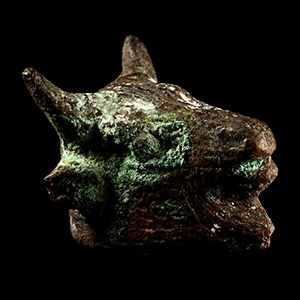
Eastern Roman Bronze Head of a Bull
1st-3rd century A.D.Sold for (Inc. bp): £52
With pecked fur texture to the neck, cheeks and dewlap; slightly indented reverse. 13.7 grams, 21 mm
Private collection of Mr S.A., Switzerland, 1990s, thence by descent.
