
Loading, please wait...
LOT 0686
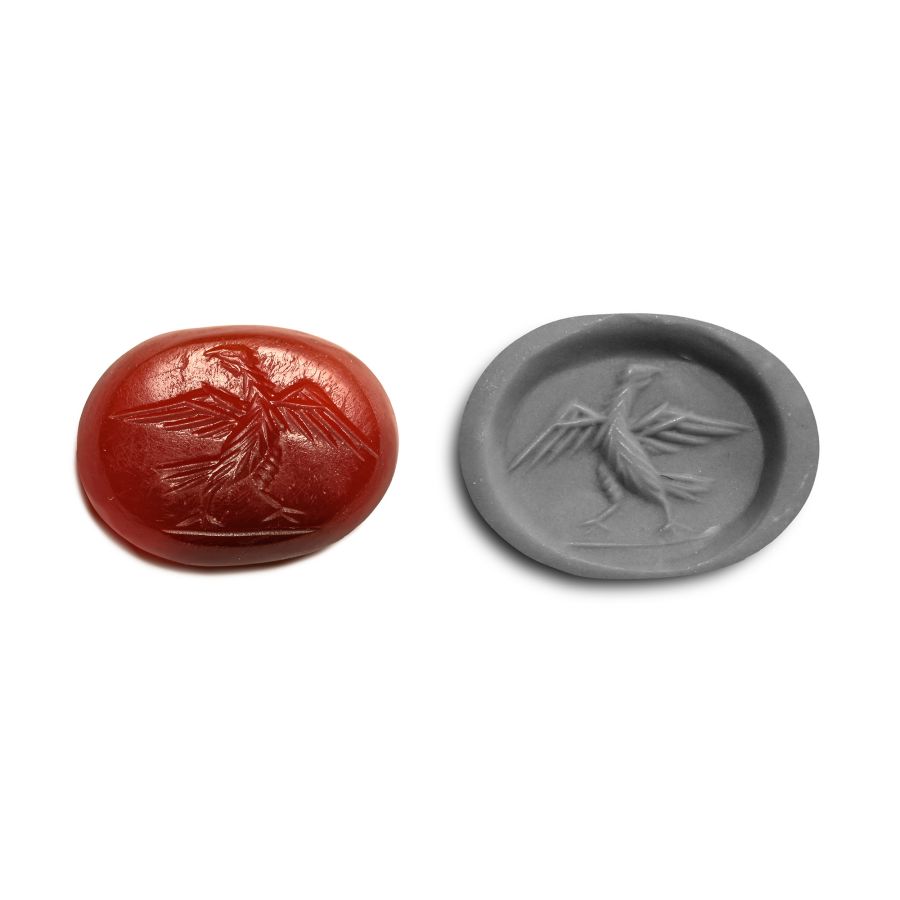
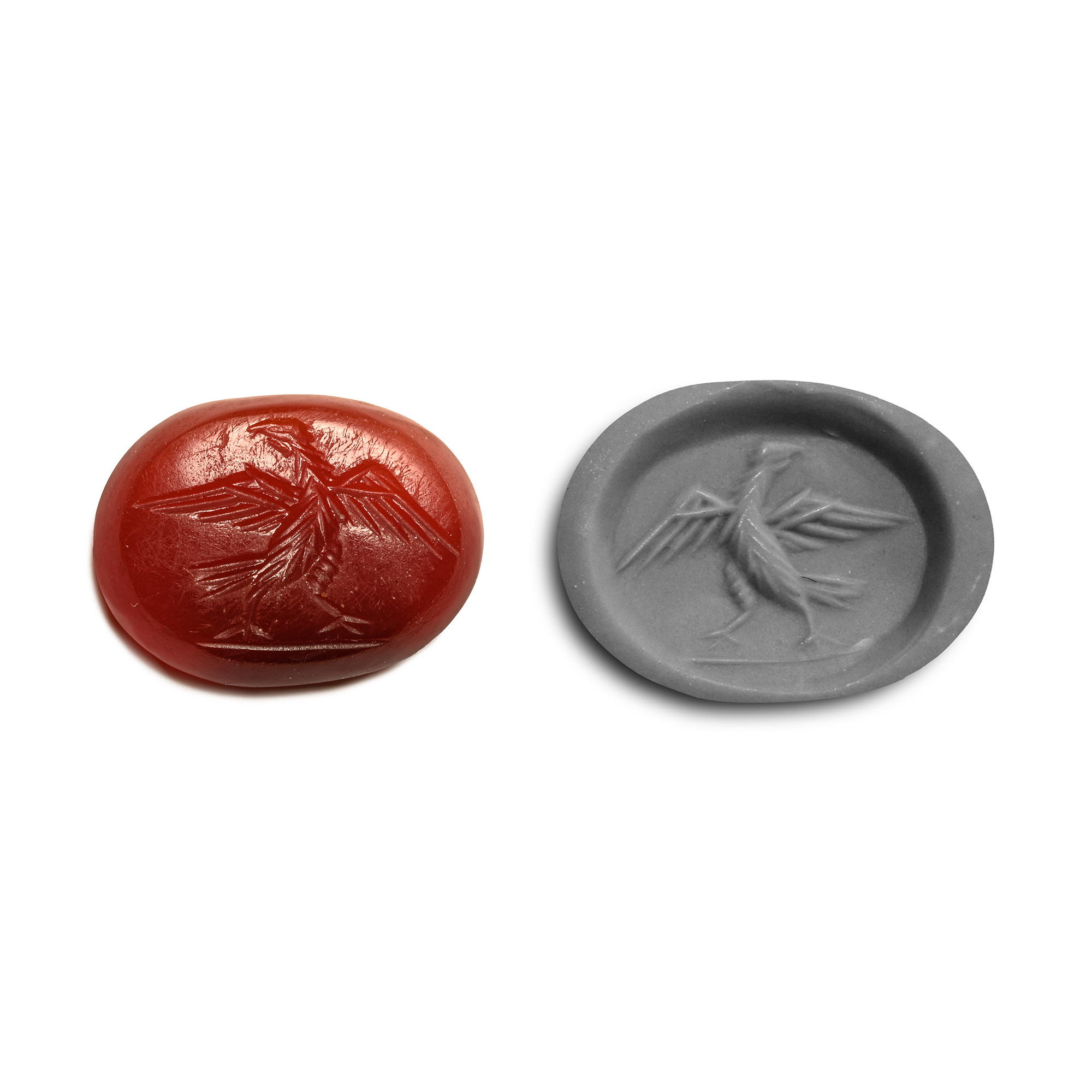
Roman Carnelian Gemstone with Eagle
CIRCA 2ND-3RD CENTURY A.D.
1/2 in. (0.96 grams, 14 cm).
Ellipsoid cloison with intaglio eagle with wings spread in the act of taking off; supplied with a museum-quality impression.
ProvenanceAcquired on the London art market in the late 1980s-1990s.
From the family collection of an East London, UK, gentleman.
TimeLine Auctions follows a vetting process to ensure the authenticity and legality of all items, reinforcing our commitment to integrity and responsible trading. Each antiquity, antique, and coin lot undergoes thorough examination by a vetting committee of at least ten external specialists, professional trade association members, scientists, and archaeologists: Our Vetting Process
AUCTIONS:
TimeLine is a leading auction house specialising in antiquities, ancient art, collectables, natural history, coins, medals, and books. Our auctions offer museums, collectors, historians, and enthusiasts the opportunity to acquire unique and historically significant pieces.
-
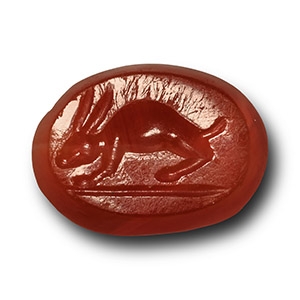
Roman Carnelian Gemstone with Hare
Circa 2nd-3rd century A.D.Sold for (Inc. bp): £390
Intaglio profile image of a hare running on a baseline. 0.28 grams, 9 mm
Acquired on the London art market in the late 1980s-1990s. From the family collection of an East London, UK, gentleman. -
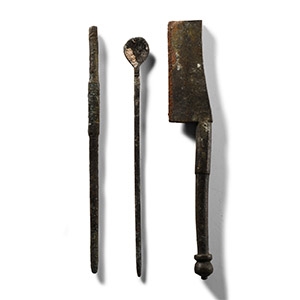
Roman Bronze Medical Instrument Group
Circa 1st-4th century A.D.Sold for (Inc. bp): £156
Comprising: cosmetic spoon with spike handle; probe with baluster and rounded tip; surgical knife with inset ferrous blade. 109 grams total, 13-14 cm
From a collection acquired on the UK art market from various auction houses and collections mostly before 2000. From an important Cambridgeshire estate; thence by descent. -
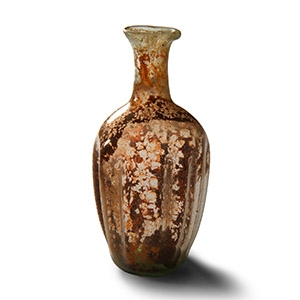
Roman Ribbed Glass Vessel
4th-5th century A.D.Sold for (Inc. bp): £130
With dimple base, radiating ribs to the bulb, gently tapering neck, flared rim with rolled edge. 20.11 grams, 95 mm
Acquired 1980-2015. Ex Abelita family collection.
