
Loading, please wait...
LOT 0688
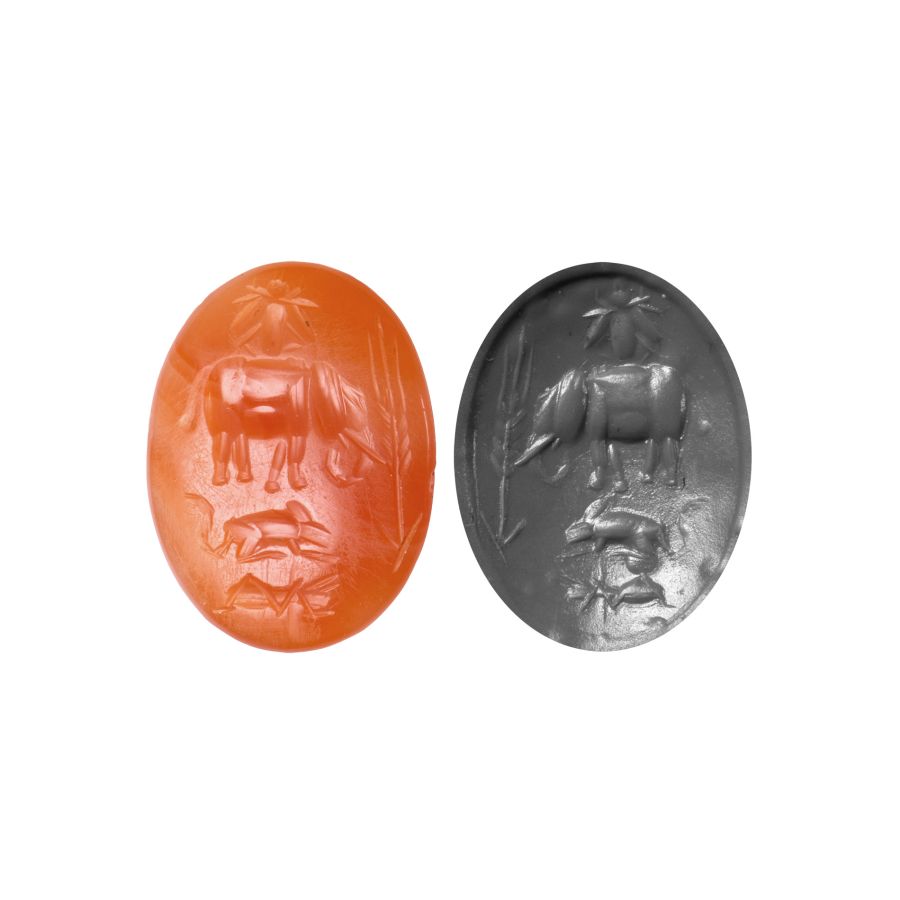
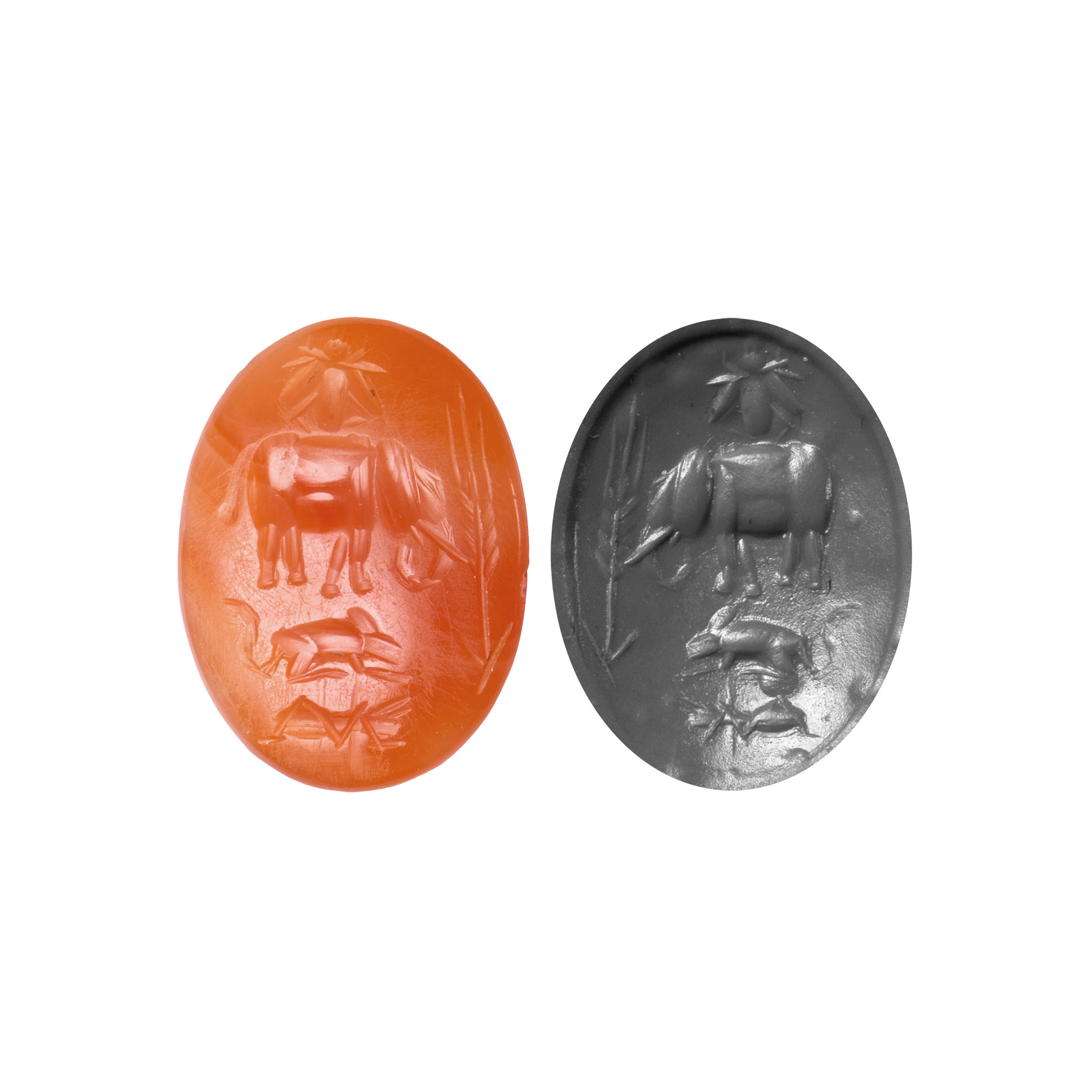
Roman Carnelian Gemstone with Animals
CIRCA 1ST CENTURY B.C. OR LATER
5/8 in. (1.68 grams, 17 mm).
Of plano-convex form, depicting an ear of wheat, a fly, an elephant in profile, a mouse and a locust; accompanied by a museum-quality impression.
ProvenanceEx property of a London gentleman; acquired by his father in the 1970s; thence by descent.
CONDITIONTimeLine Auctions follows a vetting process to ensure the authenticity and legality of all items, reinforcing our commitment to integrity and responsible trading. Each antiquity, antique, and coin lot undergoes thorough examination by a vetting committee of at least ten external specialists, professional trade association members, scientists, and archaeologists: Our Vetting Process
AUCTIONS:
TimeLine is a leading auction house specialising in antiquities, ancient art, collectables, natural history, coins, medals, and books. Our auctions offer museums, collectors, historians, and enthusiasts the opportunity to acquire unique and historically significant pieces.
-
.jpg)
Roman Tinned Bronze Decorated Casket Key
1st-3rd century A.D.Sold for (Inc. bp): £85
With broad circular bow, barrel-type shank with pierced bit, mandrel to the upper bow. 4.49 grams, 41 mm
Fine condition.
Found Cambridgeshire, UK. -
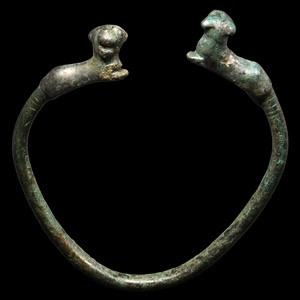
Roman Bronze Bracelet with Panthers
2nd-4th century A.D.Sold for (Inc. bp): £85
The penannular round-section hoop terminating in opposed couchant pantheresses, their heads turned in opposite directions. 30.8 grams, 75 mm
UK collection, early 1990s and before. Acquired on the UK art market since the early 2000s. From a private collection, Lancashire, UK. -
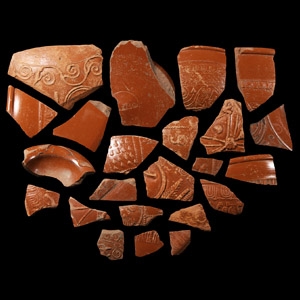
Roman 'Thames' Decorated Samian Ware Pottery Collection
Circa 2nd century A.D.Sold for (Inc. bp): £91
Mainly from rims and bodies of vessels; most displaying a design in relief, including architectural elements, scrolling foliage and a maker's stamp. 440 grams total, 3-10.5 cm
Found Billingsgate spoil from the Thames foreshore, London, UK.
