
Loading, please wait...
LOT 0096
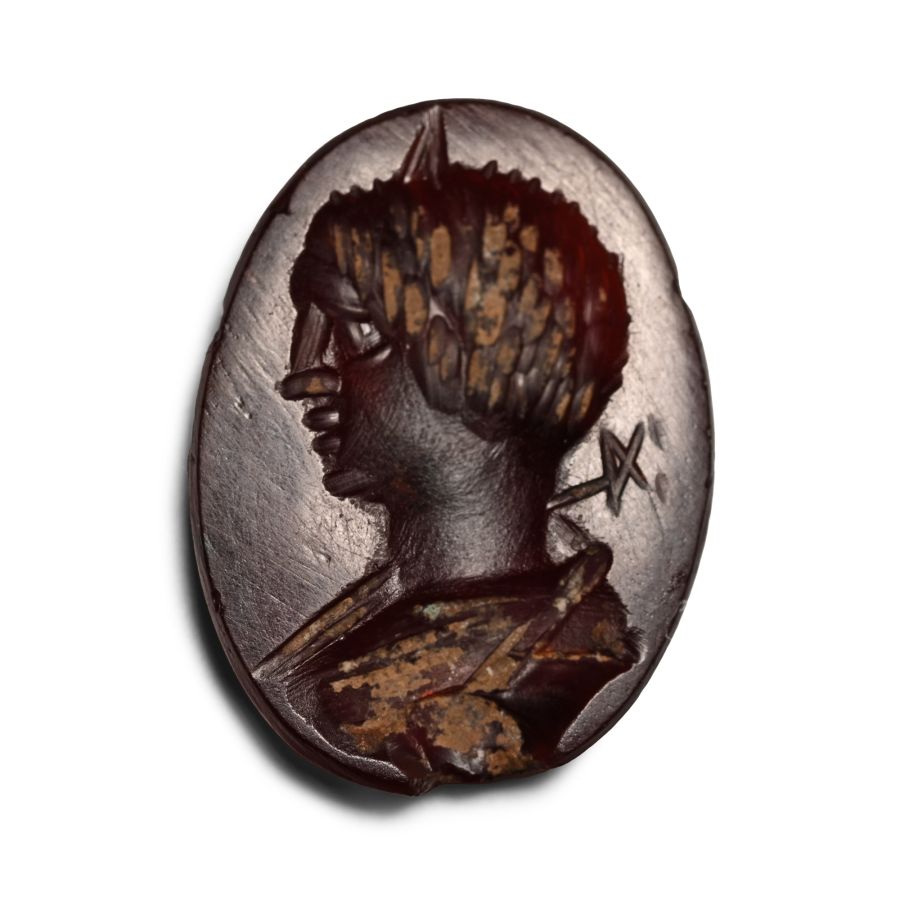
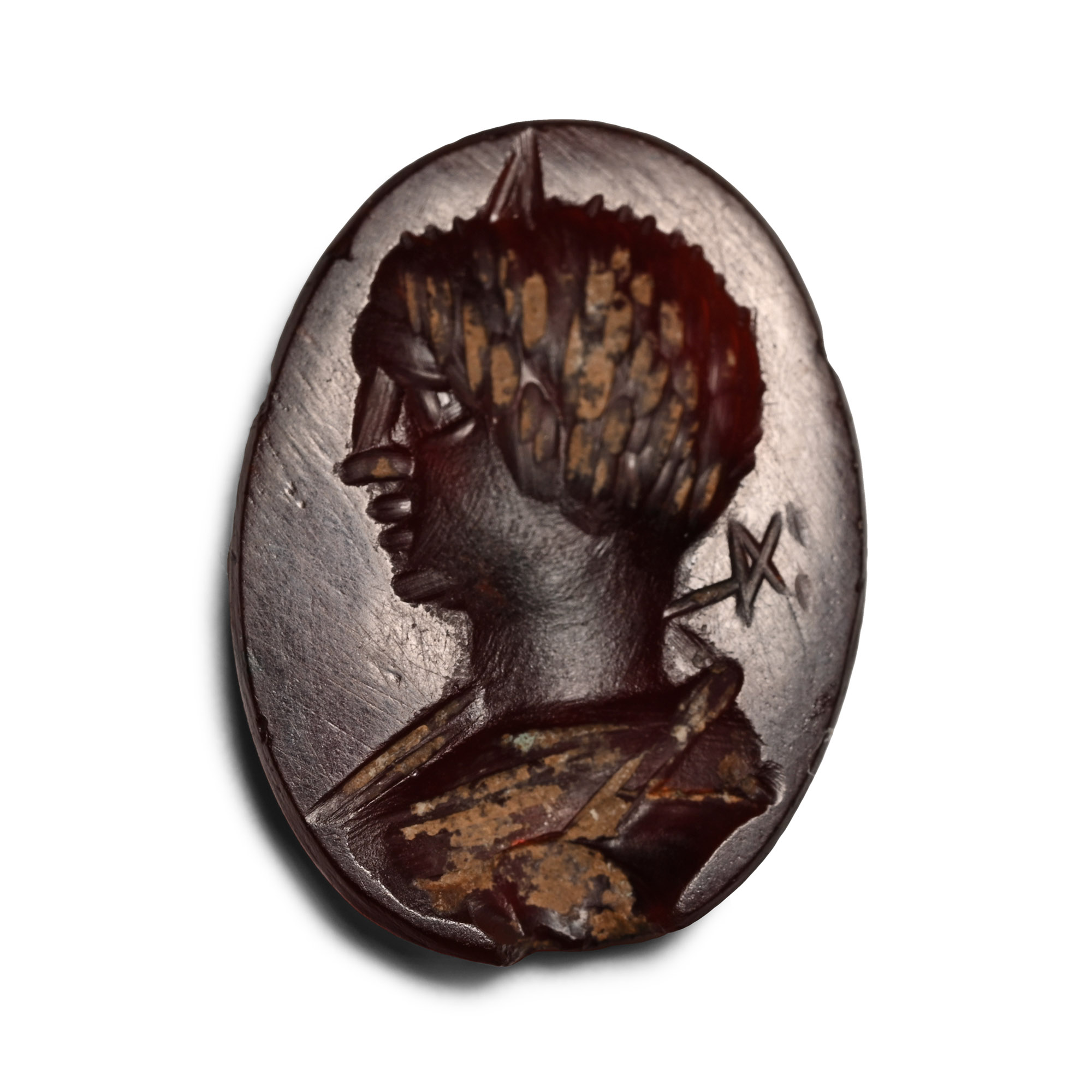
Roman Carnelian Bust of Mercury Gemstone
2ND-3RD CENTURY A.D.
3/4 in. (1.27 grams, 18 mm).
Ellipsoid gemstone with chamfered rim, incuse profile bust of Mercury with wreath in his hair and star to the rear of the neck.
ProvenanceFrom an old UK collection, 1980s.
CONDITIONTimeLine Auctions follows a vetting process to ensure the authenticity and legality of all items, reinforcing our commitment to integrity and responsible trading. Each antiquity, antique, and coin lot undergoes thorough examination by a vetting committee of at least ten external specialists, professional trade association members, scientists, and archaeologists: Our Vetting Process
AUCTIONS:
TimeLine is a leading auction house specialising in antiquities, ancient art, collectables, natural history, coins, medals, and books. Our auctions offer museums, collectors, historians, and enthusiasts the opportunity to acquire unique and historically significant pieces.
-
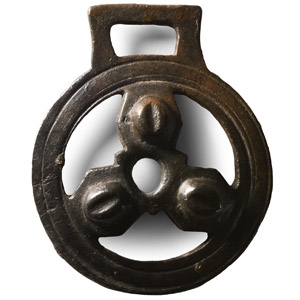
Roman Bronze Military 'Yonic' Horse Cheek Piece
1st-4th century A.D.Sold for (Inc. bp): £130
Comprising a substantial ring with incised borders surrounding three radiating hexagonal plates supporting a central pierced triangular panel; each with a raised dome and longitudinal recess; rectangular suspension slot above. 85 grams, 83 mm
From a collection acquired on the UK art market from various auction houses and collections mostly before 2000. From an important Cambridgeshire estate; thence by descent. -
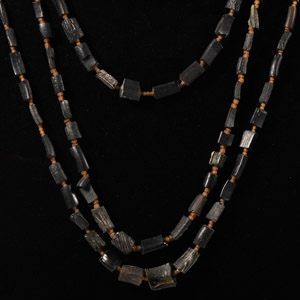
Roman Amber and Black Glass Bead Necklace Group
1st-4th century A.D. and laterSold for (Inc. bp): £72
Comprising three necklaces restrung from beads of drilled ancient glass bangle fragments. 40 grams total, 67-68 cm
UK gallery, early 2000s. -

Roman Bronze Bell
1st-2nd century A.D.Sold for (Inc. bp): £143
Trapezoidal in section with loop to the apex, pierced to accept a clapper; many of these objects are published in the Detector Finds book series. 137 grams, 68 mm
From the collection of the famous author, writer and speaker, Gordon Bailey, Essex, UK; formed since 1968.
The bell was probably used inside a temple where its melodic sound was thought to add to the aura of reverence and mystery. In Mithraic temples, bells were rung as part of the ceremonial, while in the cult of Attis the bell and tympanum were also used to serve food and drink as the critical part of the rituals of consumption. One Roman order of priests applied the term
