
Loading, please wait...
LOT 0946
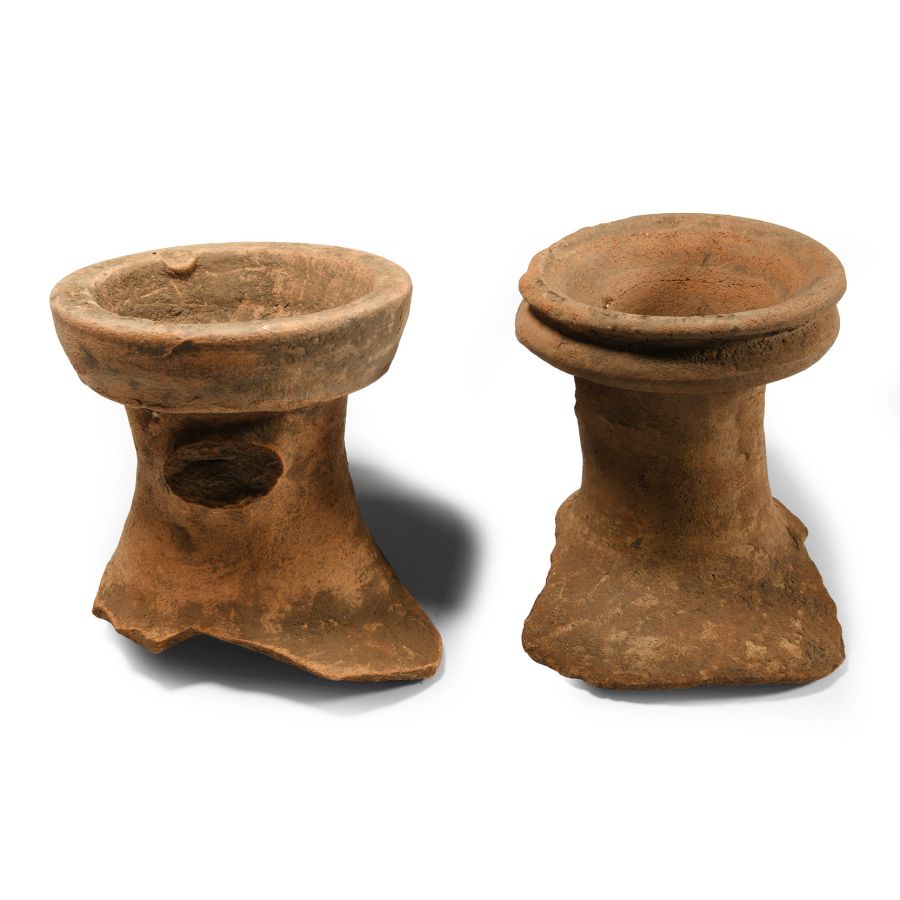
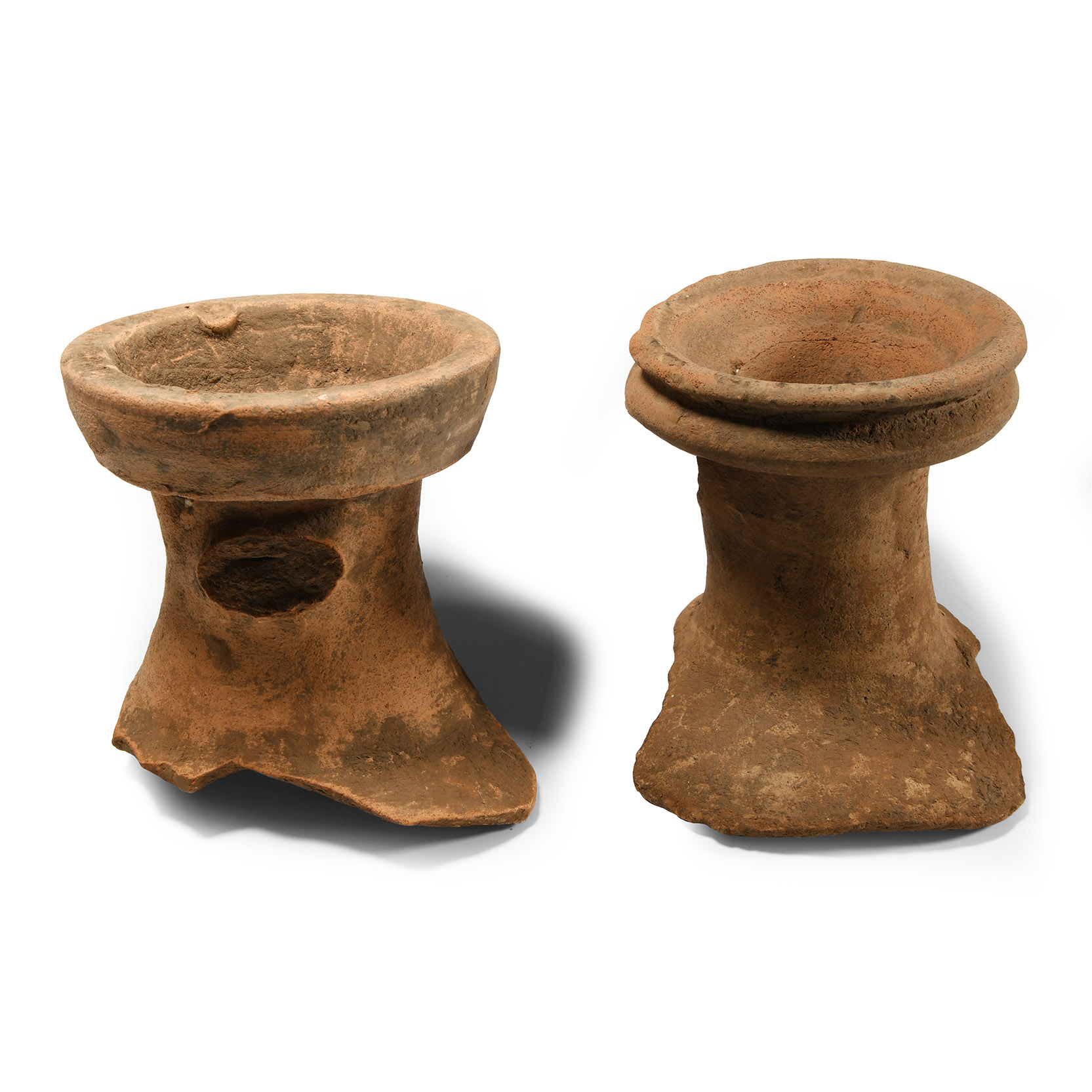
Roman 'Canterbury' Terracotta Wine Amphora Top Pair
CIRCA 1ST-2ND CENTURY A.D.
4 1/2 in. (742 grams total, 11.5 cm each).
Each bell-shaped in profile with carinated rim and stub of the lateral handle. [2, No Reserve]
ProvenanceFound by construction workers in the 1950s-1960s.
From the private collection of Mr A Hills, Kent, UK; received by gift circa 2015.
TimeLine Auctions follows a vetting process to ensure the authenticity and legality of all items, reinforcing our commitment to integrity and responsible trading. Each antiquity, antique, and coin lot undergoes thorough examination by a vetting committee of at least ten external specialists, professional trade association members, scientists, and archaeologists: Our Vetting Process
AUCTIONS:
TimeLine is a leading auction house specialising in antiquities, ancient art, collectables, natural history, coins, medals, and books. Our auctions offer museums, collectors, historians, and enthusiasts the opportunity to acquire unique and historically significant pieces.
-
.jpg)
Etruscan Gold Fibula with Amber Disc
Circa 4th-3rd century B.C.Sold for (Inc. bp): £650
Bow brooch with hollow-formed head, foot and bow; the head formed as the head of a goat; bow enclosing an annular amber panel. 12.42 grams, 75 mm
Private collection of Mr S.A., Switzerland, 1990s, thence by descent. -
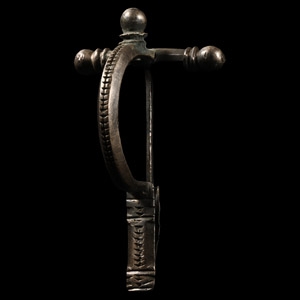
Roman Silver Crossbow Brooch
3rd century A.D.Sold for (Inc. bp): £312
With round-section crossbar and collared knop finials, deep D-section bow with vertical band of triangles extending along the outer face and onto the rectangular footplate with chamfered long edges; separate collared knop above the bow; hinged pin housed in catchplate to reverse. 16.5 grams, 60 mm
On the European art market before 2000. Ex collection of a Surrey, UK, gentleman; acquired on the UK art market.
This early form of crossbow brooch shows its origins in the P-shaped bow brooch type. -
.jpg)
Roman 'Published' Terracotta Oil Lamp with Fighting Gladiators
Early 1st century A.D.Sold for (Inc. bp): £2,340
Grey fabric, broad discus with concentric rings and chamfered shoulder, short nozzle flanked by volute scrolls; scene of two murmillo gladiators in combat, one having fallen to the ground; maker's stamp to the underside 'MAR[..]S'; mounted on a custom-made stand. 66 grams, 95 mm (137 grams total, 14.6 cm high including stand)
Ex Axel Guttmann collection of ancient arms and armour, Germany (1944-2001). with Christie's, Axel Guttmann collection of Ancient Arms and Armour, part 2, London, 28 April 2004, no.178 (part). European private collection. Exhibited at Harwich Museum, Harwich, Essex, UK, 3rd February-9th March 2024; accompanied by a copy of a photograph of the artefact on display. Accompanied by a copy of the Christie's online catalogue listing. Accompanied by copies of the relevant Das Spiel mit dem Tod, book pages. This lot has been checked against the Interpol Database of stolen works of art and is accompanied by search certificate no.12049-211932.
